
Email: [email protected]

 English
  español
Industry News
HOME / NEWS / Industry News / How to Choose a Good Tool Belt for Hand Tools: A Practical Guide for Pros
HOME > NEWS > Industry News > How to Choose a Good Tool Belt for Hand Tools: A Practical Guide for Pros
How to Choose a Good Tool Belt for Hand Tools: A Practical Guide for Pros
 2026.10.07
 Industry News
Professionals who work with their hands ask us the same question at almost every trade fair: how to choose a good tool belt for hand tools? Over more than a decade of manufacturing tool bags, tool backpacks, and tool belt bags in our Yancheng factory, we have studied what makes a belt genuinely comfortable and durable. A good tool belt is not the one with the most pockets or the heaviest leather. It is the one that keeps your daily hand tools within easy reach, spreads the load evenly across your hips, and survives the conditions of your job site. This guide explains the factors we weigh before we cut a single piece of fabric.
Understand How You Will Wear the Belt
When you evaluate a tool belt for hand tools, start with your working habits rather than the product photo. The right belt for a carpenter who climbs scaffolding all day is not the same belt that suits an electrician moving through tight spaces or a maintenance technician carrying spare parts and connectors. Think about the positions you work in, how often you bend, and which tools you reach for every few minutes. Those habits should dictate the shape of the belt, not the other way around.
Match the Belt to Your Tool Load
Before comparing materials or pocket counts, list every hand tool you carry on an average shift. The weight and size of that list is the real specification your belt must meet. In our production planning, we separate field workers into three load profiles.
| Load profile | Typical hand tools carried | Appropriate belt style |
|---|---|---|
| Light | Tape measure, utility knife, two or three screwdrivers | Compact side pouch or small waist bag |
| Medium | Hammer, pliers, wire cutters, screwdriver set, small fasteners | Multi-pocket belt bag with dedicated tool slots |
| Heavy | Full set for framing, electrical service, or general contracting | Reinforced waist bag with padded belt and suspender option |
For a light load, a one-sided belt bag is enough. A medium load needs organized pockets that protect the tools and keep them upright so you can grab them without looking. A heavy load demands a wider belt that transfers weight to the hip bones, plus padding and possibly suspenders. Deciding your load profile first prevents the most common purchasing error: buying a belt with far more capacity than you will ever use.
Select a Material That Matches Your Work Environment
Material determines how many seasons a belt will survive. Leather tool belts still have fans because of their classic feel and stiffness, and they can serve well in dry, indoor environments. Modern synthetic fabrics, however, have closed the gap and in several ways surpassed leather for professional use. They are lighter, dry faster, resist mildew, and need almost no maintenance.
| Material | Typical weight | Water resistance | Maintenance | Cost range |
|---|---|---|---|---|
| Leather | Heavy | Low if untreated | Regular oiling, risk of stretching | Higher |
| 600D Oxford cloth | Light | Good, dries fast | Simple wipe-down | Moderate |
| 1680D polyester | Medium | Excellent | Minimal | Moderate |
At our factory, most tool belt bags are cut from 600D Oxford cloth with bar-tack stitching at stress points. The 600D fabric is strong, light, and abrasion-resistant, which is why it dominates our production line. If you want a deeper look at how the two categories behave after years of use, read our comparison of leather versus nylon tool belt bags.
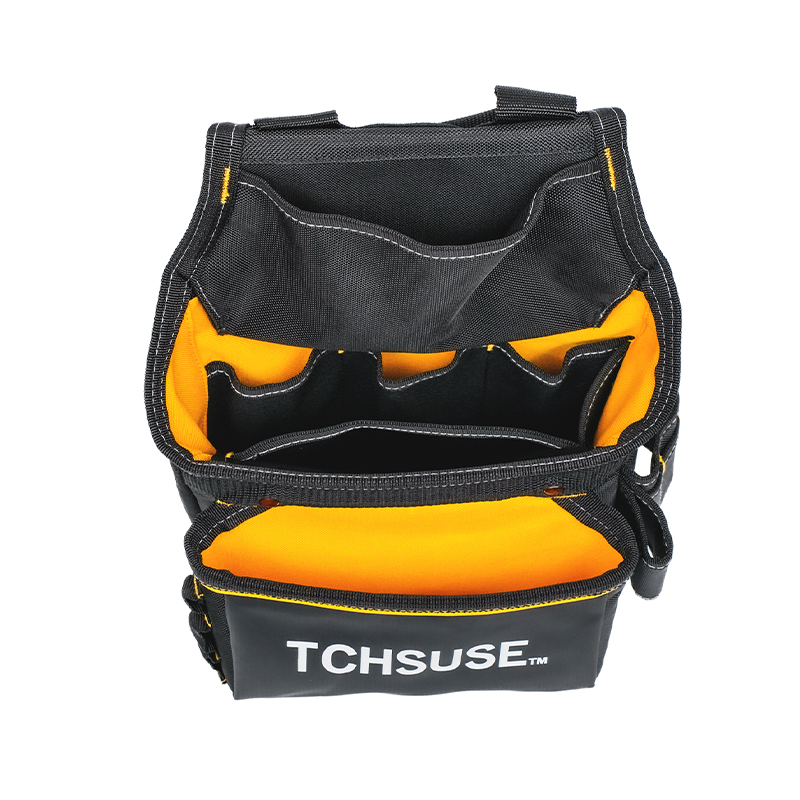 600D Oxford Cloth Waist Bag for Construction WorkThis waist bag uses high-strength, water-repellent Oxford fabric to resist abrasion and moisture. Its sturdy construction suits daily jobsite use while keeping tools organized and accessible without adding heavy weight.View Product →
The 600D Oxford cloth waist bag in our catalog is a practical example of a synthetic belt solution that stays light on the hips while absorbing daily impact on the job.
Check the Pocket Layout and How Tools Sit Inside
A good tool belt for hand tools fails if the pockets are attractive but impractical. When we design belt bags, we ask ourselves how every pocket will behave when a worker bends, climbs a ladder, or reaches across a doorway. The layout features that matter most are listed below.
- Tool-specific pockets that hold a hammer handle or screwdriver shaft securely
- Flaps, hook-and-loop closures, or magnetic snaps that keep tools from falling out
- A flat bottom inside each pocket so tools do not tip sideways
- An exterior slot for a tape measure or utility knife that can be reached in one second
- Weight balance between the left and right side of the belt
For the full breakdown of pocket types and features, see our tool belt bag buying guide.
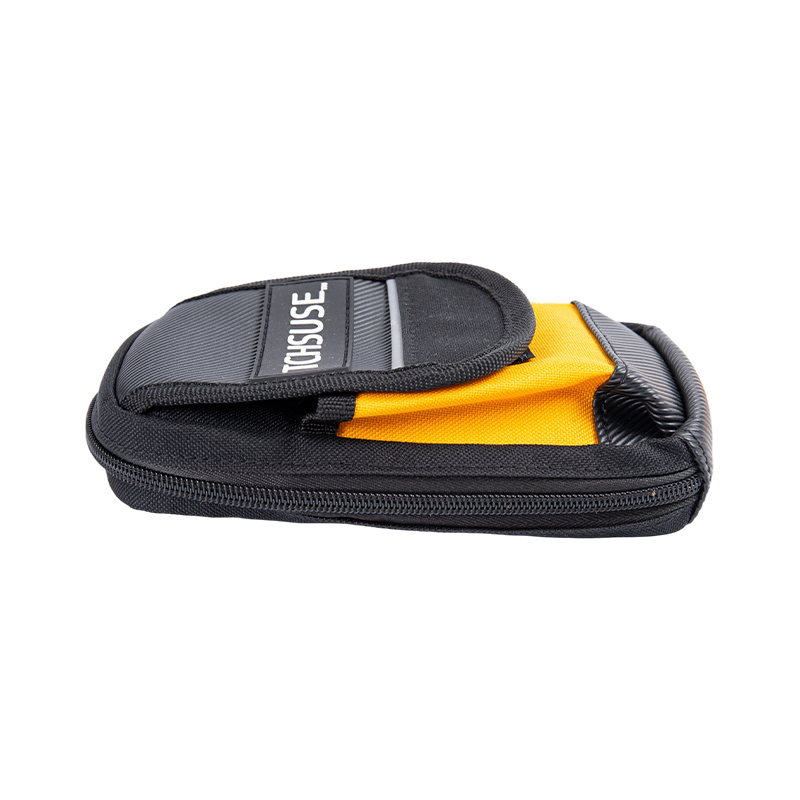 600D Multi-Tool Waist Bag with Divided CompartmentsDesigned for electricians and technicians, this waist bag offers upright tool storage for screwdrivers and pliers. Its durable 600D fabric and segmented pockets support quick access during maintenance or elevated work.View Product →
The multi-tool waist bag in our range follows this exact logic, with divided compartments that keep screwdrivers and pliers standing upright and ready to grab.
Get the Fit, Balance, and Comfort Right
The most common complaint we hear is lower back pain, and the cause is almost always poor fit. A tool belt must sit on the hip bones, where the body can carry weight without strain, rather than on the soft part of the waist. Measure the circumference of your hips while standing, and choose a belt with enough adjustment range to accommodate the clothing you wear on the job.
Padding, Buckle, and Suspenders
Padding spreads the load over a wider surface and prevents the belt from digging in. A metal quick-release buckle survives abuse better than molded plastic. For loads above roughly seven kilograms, suspenders take significant pressure off the hips and keep the belt from slipping down. If you mainly work in an upright position, a simple padded belt is often enough; if you kneel, crawl, or climb, suspenders make a noticeable difference.
Dominant Hand and Side Balance
Place the tools you use most often on the side of your dominant hand. The opposite side should carry a roughly even weight so the belt stays centered. Many experienced workers keep the hammer on the dominant side and a small parts pouch on the other side, which balances the rig and reduces twisting strain on the spine.
Consider the Whole Carry System
A tool belt for hand tools is only one part of the carry system. On most job sites, the belt works together with a tool bag that stays near the workspace or a tool backpack that travels with the technician. The most efficient setup is modular: the belt holds the active tools you reach for constantly, the bag holds the backup tools and spare parts, and neither one is overloaded. When you choose a belt, check that it can accept a spare pouch or that the same brand offers compatible bags, because the ability to expand later matters more than raw pocket count on day one.
Avoid These Common Mistakes
Over the years, we have seen the same purchasing mistakes in every market. Avoid them and the selection process becomes much simpler.
- Buying a belt with too many pockets, which encourages carrying more than the body can comfortably support
- Choosing by brand or appearance instead of testing the fit with your own tools
- Ignoring the stitching and fabric density, which are the real durability factors
- Wearing the belt too tight around the waist, restricting movement and circulation
- Ignoring the weather conditions of the job site when picking a material
The Manufacturer's Perspective on Choosing a Good Tool Belt
As a professional tool bag manufacturer, we believe the best tool belt is the one designed around real work movements. Our design process starts from the tool list, then selects fabric weight, pocket layout, and hardware accordingly. If you follow the same sequence as an individual buyer, you will arrive at the right product without guessing. If you are a distributor or a brand looking for a custom tool belt bag, we are glad to discuss specifications, samples, and production timelines with your team.
Related Products

Yancheng Tengchi Tourism Products Co., Ltd. It is dedicated to
designing and producing high-quality tool bags, including
heavy-duty electrician bags.
Experienced staff and experts are always available to provide
you with professional guidance and solutions to technical
problems.
- Product
- Tool Bag
- Tool Backpack
- Capabilities
- Capabilities
- Custom
- About US
- About Tengchi
- Certification
- Quick Connect
- Custom
- Capabilities
- Contact



