
Email: [email protected]

 English
  español
Industry News
HOME / NEWS / Industry News / How to Keep Your Tool Belt from Sliding Down: 9 Proven Fixes for Tradespeople
HOME > NEWS > Industry News > How to Keep Your Tool Belt from Sliding Down: 9 Proven Fixes for Tradespeople
How to Keep Your Tool Belt from Sliding Down: 9 Proven Fixes for Tradespeople
 2026.09.30
 Industry News
If you work on a job site, you know how annoying it is when your tool belt keeps sliding down. You pull it up, tighten it, and ten minutes later it is sitting on your hips again, tugging at your pants and making every step awkward. Over the years, we have seen this problem in every trade: electricians, carpenters, plumbers, and maintenance crews. The good news is that the fix is usually simple once you understand what is causing the slip.
At our tool bag manufacturing facility, we build professional tool storage for a living, and we have spent thousands of hours testing belt bags, pouches, and tool backpacks. In this guide, we will walk you through the five most effective ways to stop your tool belt from sliding down, plus a few extra tips that can make a big difference on a long workday.
Why Does Your Tool Belt Keep Sliding Down?
Before you can fix the problem, it helps to understand its root causes. Most sliding issues come down to one or more of these factors:
- Weight distribution: Pockets loaded with heavy tools create leverage that pulls the belt downward and forward.
- Waist-to-hip ratio: If your waist is narrow or your hips are wider, a smooth belt has little to grip.
- Belt material: Thin nylon or leather belts can stretch, twist, and lose friction once they get hot or sweaty.
- Pants belt vs. tool belt: A tool belt worn over a pants belt can push the pants belt down with it.
Identifying which of these you are dealing with will help you pick the right solution from the list below.
Start with the Right Fit and Position
The simplest fix is often to adjust how you wear the belt. Place the belt high, above your hip bones, rather than letting it rest on your hips. At this level, your ribcage and waist create a more solid anchor point. Tighten the belt so it fits snugly against your shirt or bare waist, but not so tight that it restricts movement or breathing.
Many workers make the mistake of wearing the tool belt over the belt loops of their pants. If you do that, the tool belt can hook onto the loops, pulling your pants down. Try wearing a separate suspender system for your pants, or use a belt without belt loops in the way.
Add Suspenders or Braces
For heavier loads, suspenders are the most reliable solution. Suspenders transfer the weight from your waist to your shoulders, reducing the downward pull on your belt and pants. This is the same approach used by roofers and framers who carry heavy pouches all day.
Look for padded suspenders with adjustable clips that attach directly to the belt or the D-rings on your pouch. Some suspenders also include straps that clip to a tool backpack, which helps distribute weight evenly. If you are wearing a waist bag or a tool belt bag, a pair of simple braces can keep it riding high while you bend and reach.
For an extra grip, some workers attach small pieces of rubber or silicone inside the belt where it touches the waist. This is a quick trick if you do not have padded suspenders handy.
Choose a Better Belt and Pouch Design
Your belt itself matters more than you might think. A wide, padded belt with a non-slip inner lining stays in place much better than a thin nylon strap. Look for a belt with a plastic or molded base that provides stiffness and prevents folding. Our tool belt bag guide covers the main types and features to compare, but the key points are belt width, padding, and the way pouches attach.
If you carry more than a few tools, consider swapping your traditional tool belt for a well-designed waist bag that keeps the load close to your center of gravity. A compact waist bag with multiple pockets holds the basics without the heavy side pouches that make the belt want to flip down.
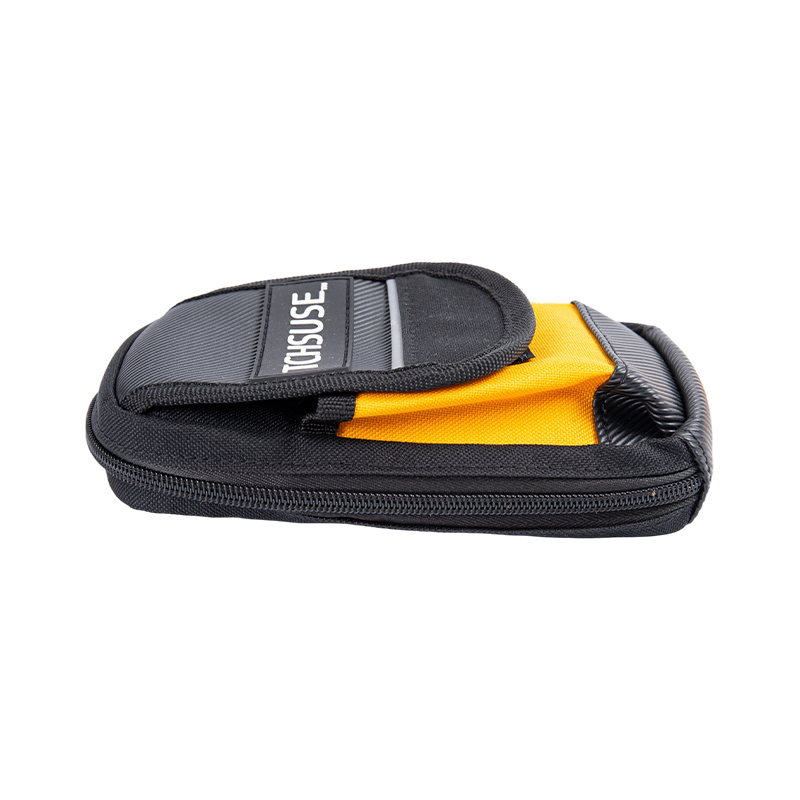 600D Multi-Tool Waist Bag for Light Tool CarryThis compact waist bag keeps essential tools close to your center of gravity, reducing the need for heavy side pouches. Its adjustable webbing and straps help fine-tune balance, preventing the bag from sliding and destabilizing your setup.View Product →
We also recommend checking the attachment system of your pouch. Velcro straps and adjustable webbing allow you to fine-tune the balance. If the pouch slides around the belt, it will destabilize the whole setup.
Rethink What You Carry and How
Sometimes the most effective fix is to reduce the load itself. A heavy tool belt full of screwdrivers, pliers, and impact drivers is hard to keep in place no matter what you do. Take a few minutes to sort your tools and keep only the ones you use regularly. For larger tools, consider moving them to a tool backpack or a rolling tool bag that you can set down near the task.
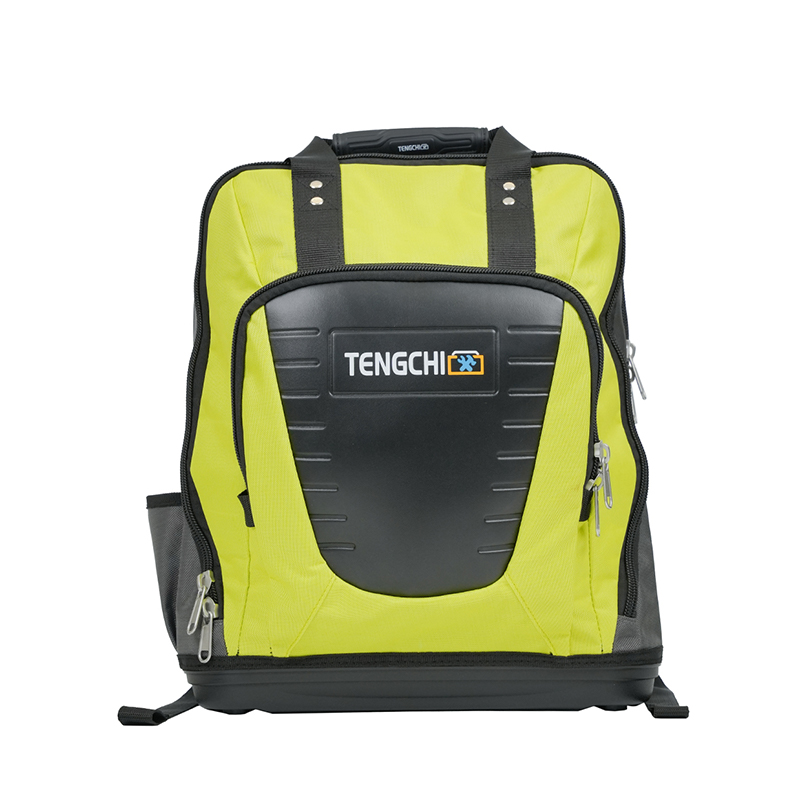
When you do need to carry a full kit, a molded-base tool backpack places the weight on your shoulders and back instead of your waist. This eliminates the sliding problem entirely, while keeping your tools organized and easily accessible. Many electricians and technicians already use this setup for daily carry.
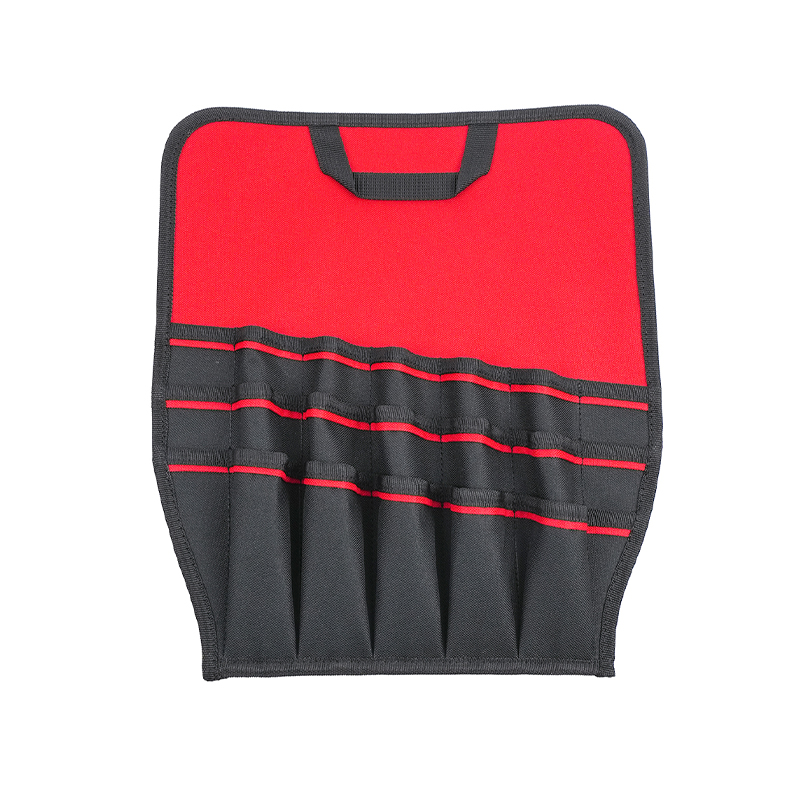 14-Inch Plastic-Bottom Tool Backpack for Full Kit TransportDesigned for high-frequency mobile tasks, this backpack shifts tool weight to your shoulders and back instead of your waist, eliminating sliding problems. Its plastic base stands firmly on rough surfaces while multi-layer partitions organize tools for quick access.View Product →
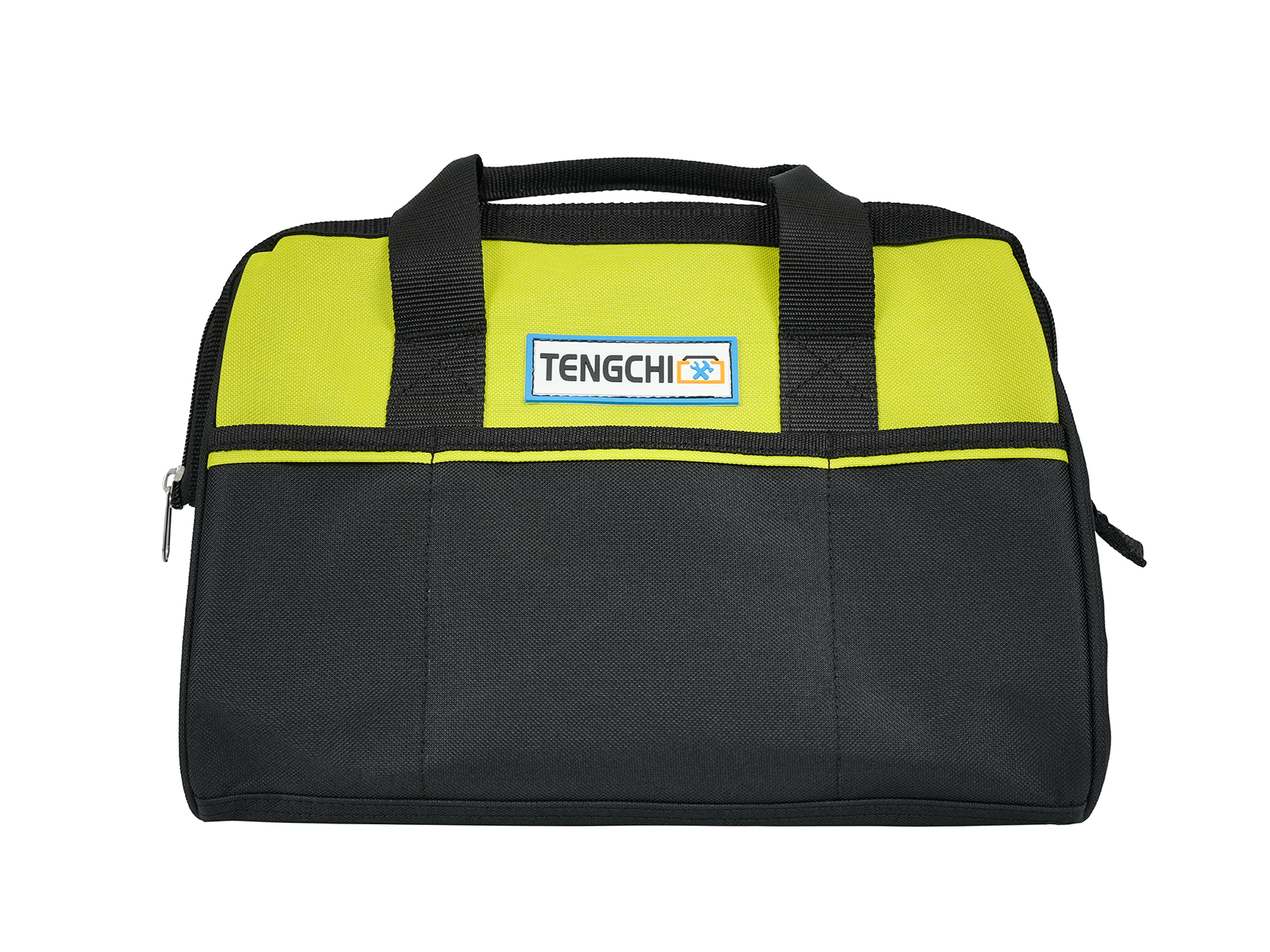
For quick access jobs, an open-top tool bag can also reduce the temptation to overload your belt. You can carry the bag to the work area, set it down, and grab tools as needed. This keeps your waist free and stops the belt from dragging your pants down.
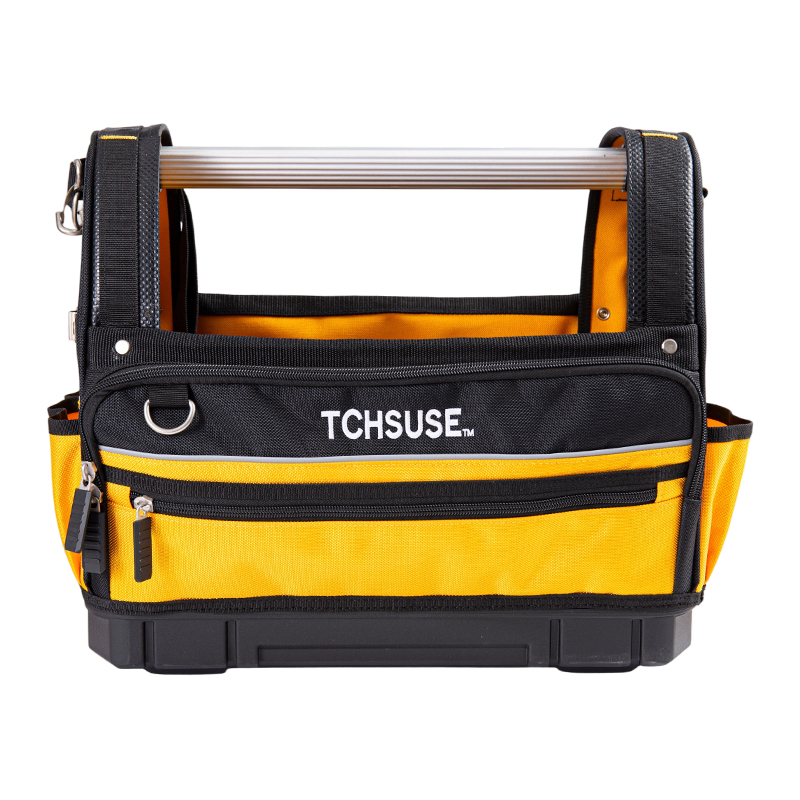
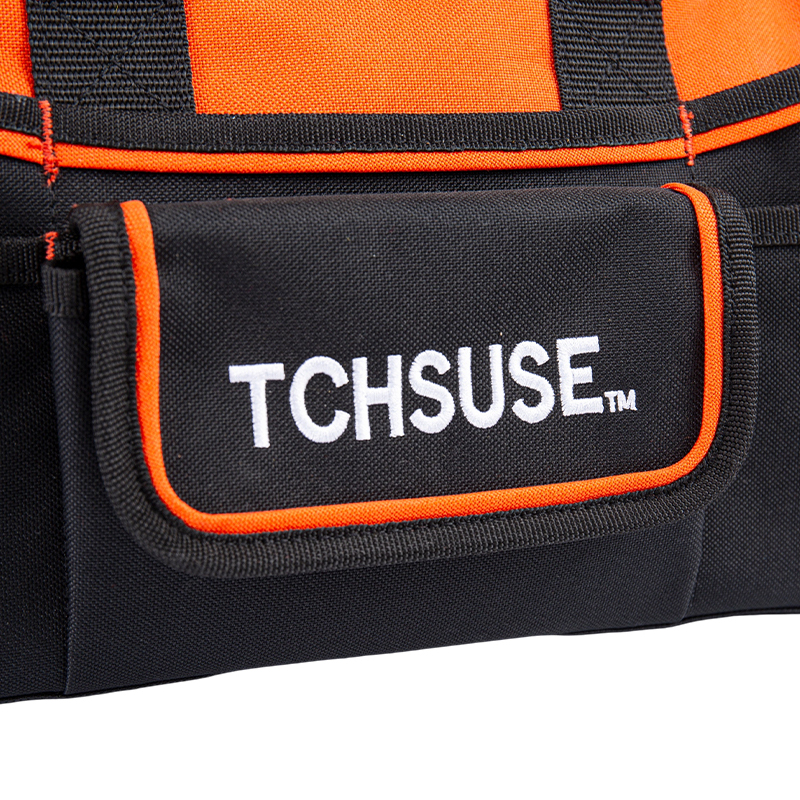 13-Inch Open-Top Tool Bag for Quick Tool AccessThe open-top design lets you see and grab tools immediately, making it ideal for work-area placement rather than waist carry. Reinforced 600D fabric and a sturdy base keep it durable when loaded, helping you avoid overloading your belt.View Product →
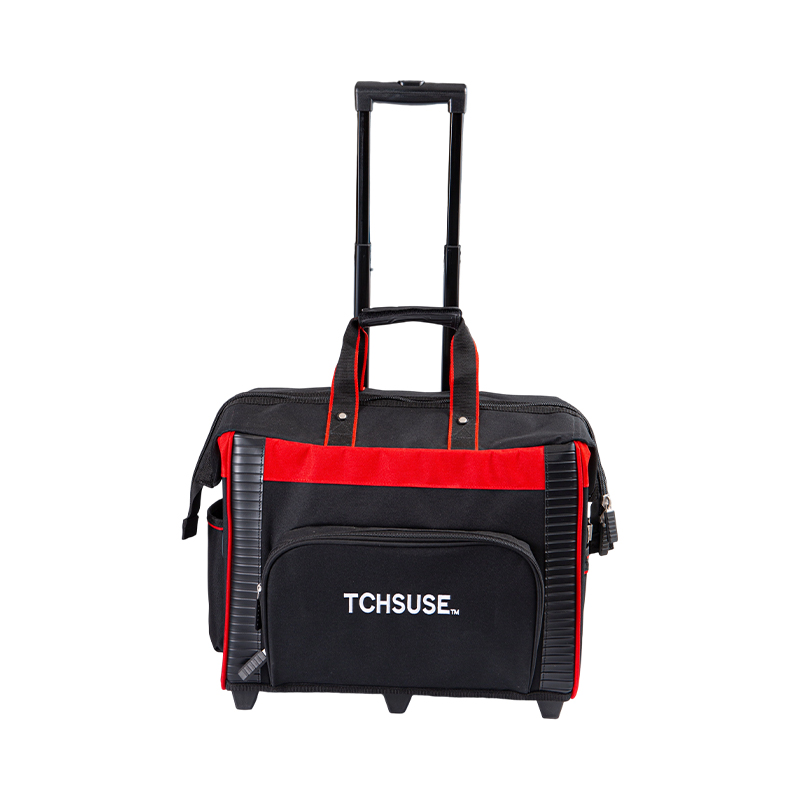
If you often switch between tasks, think about a rolling tool bag for the bulk of your equipment, and only wear a light waist bag for the few tools you need every five minutes.
Quick Comparison of Common Fixes
Here is a quick summary of the main approaches and their pros and cons.
| Solution | Best For | Effort | Effectiveness |
|---|---|---|---|
| Adjust belt height and fit | Light to medium loads | Low | Moderate |
| Wear suspenders/braces | Heavy pouches, all-day use | Medium | High |
| Use a non-slip or padded belt | Most workers | Low | High |
| Switch to a waist bag | Minimal tool needs | Medium | High |
| Use a backpack or rolling bag | Large tool kits | Medium | Very High |
Final Thoughts
Stopping your tool belt from sliding down is mostly about matching the right tool holder to the job. Start with the simple fixes: wear the belt higher, tighten it properly, and keep the load light. If that is not enough, add suspenders or switch to a waist bag, backpack, or rolling system.
As a professional tool bag manufacturer, we have seen how a well-fitted setup improves both comfort and safety. By understanding your tools and work habits, you can eliminate the constant tugging and get back to focusing on the task. Try the solutions above, and you will find the one that keeps your belt where it belongs.
Related Products

Yancheng Tengchi Tourism Products Co., Ltd. It is dedicated to
designing and producing high-quality tool bags, including
heavy-duty electrician bags.
Experienced staff and experts are always available to provide
you with professional guidance and solutions to technical
problems.
- Product
- Tool Bag
- Tool Backpack
- Capabilities
- Capabilities
- Custom
- About US
- About Tengchi
- Certification
- Quick Connect
- Custom
- Capabilities
- Contact



