
Email: [email protected]

 English
  español
Industry News
Tool Belt Bag Guide: Types, Features & How to Choose
 2026.03.11
 Industry News
A tool belt bag is a wearable carrying system that combines a waist belt with one or more attached pouches, pockets, or bags, allowing tradespeople to keep frequently used tools immediately accessible without returning to a toolbox. The right tool belt bag dramatically reduces wasted movement, improves job site safety, and is particularly critical for ladder and elevated work where descending to retrieve a forgotten tool costs time and creates fall risk with every unnecessary climb.
For workers on ladders — electricians, painters, HVAC technicians, roofers, and general contractors — tool belt bag selection requires additional consideration beyond standard trade use. The weight distribution, belt width, pouch depth, and attachment system all affect balance, fatigue, and safety when working at height. A poorly chosen tool belt bag that shifts weight to one side or catches on ladder rungs is not just inconvenient — it is a fall hazard. This guide covers every key factor in selecting, configuring, and using tool belt bags effectively, with specific guidance for ladder work.
Types of Tool Belt Bags: Matching the Style to the Job
Tool belt bags are not a single product — the category spans several distinct configurations, each suited to different trades, tool loads, and working conditions. Choosing the wrong configuration is one of the most common mistakes tradespeople make when equipping themselves.
Apron-Style Tool Belt
The apron-style belt sits at the waist with a flat leather or nylon panel that drops over the front of the thighs. Pockets and loops are distributed across this front panel. It is the lightest and simplest configuration — ideal for carpenters, framers, and finish tradespeople who need a concentrated selection of frequently used tools (hammer, pencil, measuring tape, screws) in a flat layout. Apron belts typically weigh 0.5–1.5 kg loaded and maintain a relatively flat profile that does not protrude significantly from the worker's body — an advantage on ladders where lateral clearance is limited.
Pouch and Bag Combination Belt
The most versatile configuration for professional tradespeople — a wide, padded belt with multiple separate pouches and bags attached at configurable positions. Individual pouches snap, clip, or thread onto the belt and can be rearranged or removed based on the day's tasks. Electricians typically run a deep multi-pocket pouch on the dominant side, a smaller secondary pouch on the opposite side, and a drill holster. Plumbers add fitting bags. Fully loaded combination belt systems can weigh 5–9 kg, making suspension harness support important for full-day use.
Open-Top Tool Bag Belt
Open-top bags — deep, bucket-like pouches that allow quick retrieval of a large number of tools at once — are preferred by electricians and cable installers who carry many small items (wire nuts, connectors, cable ties, strippers) along with larger tools. These bags offer maximum capacity but shift weight away from the body and can be difficult to use on ladders where the bag's bulk may contact the ladder rails. For ladder use, open-top bags should be positioned behind the hip rather than directly at the front or side where they interfere with rung contact.
Suspender (Rig) System
Suspender systems add shoulder straps to the belt, distributing the tool weight across the shoulders and torso rather than concentrating it on the hip. For heavy loads exceeding 4–5 kg, a suspender system dramatically reduces lower back and hip fatigue compared to a waist belt alone. The trade-off is that suspenders add bulk to the upper body, which can limit range of motion and make it more awkward to lean against a ladder. Many experienced tradespeople use suspenders for ground-level work but remove them and work with a reduced tool selection when on ladders.
Specialty Ladder Bags
Some manufacturers produce tool bags specifically designed for ladder use — they hang over a ladder rung rather than attaching to a belt, providing a stable tool platform at working height. These bags are not worn but are repositioned as the worker moves up or down the ladder. They are particularly useful for painters, window installers, and gutter workers who make many small repeated movements on the ladder and benefit from having tools close at hand without weight on their body.
Key Materials: What Your Tool Belt Bag Is Made Of Matters
The material determines durability, weight, weather resistance, and how well the bag maintains its shape under load. Professional tradespeople subject their tool bags to significant daily abuse — abrasion against rough surfaces, exposure to moisture, concrete dust, oil, and the constant weight of heavy tools.
| Material | Durability | Weight | Weather Resistance | Best For |
|---|---|---|---|---|
| Top-grain leather | Excellent (10–20 yr) | Heavy | Good (treated) | Carpenters, framers, premium trade use |
| Ballistic nylon (1000D) | Very Good (5–10 yr) | Light–Medium | Very Good | Electricians, HVAC, general trade |
| Polyester (600D–900D) | Moderate (3–5 yr) | Very Light | Good | Light-duty, painters, occasional use |
| Canvas (waxed) | Good (5–8 yr) | Medium | Moderate–Good | Woodworkers, general contractors |
| Ripstop nylon | Good (abrasion limited) | Very Light | Very Good | Lightweight ladder work, service technicians |
Leather vs. Nylon for Professional Use
The leather vs. nylon debate in professional tool belts is often framed as tradition versus modernity, but the real distinction is load capacity and abrasion resistance. Full-grain leather maintains structural integrity when sharp tools press against it from the inside — a screwdriver or chisel that would eventually tear through a nylon pouch bottom will leave leather intact for years. However, leather adds significant weight — a leather apron belt can weigh 0.8–1.2 kg before any tools are loaded, compared to 0.2–0.4 kg for an equivalent nylon design. For ladder work where every kilogram of carried weight increases fatigue and fall risk, this weight difference is meaningful over a full working day.
Belt Width, Padding, and Back Support
The belt itself — separate from the pouches — is the structural foundation of the entire system. Belt quality is frequently the component that limits the service life and comfort of an otherwise good tool bag setup.
Belt Width and Load Distribution
Belt width determines how the load transfers to the body. Narrow belts (50mm / 2 inches) concentrate pressure on a small area of the hip — acceptable for light loads up to 3 kg but cause significant hip pressure and discomfort at heavier loads. Wide belts (100–125mm / 4–5 inches) distribute the load across a larger contact area and incorporate a padded kidney section that protects the lumbar spine from tool weight leverage. For any tool system expected to exceed 3–4 kg total loaded weight, a wide padded belt is not optional — it is the difference between an all-day tool belt and one that causes pain by noon.
Ladder-Specific Belt Considerations
When working on ladders, the tool belt must not extend so far from the body that it contacts ladder rungs during climbing — this is a trip hazard. Wide padded belts with rear pouches are particularly problematic on standard extension ladders where the worker's back is close to the rails. Key guidelines for ladder-compatible belt configuration:
- Avoid rear-mounted pouches when working on extension ladders — move all pouches to the front and sides
- Keep total lateral protrusion from belt to outer pouch edge under 100–120mm (4–5 inches) to maintain comfortable contact with ladder rails
- Use slim-profile pouches that orient tools vertically rather than horizontally to minimize lateral bulk
- Secure all pouch lids and zippers before climbing — open pouches can snag on rungs
Pocket Layout and Organization for Different Trades
The internal organization of tool belt bags — pocket count, pocket depth, specialized holders, and loop placement — should match the specific tools carried for the trade. A generic tool belt bag that does not match the actual tool mix creates fumbling, inefficient retrieval, and the temptation to overload the wrong pockets.
Electricians
Electricians typically carry a large number of small items alongside larger tools. Ideal pouch configuration: one deep main pocket (200–250mm depth) for wire nuts, connectors, and loose materials; multiple narrow pockets sized for individual tools (pliers, strippers, voltage tester); dedicated loops for screwdrivers; a side pocket for a measuring tape; and a zip pocket for small parts like screws and wire clips. Many electricians add a separate material bag for pulling wire that clips to the belt when needed.
Carpenters and Framers
Carpenters need a hammer loop or dedicated slot positioned at the dominant thigh, a nail/fastener pocket or bag with a metal grommet at the bottom for drainage, a pencil holder, a speed square pocket, and loops for a tape measure. Framing carpenter tool belts tend to be wider and heavier-duty than finish carpenter setups — a framer carries significantly more nails and a heavier hammer than a finish carpenter, so load capacity and belt stiffness are priorities.
Plumbers
Plumbers need wide, deep pockets for fittings and pipe couplings, a dedicated knife pouch, loops for channel-lock pliers and pipe wrenches, and ideally a material bag or fitting pouch that can be removed and left at the work area without carrying the entire belt. Plumber tool belts are frequently subjected to water and chemical exposure, so material selection (nylon over leather) and metal hardware quality (stainless or anodized) matters significantly.
Painters and Decorators
Painters on ladders typically carry a minimal tool kit — putty knife, scraper, caulk gun, brush pockets, and a small pocket for sandpaper and spackle. For painters, weight minimization is the top priority — a painter on a ladder works with arms raised for extended periods, and any waist weight adds to overall physical load. A lightweight apron or minimal nylon pouch system is preferred over a heavy professional rig. Painters frequently use ladder-hung bags that hold paint pots and tools at working height instead of wearing heavy belt systems.
Weight Management: How Much Is Too Much for Ladder Work
Tool belt weight is one of the most underappreciated factors in occupational health and safety for tradespeople. Carrying excessive weight on a tool belt all day contributes to lower back injury, hip joint degradation, and — specifically for ladder workers — increased fall risk due to fatigue-related loss of balance and coordination.
Research published in occupational health literature indicates that tool belt weights commonly reach 7–11 kg in fully loaded professional configurations. The effects are cumulative: a worker who carries 8 kg on their belt for an 8-hour shift is effectively walking with a significant additional load on their lower body throughout the day, before accounting for tools carried in hand or materials being moved.
Recommended Weight Limits for Ladder Use
- Light ladder work (stepladder, short duration): Up to 4 kg total belt weight is manageable for most adults without significant fatigue or balance compromise
- Extended ladder work (extension ladder, multiple hours): Limit to 3 kg or less — use tool hoisting to bring up additional items rather than carrying everything at once
- High ladder or roof work (above 4 meters): Minimize belt weight to essential tools only — plan tasks to reduce the number of climbs rather than increasing the tool load per climb
Weight Distribution and Balance
For ladder work, symmetric weight distribution is more important than absolute weight. A tool belt with 3 kg on the dominant side and 0.5 kg on the non-dominant side creates significant lateral imbalance that forces the climber to compensate with core muscles and can cause an involuntary lean on the ladder. Aim for equal weight distribution within 20% between left and right sides. On ladders, even slight imbalance is amplified because the narrow stance width (ladder rungs are typically 350–400mm wide) provides minimal lateral stability compared to normal standing.
Practical tip: weigh each side of your loaded belt separately using a luggage scale before climbing. Many experienced tradespeople discover their belt is far more asymmetrically loaded than they perceived — often by 1.5–2 kg difference between sides.
Tool Belt Safety Considerations for Ladder Work
Tool belts and ladders interact in ways that create specific safety risks not present in ground-level work. Understanding these risks drives better equipment choices and work practices.
Tool Drop Prevention
A tool dropped from a ladder is a serious hazard to anyone below — OSHA data indicates that struck-by injuries from falling objects account for approximately 8% of construction fatalities. Tool belt bags must securely retain tools during climbing. Key features that prevent tool ejection:
- Lip retention: Stiff pocket openings with a forward-curved lip that prevents tools from falling out when the worker bends or the pouch shifts position during climbing
- Elastic retention straps: Loops or straps that secure individual tools (especially heavy items like voltage testers, pliers, and hammers) to the pouch
- Zipper compartments: For small items (screws, wire nuts, connectors) that could fall out of open-top pockets when the body is angled during climbing
- Tool tethers: Retractable tether attachments (sold separately and attached to high-value or critical tools) provide a secondary retention system for the most hazardous drop scenarios
Snag and Catch Hazards on Ladders
Protruding tools, dangling loops, open pouches, and long lanyards on a tool belt can catch on ladder rungs or side rails during climbing, causing an unexpected jerk or stop that throws the climber off balance. Before ladder work:
- Remove or tightly secure any tool that protrudes more than 150mm above the pouch top
- Close all zipper pockets and snap all flap closures
- Tuck or remove any loose straps, loops, or lanyards not in active use
- Do a full rotation check — stand in place and fully rotate your torso to confirm no pouch element extends beyond your body profile in a way that would contact ladder sides
Fall Protection Compatibility
Workers using fall protection systems (harnesses, lanyards) on ladders must ensure their tool belt does not interfere with harness geometry or attachment points. A wide, padded tool belt worn over a fall arrest harness can shift the harness leg straps and alter the harness's load distribution in an arrest event. The tool belt should be worn on top of the fall arrest harness, never underneath it, and should not obscure or block access to the harness's dorsal D-ring or chest D-ring that connect to the fall arrest lanyard.
How to Configure a Tool Belt Bag for Ladder Work Specifically
A tool belt that works well on the ground often needs reconfiguration for ladder use. Many experienced tradespeople maintain two configurations — a full setup for ground and floor work, and a reduced "ladder kit" with only what's essential for elevated tasks.
- Start by listing only the tools needed for the specific task above. The goal is to carry only what is actually required for the work at height. Tools that are only needed at the bottom of each run (marking tools, cutters for wire lengths, etc.) can be left at the base.
- Position all pouches to the front and non-dominant side. Rear-mounted pouches contact the ladder or shift your center of mass backward during climbing. Front and side positioning keeps weight forward and reduces the risk of snagging on rails.
- Weigh the configured belt before use. Use a luggage or kitchen scale to verify the total weight is within your planned limit for the height and duration of ladder work planned. Adjust by removing tools until weight is appropriate.
- Secure every pouch and pocket. Walk around, bend over, and simulate climbing movements on the ground to confirm no tools shift, protrude, or fall out before ascending.
- Use a tool bucket or hoisting system for additional items. A five-gallon bucket with a hook, a dedicated tool bucket hanger, or a rope-and-hook hoist system allows you to bring up additional tools without carrying them on your body — significantly reducing belt weight while maintaining access to a full set of tools when needed at height.
- Consider a ladder-mounted accessory bag as an alternative. For tasks requiring many small items (screws, anchors, caulk tubes, brushes), a bag that hangs over a ladder rung keeps tools immediately accessible without belt weight. Many painters and tile installers use this as their primary tool-access method at height.
Top Tool Belt Bag Features to Look For When Buying
With hundreds of tool belt bag options on the market at price points from $15 to $300+, the following features separate quality professional products from budget options that fail quickly under daily trade use:
- Riveted or bar-tacked stress points: High-stress areas (pocket bottoms, loop attachments, D-ring mounts) must be reinforced with metal rivets or bar-tacked stitching — plain stitching alone tears out within months under heavy tool loads.
- Metal grommet drainage holes: Tool bags collect sawdust, water, and debris at the bottom. Metal grommets allow cleaning and drainage; solid bottoms trap moisture that rots material from inside.
- Quality buckles and hardware: Plastic buckles on work belts fail under sustained load — look for metal quick-release buckles or heavy-duty Duraflex/ITW hardware rated for the expected load. The belt closure is a single point of failure for the entire system.
- Modular attachment system: Pouches that connect to the belt via loops, clips, or a dedicated rail system rather than being permanently attached allow you to reconfigure the setup for different tasks — including reducing to a minimal ladder kit from a full-service configuration.
- Adjustable belt range: Verify the belt adjustment range covers your waist size with PPE (if worn) and work clothing — a belt that fits barely at maximum adjustment will be too tight by midday as clothing shifts.
- Tool-specific holders within pouches: Individual molded slots for common tools (pliers, voltage testers, markers) allow faster retrieval and prevent tools from tangling together at the bottom of a generic open pocket.
- Padded back panel on wide belts: For belts wider than 75mm, a padded back panel with lumbar contouring significantly improves all-day comfort and reduces the point pressure that causes hip bruising from prolonged wear of stiff leather belts.
Maintenance and Care to Extend Tool Belt Bag Life
A quality professional tool belt bag represents a significant investment — top-tier leather or premium nylon systems from brands like Occidental Leather, CLC, or DeWalt Professional cost $80–$300. Proper maintenance extends service life and maintains safety performance.
- Empty and shake out debris weekly: Sawdust, concrete dust, and fine particles trapped in pockets abrade both the bag material and tool finishes from inside. A quick inversion and shake takes 30 seconds and prevents significant wear accumulation.
- Condition leather belts quarterly: Untreated leather dries, cracks, and loses structural integrity in outdoor conditions. Apply a leather conditioner (neatsfoot oil, mink oil, or purpose-formulated leather conditioner) to all leather components every 3 months or after significant water exposure.
- Inspect stitching and rivets monthly: Check all high-stress attachment points for broken threads, loose rivets, or developing tears. Early repair of failing stitching (with a heavy-duty awl and waxed thread) is far cheaper than replacing a pouch.
- Store away from UV and heat: Nylon degrades significantly with prolonged UV exposure, and heat above 60°C can soften or warp plastic hardware. Store belts inside the vehicle or in shade rather than in truck beds or on exterior hooks.
- Replace worn hardware promptly: A buckle or D-ring showing deformation, cracking, or seizure should be replaced before it fails at a critical moment — particularly for ladder work where a belt separation while climbing could cause a fall.
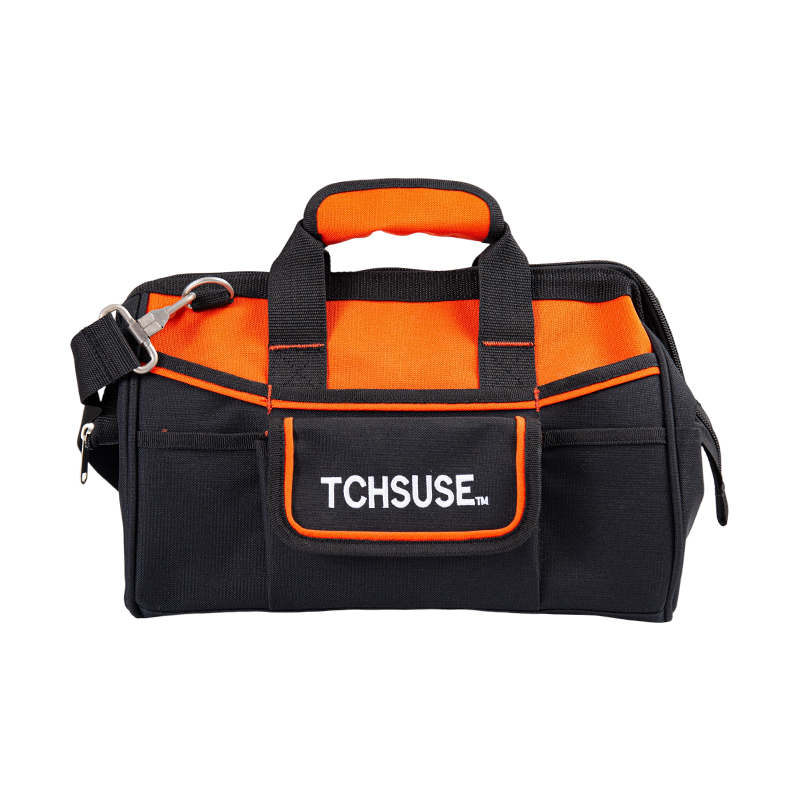
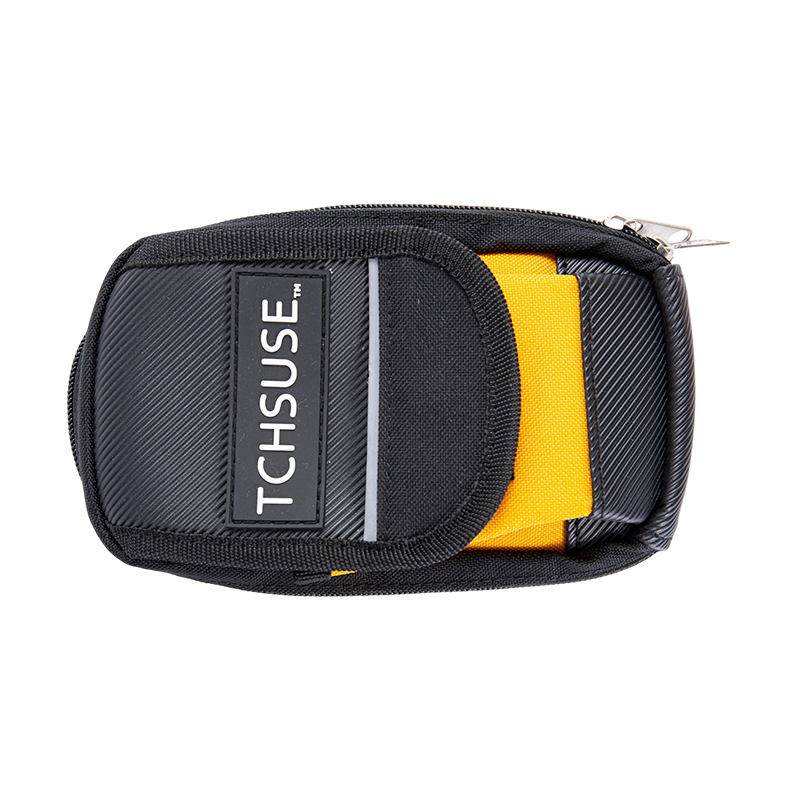

Yancheng Tengchi Tourism Products Co., Ltd. It is dedicated to
designing and producing high-quality tool bags, including
heavy-duty electrician bags.
Experienced staff and experts are always available to provide
you with professional guidance and solutions to technical
problems.
- Product
- Tool Bag
- Tool Backpack
- Capabilities
- Capabilities
- Custom
- About US
- About Tengchi
- Certification
- Quick Connect
- Custom
- Capabilities
- Contact



