
Email: [email protected]

 English
  español
Industry News
HOME / NEWS / Industry News / How to Make a Canvas Tool Bag: A Step-by-Step Guide from a Manufacturer
HOME > NEWS > Industry News > How to Make a Canvas Tool Bag: A Step-by-Step Guide from a Manufacturer
How to Make a Canvas Tool Bag: A Step-by-Step Guide from a Manufacturer
 2026.09.23
 Industry News
Ask anyone on our factory floor in Yancheng what makes a dependable tool bag, and the answer almost always begins with the fabric. We have spent more than fifteen years cutting, stitching, and assembling canvas tool bags for professional buyers around the world, and along the way we have learned precisely where a bag succeeds and where it fails. If you have ever wondered how to make a canvas tool bag, whether as a weekend DIY project or simply to understand what you are sourcing, this guide explains the process the way we would walk a visitor through it at a cutting table.
Why Oxford Canvas Is the Backbone of a Good Tool Bag
When people picture canvas, they often imagine the heavy cotton duck of an old work apron. In modern tool bag manufacturing, though, the material of choice is usually polyester oxford canvas. It is measured in denier (D), where a higher number means thicker, stronger yarns. We build most bag bodies from 600D oxford because it is light, flexible, and remarkably tear-resistant, while 1680D oxford, which is thicker and far more abrasion-resistant, goes into bases and other panels that take punishment. Most quality oxford also carries a PU or PVC coating on the reverse side, which repels water and gives the fabric enough body to hold its shape even when the bag is empty.
Cotton canvas can still work for a hobby project, but for a bag that will carry wrenches, drills, and testers day after day, coated oxford simply outlasts it in strength, water resistance, and ease of cleaning.
| Fabric Weight | Characteristics | Where We Use It |
|---|---|---|
| 600D oxford | Lightweight, flexible, tear-resistant, easy to stitch | Bag bodies, pockets, waist bags |
| 1200D oxford | Denser weave with extra abrasion resistance | Reinforced panels and high-wear zones |
| 1680D oxford | Thickest and toughest, often PVC-coated for waterproofing | Heavy-duty bases, waterproof bags, backpacks |
Materials and Tools You Will Need
Before you cut a single panel, gather everything in one place. A missing item mid-project is how corners get cut.
- Coated oxford canvas: 600D for the body and pockets, 1680D for the base panel
- Bonded nylon or heavy-duty polyester thread in a #69 weight, which holds up under load
- 25 mm to 38 mm nylon webbing for handles
- A zipper, a drawstring cord with grommets, or extra webbing loops for the closure
- A rigid plastic board or molded base insert if you want a structured bottom
- A heavy-duty sewing machine, ideally with a walking foot, plus fabric shears, a measuring tape, and sewing clips
One honest warning from experience: household machines often choke when stitching through several layers of 1680D. If yours struggles, sew the body from 600D and reserve the thick fabric for flat base panels only.
How to Make a Canvas Tool Bag, Step by Step
With materials ready, the build itself is straightforward. These are the same stages our production line follows, scaled down for a single bag.
- Plan and cut your panels. Sketch the bag first. A 14-inch-wide, 10-inch-tall, 8-inch-deep bag is a forgiving starting size. Cut the front, back, side, and base panels with a 1.5 cm seam allowance, then cut your pocket panels while everything is still flat.
- Reinforce the base. Fold a second layer of fabric over the base panel or slip a cut plastic board between layers, then stitch the bottom corners into a box shape so the bag stands on its own.
- Assemble the body. Sew the side and bottom seams with the right sides together, then add a second row of stitching a few millimeters out. That double line is the cheapest insurance against blown seams.
- Build the pockets. Inside, add elastic loops and dividers for pliers and screwdrivers; outside, a bellows pocket with a flap keeps small parts from wandering.
- Attach the handles. Wrap the webbing down the side panels and under the base so the load travels through the whole bag, then secure each junction with a box-X stitch.
- Install the closure. A zipper across the top keeps dust out, a drawstring through grommets cinches quickly, and an open throat favors speed when your hands are gloved.
- Finish like a professional. Bind every raw edge, bar-tack each stress point, trim the threads, and turn the bag right side out for a final inspection.
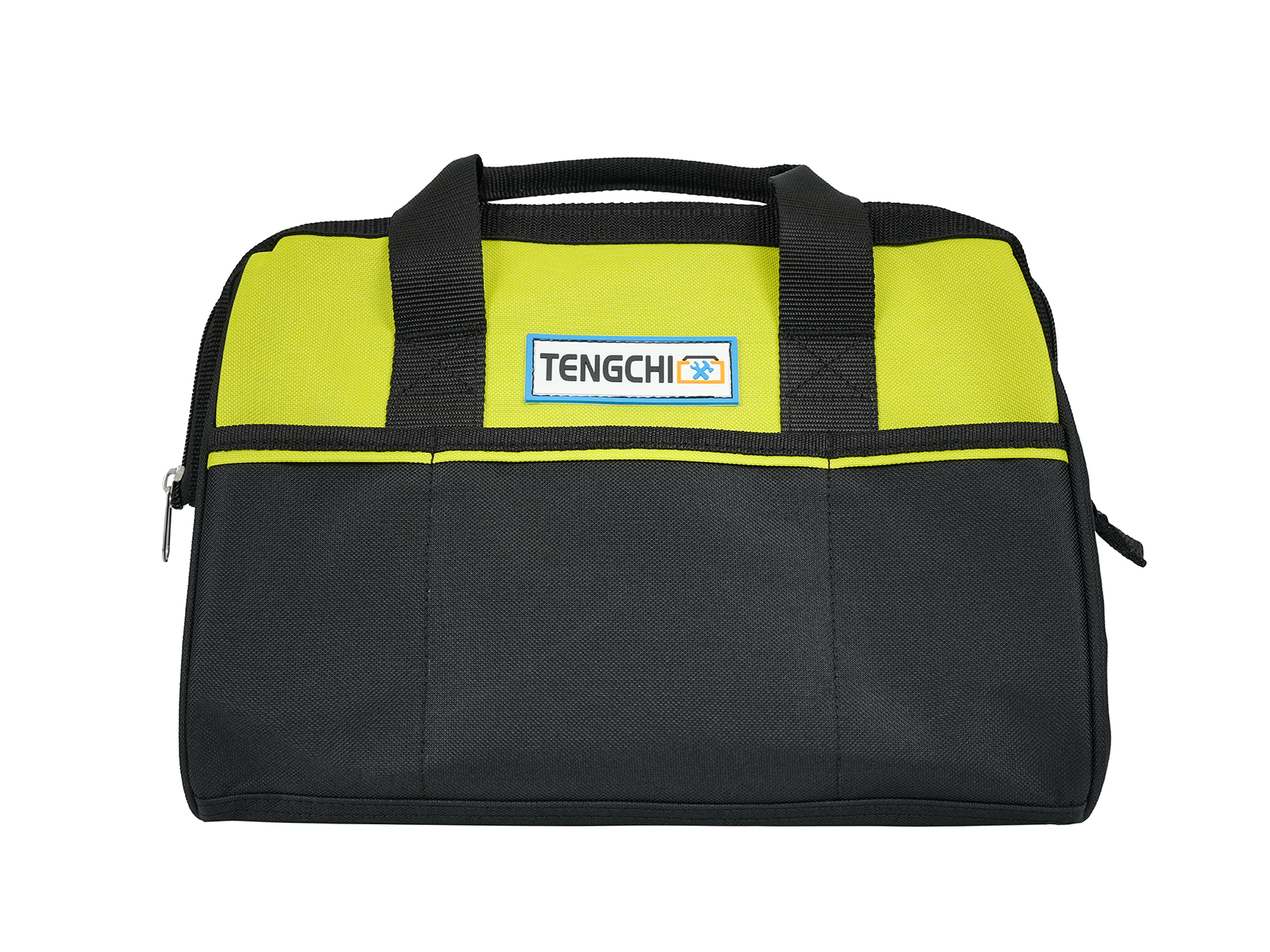
If you would like to see this quick-access structure done commercially, the bag below from our open-top line follows exactly this recipe: a 600D oxford body, webbing handles, and a base panel that holds its shape.
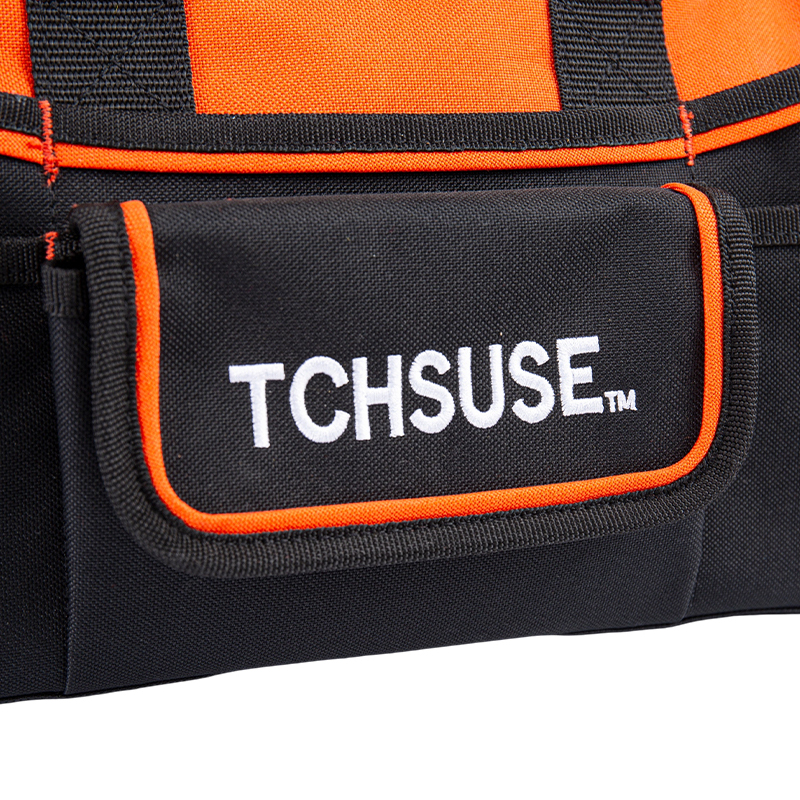 13-Inch 600D Oxford Open-Top Tool BagThis open-top bag pairs a 600D oxford body with webbing handles and a shape-holding base, illustrating how the quick-access structure described earlier is executed commercially.View Product →
The Details That Separate Homemade from Factory-Built
Three construction details decide whether a handmade bag reads amateur or professional, and each one is easy to overlook.
A Base That Takes the Beating
The ground on a jobsite is rarely kind: wet concrete, gravel, metal debris. That is why so many of our bags, backpacks and hand carriers alike, use a molded plastic base rather than a plain fabric bottom. It keeps the bag upright, shields the contents from moisture, and spreads the load instead of letting the fabric bear it alone. DIY builders can approximate this with a stiff plastic insert, though a true molded base also protects the outer corners from abrasion.
Pocket Layouts Born from Real Jobsites
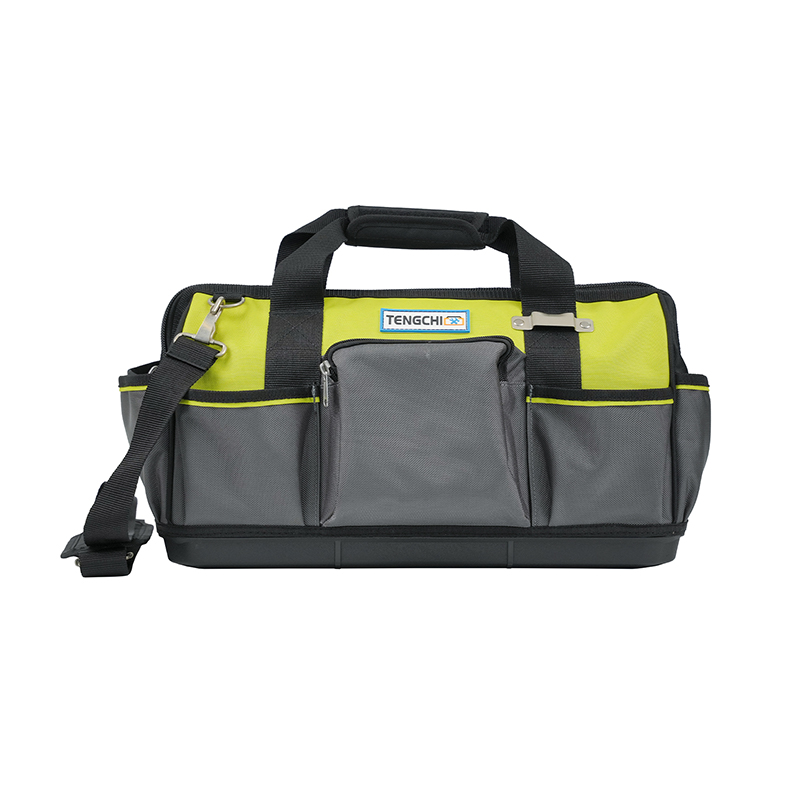
Pocket layout is not decoration; it is workflow. Electricians we work with favor open-top designs because they can pull a tester by feel without looking, while maintenance technicians prefer defined loops so every tool has one home. Before you sew a single pocket, lay your actual tools on the panel and arrange them by frequency of use. The multi-pocket bag below shows how a disciplined layout keeps a dozen tools within reach of one hand.
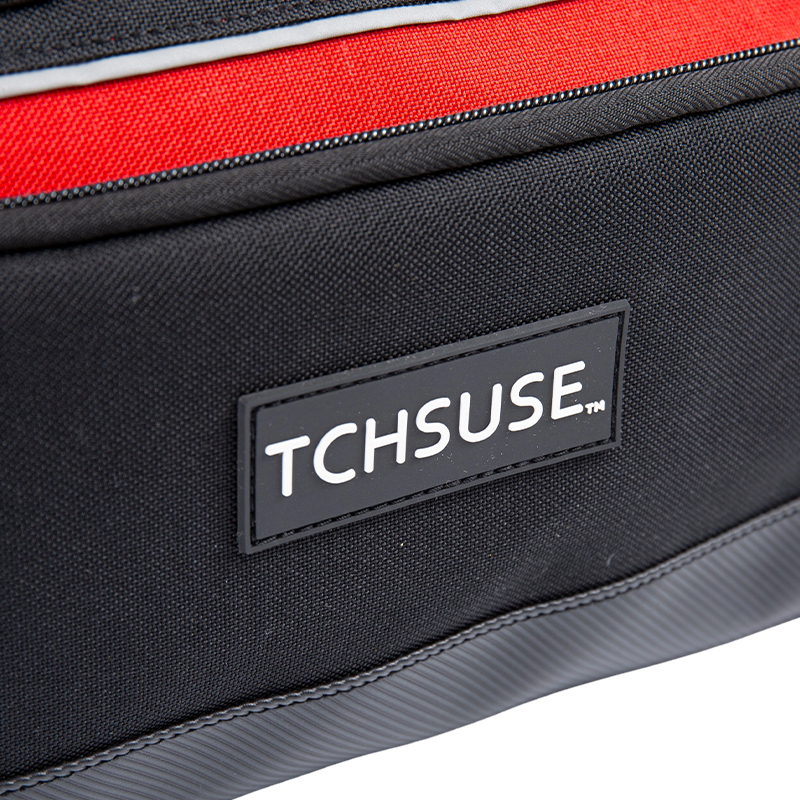 14-Inch and 16-Inch 600D Multi-Pocket Tool BagBuilt from abrasion-resistant 600D oxford with layered pockets and loops, this bag shows how a disciplined layout keeps frequently used tools organized and within one hand's reach.View Product →
Handles and Stitching You Can Trust
A filled bag can easily weigh more than twenty kilograms, so handles deserve engineering, not afterthoughts. We wrap handle webbing fully under the base, double-stitch every pass, and on larger bags fit a steel tube handle over a plastic bottom for a grip that will not fold under load. The folding steel-handle bag below shows how that system works in a compact footprint.
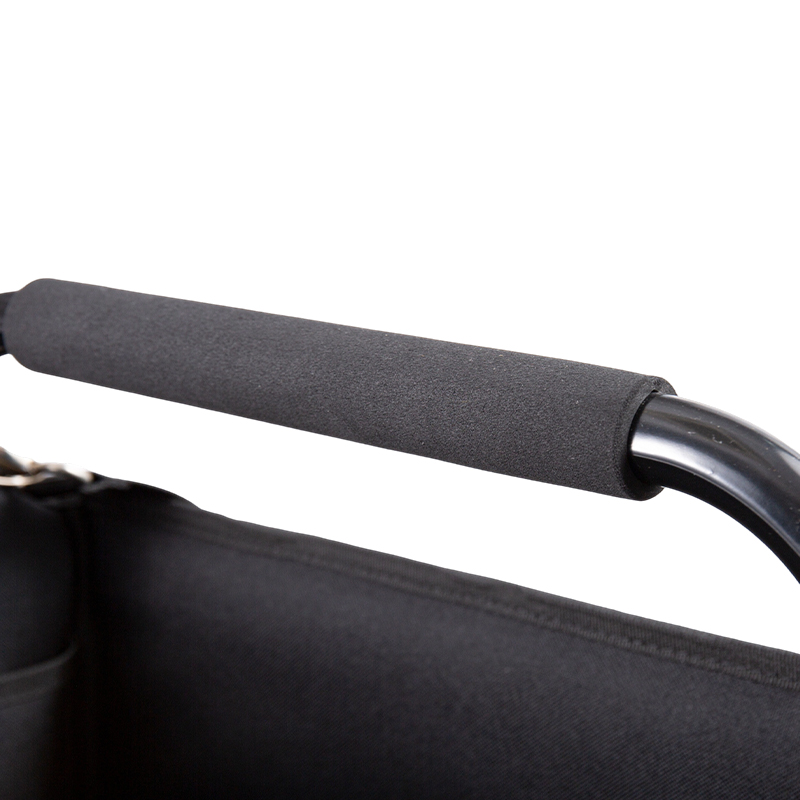 18-Inch 600D Folding Steel-Frame Tool BagWith webbing wrapped under the base, a steel pipe frame, and a plastic bottom, this folding bag demonstrates the engineered handle system that keeps heavy loads from folding the grip.View Product →
When to Make It Yourself and When to Work with a Manufacturer
For a single bag, perhaps a gift for a colleague or a personal shop organizer, making it yourself is genuinely rewarding, and you control every stitch. The economics change completely, however, when you need dozens or thousands of units with identical dimensions, consistent seam strength, matched coatings, and your logo in the right place every time. That level of consistency is exactly what a factory exists to deliver.
This is the work we do every day at our 25,000-square-meter facility in Yancheng, where certified production lines turn out oxford tool bags and backpacks for brands, distributors, and retailers worldwide. Custom sizes, fabric weights, pocket configurations, and branding are all part of our routine. If you are weighing which construction suits your customers best, our guide to different types of tool bags breaks the options down clearly, and you can browse our complete range of tool bags and tool backpacks to see how each design is built.
Keeping Your Finished Bag in Service
Whether the bag comes off your own machine or our production line, care is the same. Brush out metal dust and debris after each use, let the bag air dry fully before storage, and skip the washing machine, which can strip the protective coating from the oxford. A touch of wax on the zipper keeps it sliding smoothly for years.
A good canvas tool bag is really four things working together: the right fabric, a layout shaped by real work, a base built for rough ground, and stitching that does not shy away from weight. Get those right, by hand or with our help, and the bag will outlast the project you built it for. If you would like a design reviewed or a custom run quoted, our team is always happy to talk.

Yancheng Tengchi Tourism Products Co., Ltd. It is dedicated to
designing and producing high-quality tool bags, including
heavy-duty electrician bags.
Experienced staff and experts are always available to provide
you with professional guidance and solutions to technical
problems.
- Product
- Tool Bag
- Tool Backpack
- Capabilities
- Capabilities
- Custom
- About US
- About Tengchi
- Certification
- Quick Connect
- Custom
- Capabilities
- Contact



