
Email: [email protected]

 English
  español
Industry News
HOME / NEWS / Industry News / How to Clean a Tool Bag: Material-Specific Steps and Long-Term Care Tips
HOME > NEWS > Industry News > How to Clean a Tool Bag: Material-Specific Steps and Long-Term Care Tips
How to Clean a Tool Bag: Material-Specific Steps and Long-Term Care Tips
 2026.09.16
 Industry News
Most tradespeople treat a tool bag as a portable workbench rather than a piece of equipment. It gets thrown into the back of a van, set down on wet concrete, and packed with tools that still carry dust and grease from the job. Over time, that grime does more than make the bag look rough. It works into zippers, stiffens heavy-duty fabrics, traps moisture against steel handles, and gives dirt a way to transfer onto clean surfaces. This guide explains how to clean a tool bag safely, using methods matched to the materials it is made from, so the bag stays presentable and functional for years.
Why Cleaning a Tool Bag Matters More Than It Looks
A clean tool bag does not just protect the bag itself. Abrasive dust caught in the fabric can rub against a precision tool and leave fine scratches. A dirty handle transfers oil and debris to your hands before you open a customer’s door. Moisture left in the bottom of the bag encourages flash rust on steel tools and corrosion on plated surfaces.
The fabric and stitching also carry an unnecessary load when grit works into seam roots. Dirt acts like sandpaper on the thread, especially along the bottom edge where the bag flexes as you lift it. Keeping the base and lower side panels free from debris preserves the bag’s shape and makes it easier to reach for the correct tool without digging through a layer of grime. For the same reason, how you arrange the interior matters just as much as how often you wash it.
Before You Clean: Empty, Inspect, and Identify the Material
Empty every pocket, including internal slip pockets and elastic tool holders. Turn the bag upside down and shake out loose debris, then use a vacuum nozzle or a dry brush for particles that cling to seams. Check the label or the product listing for the base material and fabric type. Most professional tool bags are built from 600D, 1200D, or 1680D oxford polyester, sometimes with PVC vinyl panels and a molded plastic base. Each material reacts differently to heat, solvent, and abrasion.
Whether your bag has a soft fabric bottom or a molded plastic-base tool bag design, the base determines how much dirt and moisture it absorbs. A simple rule is to treat the structure as carefully as the fabric: do not soak a plastic base for long periods, and do not bake a polyester bag in the sun.
Common Materials and Safe Cleaning Methods
| Material | Safe cleaning method | Avoid | Drying note |
|---|---|---|---|
| 600D / 1200D oxford polyester | Warm water, mild dish soap, soft brush | Bleach, fabric softener, hot dryer | Air dry without direct sunlight |
| 1680D polyester | Warm soapy water, diluted vinegar for stains | Abrasive pads, solvent-based cleaners | Air dry and wipe base separately |
| PVC / vinyl | Warm soapy water and a damp cloth | Acids, alkaline cleaners, bleach | Wipe dry, do not soak |
| Plastic / molded base | Warm water, mild all-purpose cleaner, sponge | Solvents, harsh scouring pads | Wipe dry before storing |
Use the chart as a starting point, not a universal rule. If the bag has care instructions printed on an internal tag, follow those instructions first.
How to Clean a Tool Bag: Step-by-Step Instructions
This routine works for a bag that needs more than a quick wipe-down. It assumes the bag is empty and the loose dirt has already been brushed or vacuumed away.
Step 1: Spot-Treat Stains
Mix a few drops of mild dish soap into warm water, or make a paste with baking soda and a little water for grease marks. Apply the paste with a soft brush, rub in small circles, and leave it for 10-15 minutes. For tar or dried oil, apply a small amount of dish soap directly to the stain and let it sit before brushing.
Step 2: Scrub the Fabric by Hand
Fill a bucket with warm water at 30-40°C, warm to the touch but not steaming, and add a small amount of mild laundry detergent or dish soap. Work from the top of the bag toward the bottom using a soft-bristle brush. Pay extra attention to zipper tapes, handles, and lower corners, because those areas collect the most grime. For PVC or vinyl panels, use a sponge rather than a brush to avoid scratching the surface.
Step 3: Clean the Base and Hardware Separately
If the bag has a molded plastic base, wipe it with a damp cloth and a mild cleaner instead of submerging the whole bag. Water can pool in the seam between the fabric and the plastic base, so keep that joint as dry as possible.
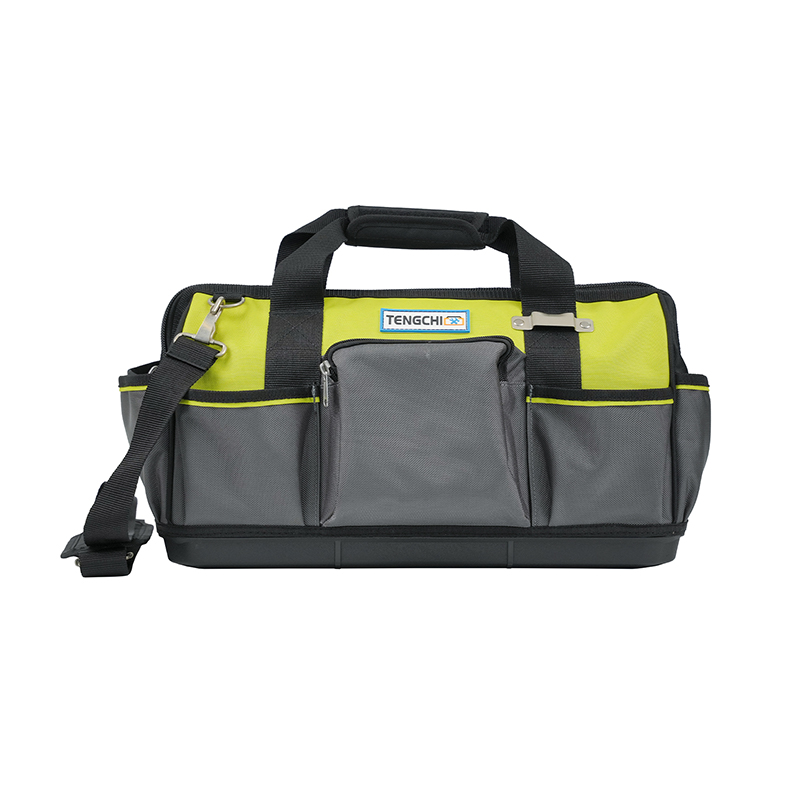
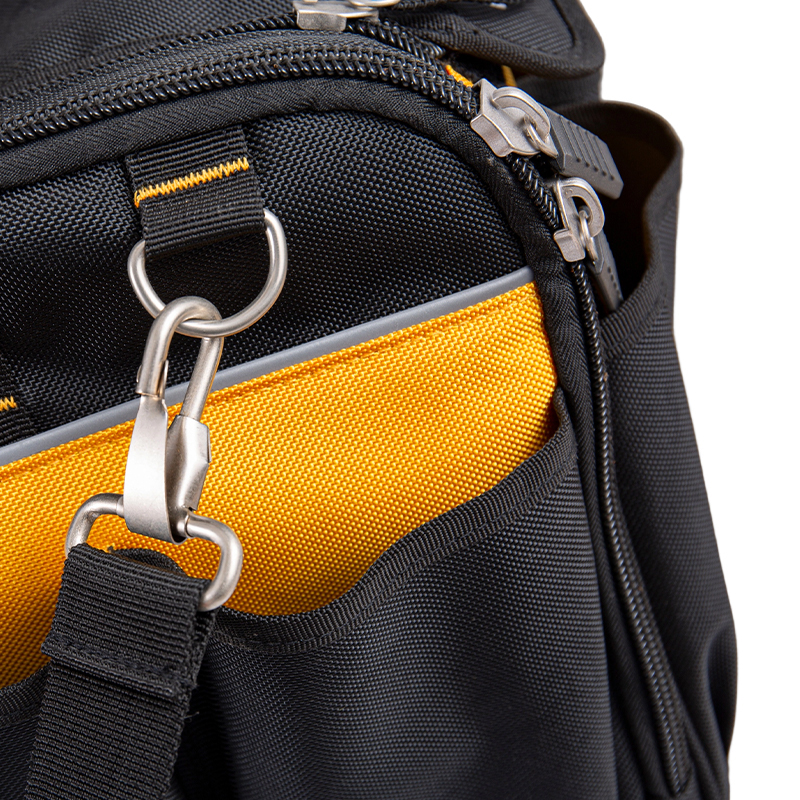 17-inch and 20-inch 1680D Tool Bag with Molded Plastic BaseThis series pairs high-density 1680D Oxford fabric with a rigid plastic bottom that resists water absorption, making it easier to clean and dry. Ideal for construction, electrical, and maintenance work where tools need protection from damp surfaces.View Product →
Plastic-bottom tool bags, like the 17-20 inch 1680D model, are common on job sites because the base does not soak up water the way a fabric bottom does. If you are used to washing a fully fabric bag, you will notice that a molded base needs less time to dry and less effort to clean.
Step 4: Rinse and Remove Soap Residue
Use a clean cloth dipped in fresh water to wipe off all soap residue. Pay special attention to the inside of pockets and the area around zipper sliders. Detergent left in the fabric will attract dust and can irritate your skin when you reach into the bag.
Step 5: Air Dry in the Right Position
Squeeze excess water out without twisting or wringing the bag. Open every zipper and pocket, stuff the main compartment with dry cloths or crumpled newspaper to hold its shape, and place the bag in a shaded, well-ventilated area. Do not use a dryer, a heater, or direct sunlight. High heat can shrink polyester, fade colors, and make a molded plastic base brittle.
What Not to Do When Cleaning a Tool Bag
- Do not use chlorine bleach. It weakens threads and can discolor webbing and fabric.
- Do not machine wash unless the bag is completely soft-sided and the manufacturer allows it. Plastic bases, steel handles, and stiff frames can damage both the bag and the machine.
- Do not use fabric softener. It leaves a coating that attracts dust and makes the fabric surface more slippery for tools.
- Do not soak PVC-backed material or a molded base in water for an extended period.
- Do not use a pressure washer on zippers or around zipper sliders; water forced into the mechanism will wash out lubrication and may cause rust.
How to Keep a Tool Bag Clean Longer
Deep cleaning is easier when the bag does not get too dirty in the first place. At the end of a job, shake the bag upside down and wipe the base and handles with a damp rag. Keep the bag off wet concrete or bare ground; a shelf, a pallet, or a plastic mat in the van is enough to prevent most moisture damage.
If you often work in rain or near water, a waterproof upper reduces the amount of moisture that reaches the fabric. A waterproof tool backpack also makes it easier to keep the contents dry, which means less mud and condensation settling into the seams.
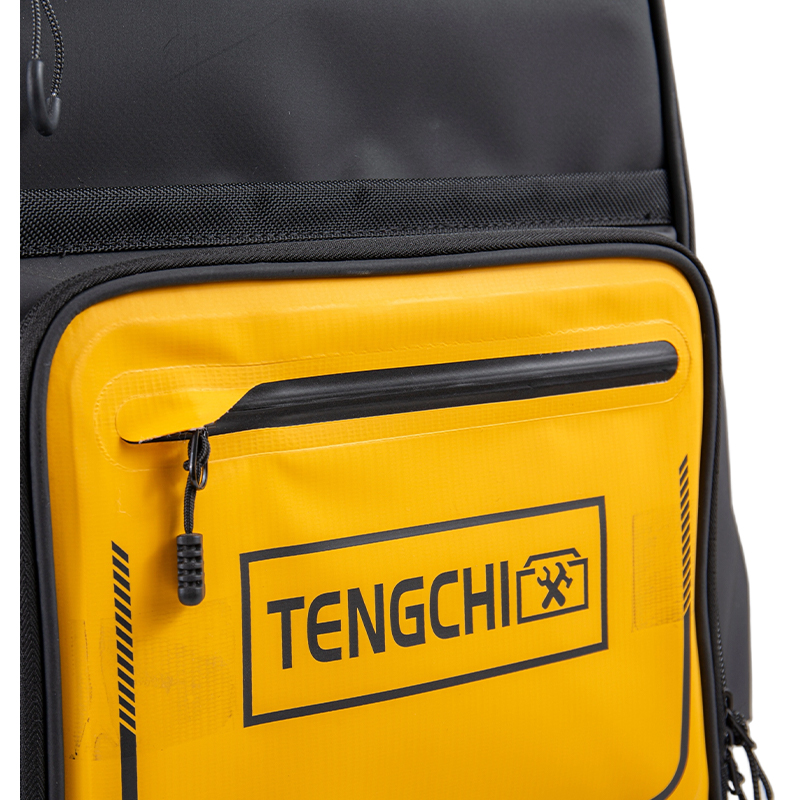 Thickened Waterproof 1680D Tool Backpack with Plastic BaseBuilt for wet or muddy conditions, this backpack uses 1680D fabric and a waterproof plastic base to keep contents dry. It includes a laptop compartment and organized pockets, suited for technicians and electricians who work outdoors.View Product →
For someone who carries tools outdoors, a 1680D waterproof backpack is a practical choice because the fabric sheds water and the plasticized interior can be wiped down after a wet day. Fewer moisture cycles mean the bag will need a deep cleaning less often.
When Cleaning Is Not Enough: Signs It Is Time to Replace
Even careful cleaning cannot repair structural damage. Check for the following after each deep clean:
- Split or opened seams where the bag meets the base
- Bent steel handles or a cracked plastic base
- Zippers that no longer close or catch fabric
- Persistent mildew smell after the bag has been dried completely
- Loose rivets or broken buckles on the shoulder straps or handle
If the bag fails any of these checks, replacing it is safer than trying to extend its life. For users who want quick access to tools and a surface that is easy to wipe down, an open-top bag with a plastic bottom is a direct alternative to a zippered design.
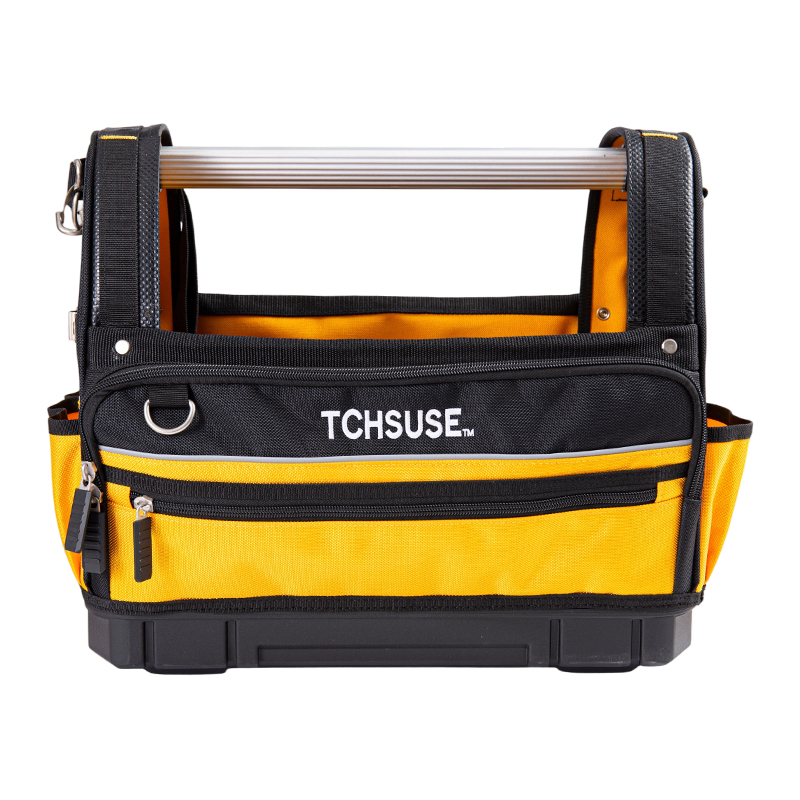
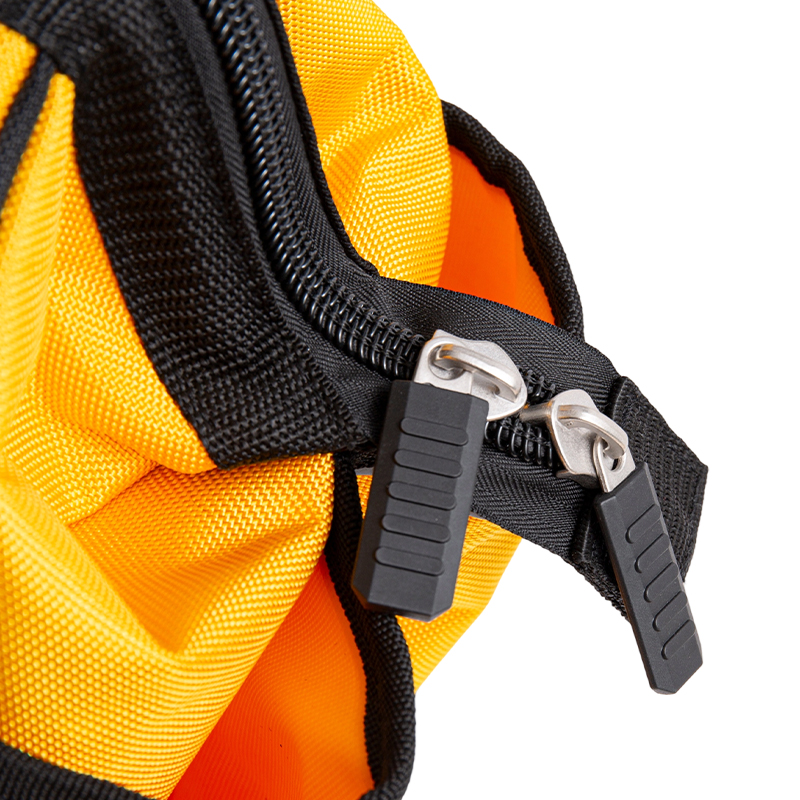 19-inch 1680D Open-Top Tool Bag with Hard Plastic BottomThe open-top design allows quick access and easy airing out, while the thickened plastic base provides stability on uneven ground and protects tools from moisture and impact. A practical choice for construction and maintenance sites.View Product →
An open-top tool bag eliminates the zipper as a failure point and makes the interior easier to air out after cleaning. The 19-inch 1680D plastic-bottom opening bag is a typical example: the molded base keeps the lower structure rigid, and the open top lets you brush out sawdust and debris without pulling tools through a narrow opening.
Clean a bag when it still has structural integrity, and replace it when those parts have worn out. That simple rule keeps your tools protected, your hands clean, and your day-to-day work more efficient.

Yancheng Tengchi Tourism Products Co., Ltd. It is dedicated to
designing and producing high-quality tool bags, including
heavy-duty electrician bags.
Experienced staff and experts are always available to provide
you with professional guidance and solutions to technical
problems.
- Product
- Tool Bag
- Tool Backpack
- Capabilities
- Capabilities
- Custom
- About US
- About Tengchi
- Certification
- Quick Connect
- Custom
- Capabilities
- Contact



