
Email: [email protected]

 English
  español
Industry News
HOME / NEWS / Industry News / Types of Tool Bags: Choosing the Right Tool Bag for Technicians & Trades
HOME > NEWS > Industry News > Types of Tool Bags: Choosing the Right Tool Bag for Technicians & Trades
Types of Tool Bags: Choosing the Right Tool Bag for Technicians & Trades
 2026.08.12
 Industry News
An electrician climbs a ladder with a tool backpack and keeps both hands on the rails. An appliance repair technician opens a wide-mouth tote and pulls out a multimeter without breaking stride. A maintenance crew rolls a wheeled bag across a plant floor because the motor and pipe wrenches are too heavy for a shoulder strap. The tools are similar; the tool bag type is different because the job demands it. The conclusion for both tradespeople and procurement teams is the same: choose a tool bag by matching carry style, capacity, and base construction to how and where the tools are used. For purchasing teams, that logic also determines the fabric, base structure, and hardware requirements that go into an OEM tool bag order.
Open-Top Tool Bags: Quick Access Without Extra Friction
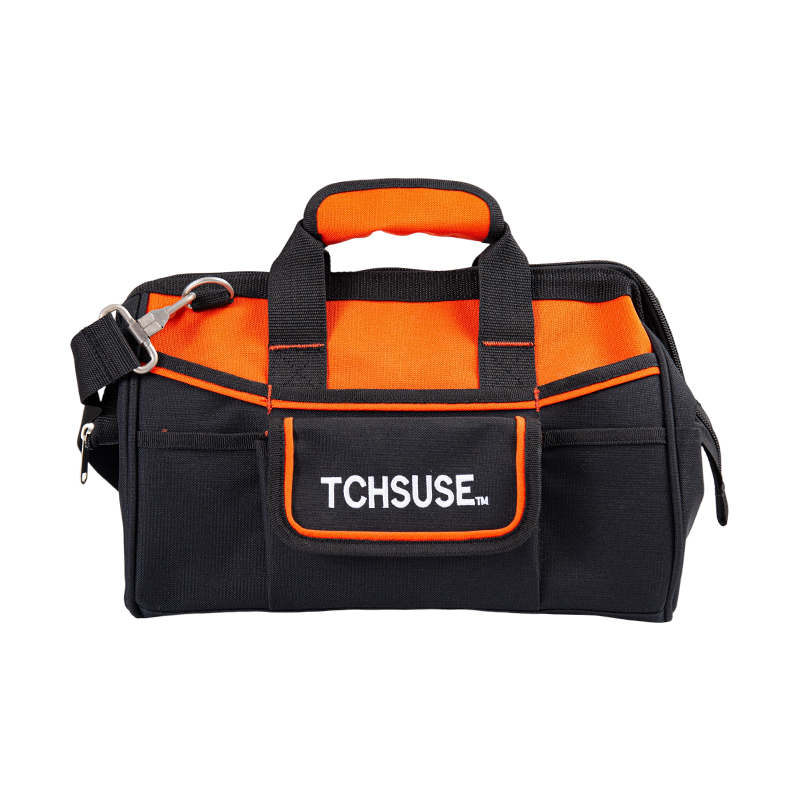
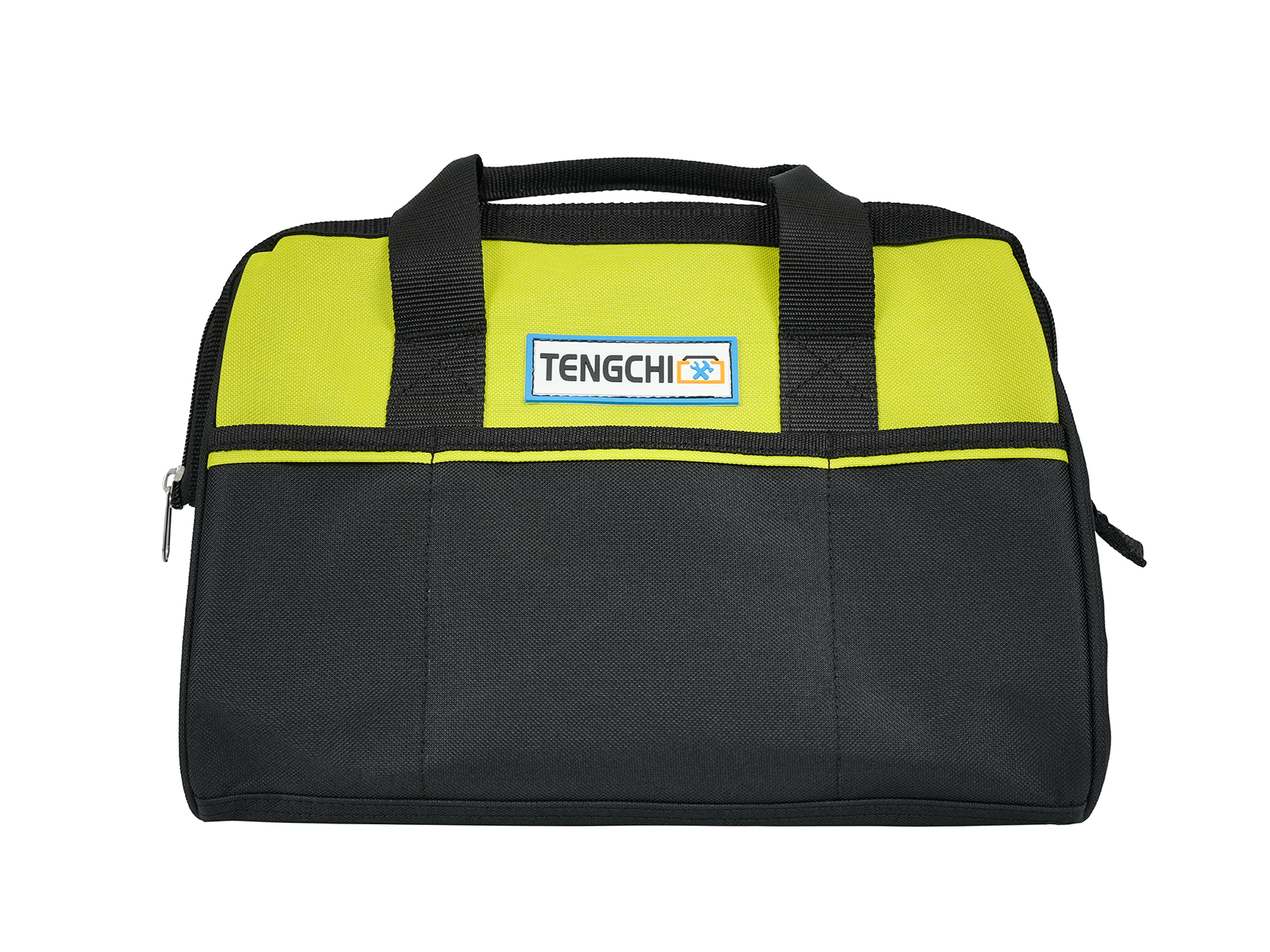
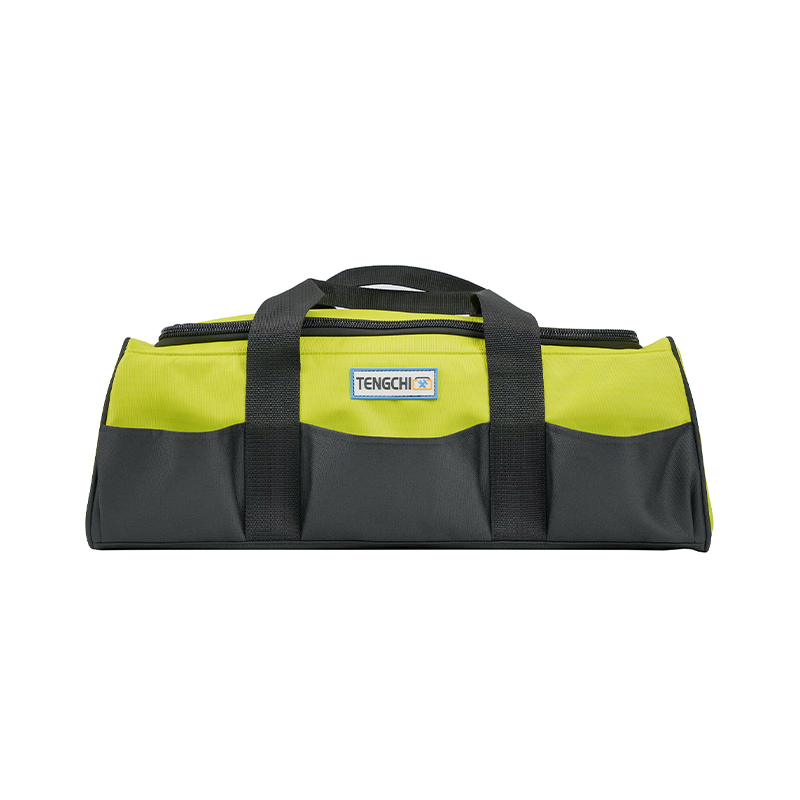
Open-top tool bags are the most direct category and usually the first choice for tradespeople who want immediate access. The top stays open, so you can reach in and grab a drill, level, or pliers without undoing a zipper or lifting a flap. Most open-top models sit between 11 and 22 inches and use 600D oxford polyester, a fabric weight that balances everyday durability with a reasonable price.
When speed matters, this design wins:
- Fastest access because there is nothing to unzip or unclip.
- A wide opening accepts bulky items such as hammers, levels, and cable reels.
- Simpler construction keeps the cost lower than structured or wheeled bags.
The trade-offs are real. Tools are exposed to dust and rain, and small items drift to the bottom unless the bag has interior pockets or removable inserts. For indoor finishing, drywall, and general carpentry, an open-top bag is often the best value, and a basic 600D open-top tool bag covers most of those jobs without extra cost.
 Open-top Tool BagThe open-top tool ba...View Product →
Technician Tool Bags: Organized Carrying for Service Work
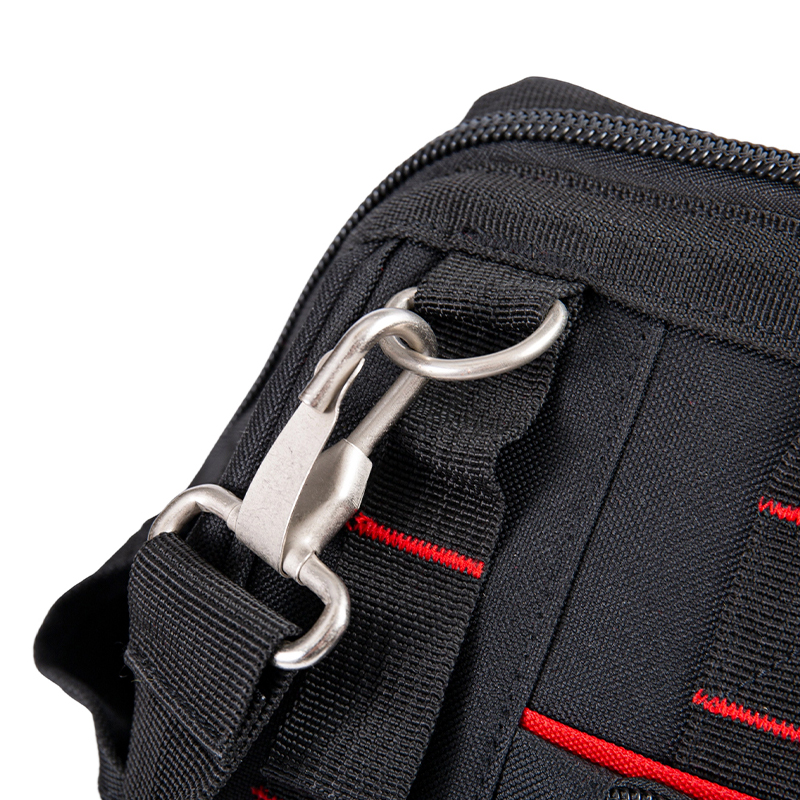
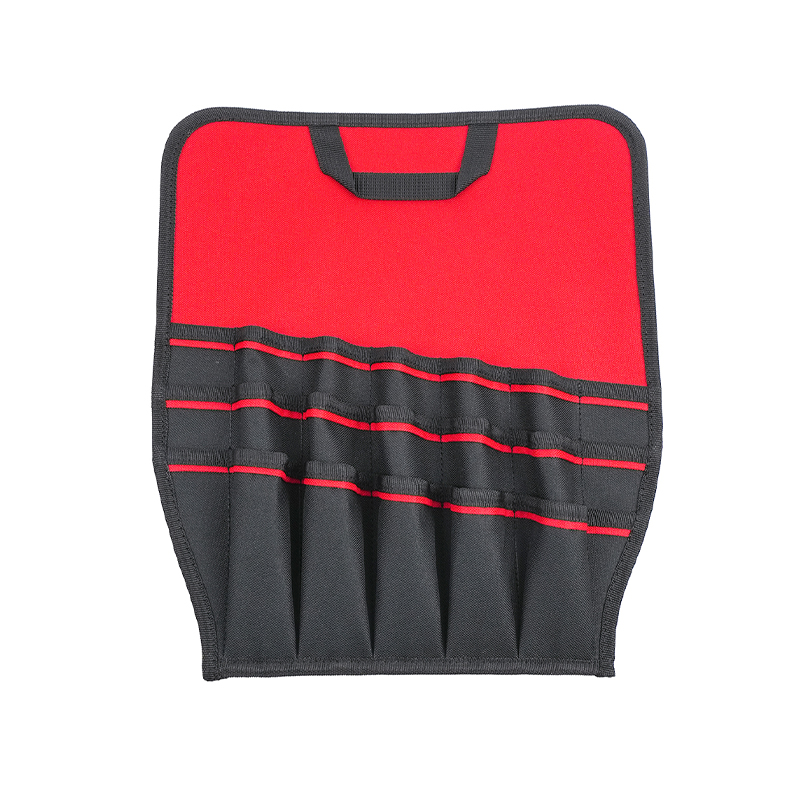
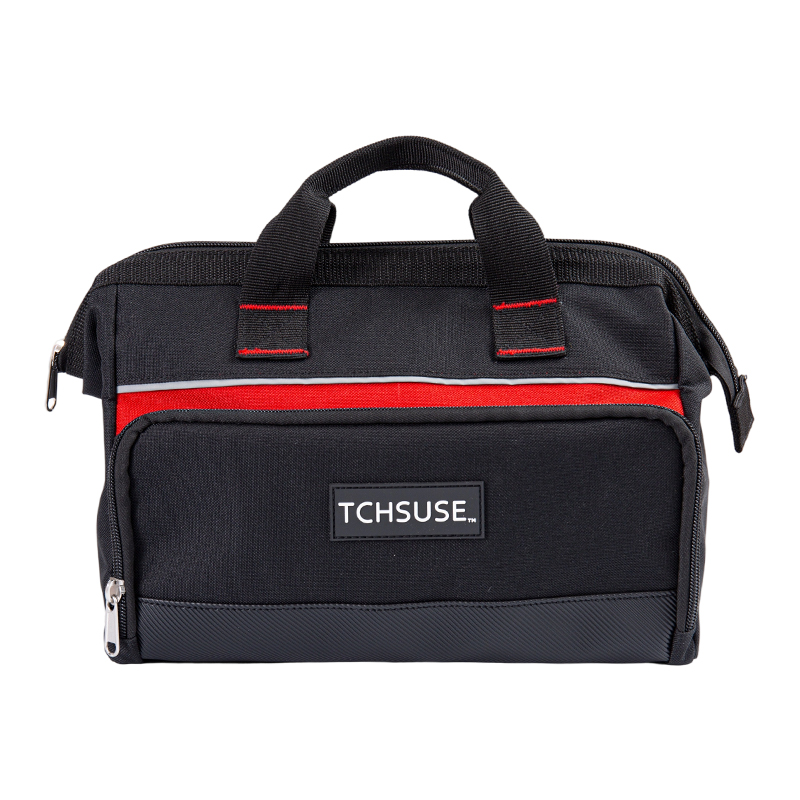
Technician tool bag is more than a label. It describes a multi-pocket, structured bag designed for people who carry a wide assortment of tools rather than a few large ones. A typical 17 to 18 inch technician bag has a reinforced plastic bottom, a padded handle, and divided compartments for screwdrivers, pliers, testers, fasteners, and small parts.
Service technicians in telecom, security, AV integration, and appliance repair rely on this layout because it keeps small items visible and stops them from sinking into a pile. The same reasoning explains why electricians favor heavy-duty electrician bags with dedicated sleeves: when you need a specific driver or tester, you want to see it, not dig for it.
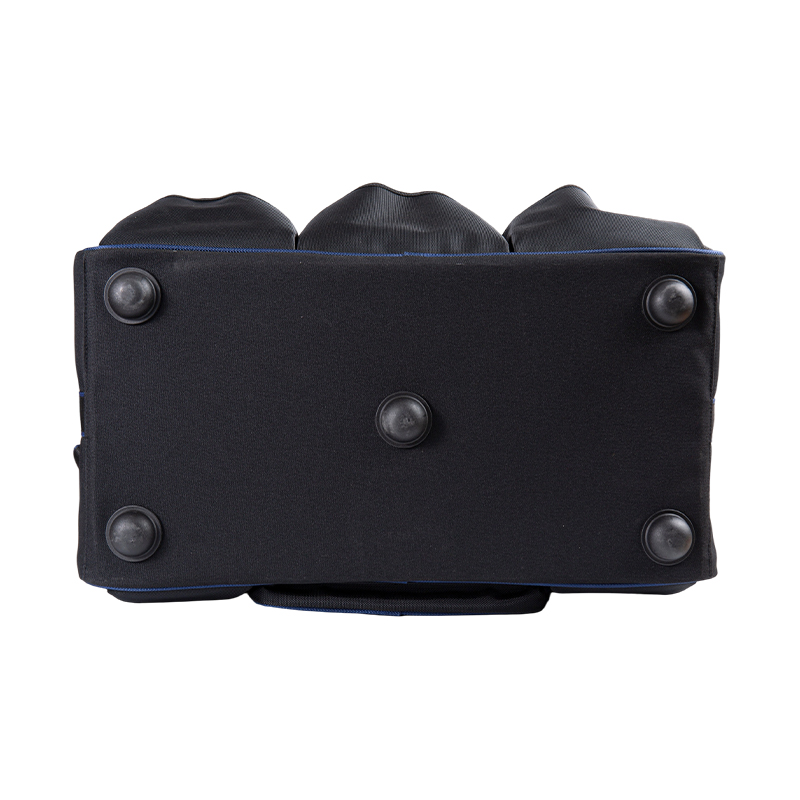
A plastic-bottom construction adds practical value here. The base keeps the bag upright on wet or uneven floors, protects the contents when set down hard, and prevents the fabric from sagging under load. A 17 to 18 inch plastic-bottom multifunction tool bag is the typical starting point for this kind of work.
 Multi-Purpose Tool BagThe versatile tool b...View Product →
Tool Backpacks: Hands-Free Carry for Ladders and Stairs
Tool backpacks solve the problem open-top bags cannot: hands-free carrying. When the route includes ladders, stairs, scaffolding, or rooftops, a backpack leaves both hands on the rail and shifts the weight to your back, which most people tolerate better than a one-sided shoulder load over a full day.
Molded-base tool backpacks are a key subcategory. A rigid plastic base holds the bag's shape when you set it down, protects tools from impact, and keeps the bottom away from wet ground. Most molded-base models in this segment are 14 inches tall and built from 600D or 1680D fabrics; the higher denier is worth it for harsh job-site conditions. For outdoor or wet-site work, a waterproof tool backpack with sealed construction is worth a separate evaluation.
A practical note: a backpack concentrates weight on your shoulders, so keep the inventory disciplined. It is the right choice when mobility matters more than raw capacity. For most electricians, low-voltage installers, and roof-adjacent trades, a 14-inch 600D multifunctional plastic-bottom tool backpack handles the daily load well.
 Molded Base Tool BackpackThe plastic bottom t...View Product →
Rolling Tool Bags: Capacity Without Shoulder Strain
When the inventory grows, carrying turns from a comfort issue into a safety issue. A fully loaded tote or backpack can exceed 20 kg, and pulling that weight on one shoulder is a fast route to fatigue. Rolling tool bags, typically 18 to 27 inches, add a pull rod and wheels so the load travels behind you instead of on you.
These bags suit mobile technicians who move between parking lots, buildings, and plant floors. The rolling frame also keeps everything in one organized unit rather than in several overflow totes. Rolling tool backpacks combine the trolley frame with a backpack shape, which helps when stairs are unavoidable: the frame takes the weight, and you lift only the bag body.
For a deeper look at wheel size, frame types, and weight-handling differences, see how to choose rolling tool bags.
Steel-Handle Tool Bags: Built for the Van and the Job Site
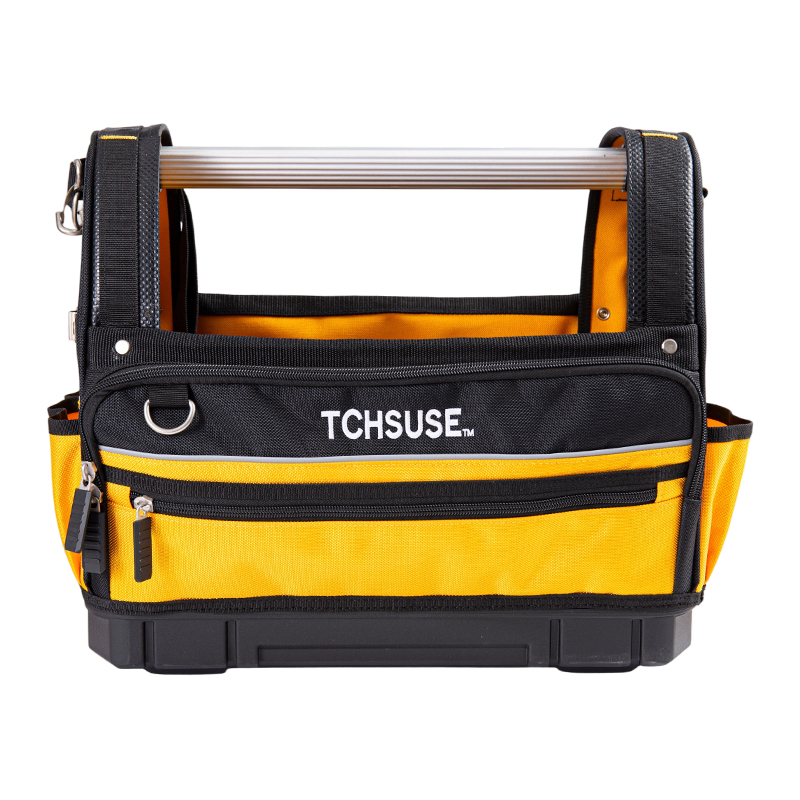
Steel-handle tool bags are the classic contractor tote. The defining structure is a rigid frame: a steel or steel-pipe handle attached to a plastic or molded base, with the fabric body between them. Sizes typically run from 17 to 20 inches. The frame keeps the bag open, so it does not slump when set down, and the metal handle makes it easy to pull the bag out of a truck bed or off a storage shelf with one hand.
Plumbers, electricians doing rough-in work, and general contractors favor this style because it survives being loaded into and out of service vans every day. With a 1680D body and a plastic base, these bags stay upright and keep their shape for years. If your daily route is van-to-site rather than site-to-site on foot, a steel-handle bag is usually a better investment than a soft tote.
Tool Belts and Waist Pouches: Keeping the Essentials at Hand
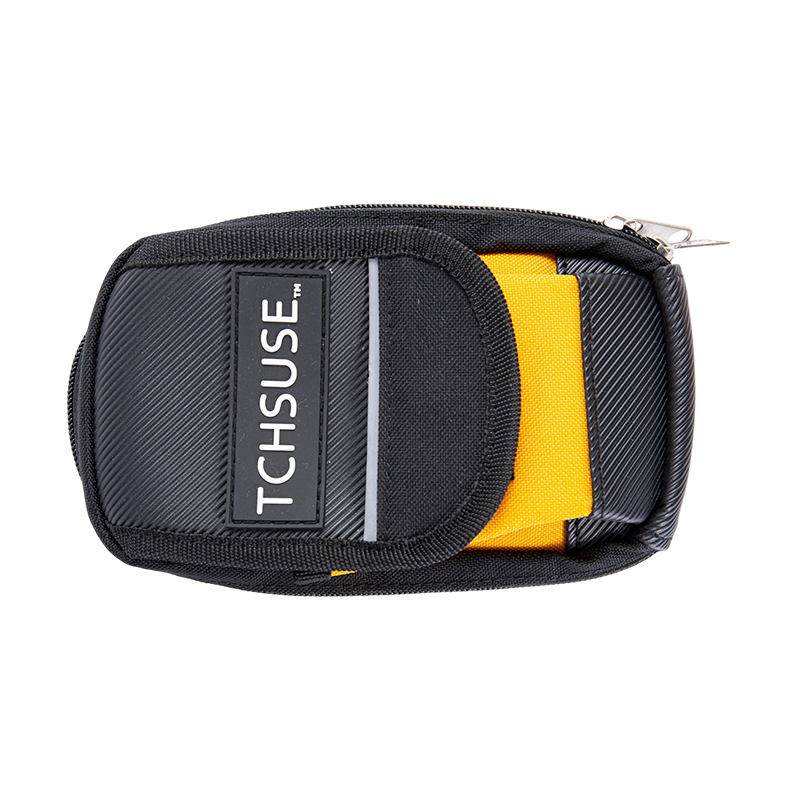
At the compact end of the range, tool belt bags and waist pouches carry only the few tools you need for the current task. A 600D oxford waist bag holds screwdrivers, pliers, and bits at hip height. For repetitive jobs such as installing outlets or light fixtures, this is the most efficient option, because reaching to your waist beats bending to a bag on the floor.
These small items complete a storage system. Many technicians carry a backpack or rolling bag with the full kit and keep a waist pouch for the immediate job.
OEM Tool Bag Procurement: What to Verify Before Ordering
For distributors, hardware brands, and industrial buyers, the category label is only the starting point. The construction details decide whether a bag lasts two years or two months.
Fabric Weight and Base Construction
Fabric weight is expressed in denier. 600D polyester is an acceptable everyday choice; 1200D and 1680D add thickness and tear resistance for heavy tools. The base matters just as much. A plastic or molded base resists moisture and keeps the bag standing; a soft sewn base sags over time and lets tools push through the bottom. Check the zipper size, stitching density at stress points, and whether load-bearing seams are bar-tacked.
Hardware, Customization and Certification
Handles and wheels fail first under load. A steel-pipe handle anchored to a plastic base is a stronger structure than a soft webbing handle on a heavy bag. For OEM orders, confirm the customization range: fabric color, logo printing or embroidery, pocket layout changes, and packaging. A manufacturer with in-house production, such as our 25,000-square-meter facility in Yancheng, applies these changes more consistently than a trading company.
Certification is the other checkpoint. ISO 9001 covers quality management, ISO 14001 covers environmental management, and material compliance such as REACH matters when your customers or regulators request documentation. Buyers who skip these checks often repeat the same tool bag purchasing mistakes, paying for poor hardware or fabric that fails in the field.
Tool Bag Types at a Glance
The table below summarizes the main trade-offs.
| Type | Carry Style | Typical Sizes | Best Suited For |
|---|---|---|---|
| Open-top tool bag | Hand | 11 to 22 in | Carpentry, drywall, general indoor work |
| Technician / multi-purpose bag | Hand | 14 to 22 in | Field service, telecom, AV, appliance repair |
| Tool backpack | Back | 14 in (typical) | Ladders, stairs, rooftops, multi-floor sites |
| Rolling tool bag | Pull / wheel | 14 to 27 in | Heavy loads, mobile service, plant floors |
| Steel-handle tool bag | Hand | 17 to 20 in | Plumbing, electrical rough-in, van-based trades |
| Tool belt / waist pouch | Waist | Compact | Repetitive tasks requiring instant access |
The right tool bag is rarely the biggest or the cheapest one. It is the type that matches carry style to the job. For quick indoor work, an open-top tote keeps cost low; for service technicians, a plastic-bottom multi-pocket bag protects organization; for ladders and long walks, a molded-base backpack is hard to beat; and for heavy inventories, a rolling bag saves your shoulder. Define the work first, and the tool bag type, plus the OEM specification that follows, becomes a much simpler decision.

Yancheng Tengchi Tourism Products Co., Ltd. It is dedicated to
designing and producing high-quality tool bags, including
heavy-duty electrician bags.
Experienced staff and experts are always available to provide
you with professional guidance and solutions to technical
problems.
- Product
- Tool Bag
- Tool Backpack
- Capabilities
- Capabilities
- Custom
- About US
- About Tengchi
- Certification
- Quick Connect
- Custom
- Capabilities
- Contact



