
Email: [email protected]

 English
  español
Industry News
HOME / NEWS / Industry News / Waterproof Tool Bags: Why Plastic Base Tool Bags Outperform Standard Fabric Options
HOME > NEWS > Industry News > Waterproof Tool Bags: Why Plastic Base Tool Bags Outperform Standard Fabric Options
Waterproof Tool Bags: Why Plastic Base Tool Bags Outperform Standard Fabric Options
 2026.08.05
 Industry News
A waterproof tool bag with a reinforced plastic base is one of the most practical investments a tradesperson or site worker can make. The combination of water-resistant fabric walls and a rigid plastic bottom protects tools from wet ground, puddles, and rain while keeping the bag upright and structurally stable — two problems that standard fabric tool bags fail to solve. If your work takes you outdoors, onto rooftops, into crawl spaces, or anywhere moisture is a regular hazard, these features are not optional extras.
This article covers what makes a tool bag genuinely waterproof versus merely water-resistant, what a plastic base actually contributes structurally, which materials and construction details to look for, and what separates a bag worth buying from one that fails after a season on the job.
Waterproof vs. Water-Resistant Tool Bags: Understanding the Real Difference
Most tool bags marketed as "waterproof" are more accurately described as water-resistant. True waterproofing — meaning no moisture penetration under sustained exposure — requires sealed seams, waterproof zippers, and a fabric with a hydrostatic head rating sufficient to withstand standing water pressure. Most canvas or polyester tool bags are water-resistant to light rain but will allow moisture ingress if submerged or left in standing water.
For practical jobsite use, the distinction matters in the following ways:
- Water-resistant tool bags (DWR-coated polyester or waxed canvas): Repel light rain and splashing for a limited time. The coating degrades with UV exposure and washing, typically requiring re-treatment after 12–18 months of regular outdoor use.
- Waterproof tool bags (PVC-coated fabric, TPU-laminated nylon, or fully welded construction): Block water penetration under sustained exposure. PVC-coated bags can withstand rain, hose-downs, and wet surfaces without allowing moisture through the fabric walls — though unsealed zippers remain a point of entry.
- Submersion-rated bags (welded seams, waterproof YKK zippers, roll-top closures): Designed to protect contents even if briefly submerged. Rare in tool bags and typically used for marine or flood-prone environments.
For most construction, electrical, and plumbing trades, a PVC-coated 600D polyester or 1680D ballistic nylon bag with a sealed base represents the practical sweet spot between genuine water protection and everyday usability.
What a Plastic Base Actually Does for a Tool Bag
The base of a tool bag is its most structurally vulnerable point. Fabric-only bases flex under load, allow moisture to wick through from wet ground, and wear through quickly when dragged across concrete, gravel, or metal surfaces. A molded plastic base — typically injection-molded high-density polyethylene (HDPE) or ABS plastic — addresses all three problems simultaneously.
Structural Rigidity and Shape Retention
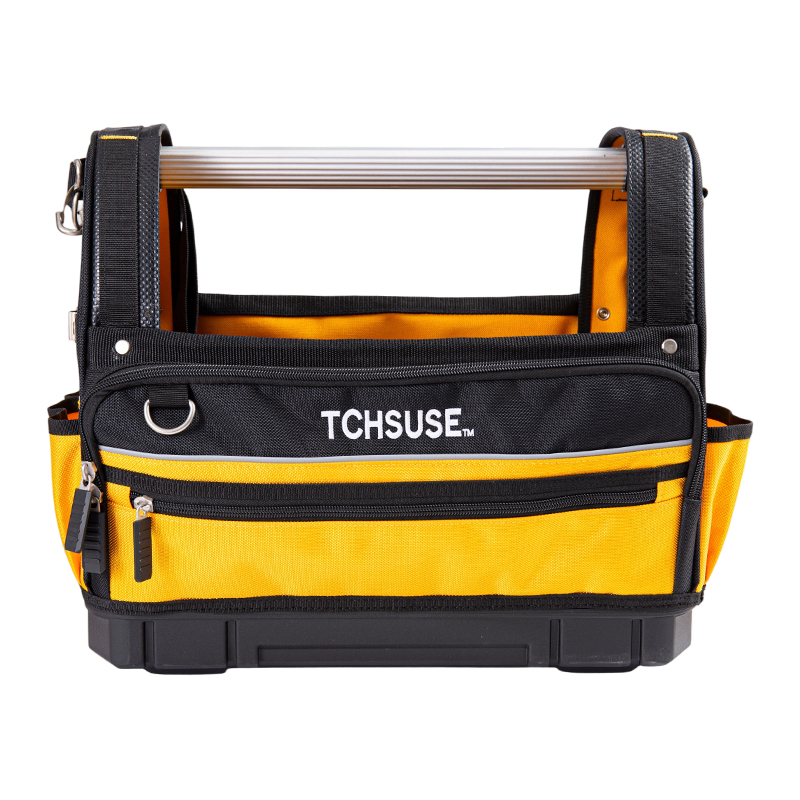
A plastic base keeps the bag upright when set down, even when partially loaded. This is particularly important for open-top tool bags and tote-style carriers where tools need to be accessed quickly without the bag collapsing inward. A rigid base also distributes the weight of heavy tools — a bag loaded with 15–20 kg of hand tools and power tool batteries will sag and distort at the bottom without structural support, eventually stressing the stitching at the base-to-wall junction.
Moisture Isolation from Below
Setting a tool bag on a wet surface — a damp concrete floor, a puddle on a flat roof, or wet grass — is unavoidable in field conditions. A plastic base creates a completely impermeable barrier between the bag's contents and surface moisture, something no fabric base can match regardless of coating. This is the single most effective moisture protection measure in a tool bag, more practically reliable than waterproof zippers or treated fabric in day-to-day use.
Abrasion and Impact Resistance
The base sustains the most abrasion of any part of a tool bag — sliding across truck beds, being dragged across rough surfaces, and absorbing impact when set down heavily. HDPE and ABS plastic bases resist abrasion far better than any fabric, and unlike rubber feet on some bags, a full molded base does not degrade or peel off. A quality plastic base on a well-constructed bag can last the entire service life of the bag — typically 5–10 years in heavy trade use.
Fabric and Material Options: What the Walls of a Waterproof Tool Bag Are Made From
The body fabric determines the bag's weight, flexibility, durability, and water resistance. The most common materials used in quality waterproof tool bags are:
| Material | Typical Denier | Water Resistance | Abrasion Resistance | Weight |
|---|---|---|---|---|
| PVC-coated polyester | 500D–1000D | Excellent | Good | Medium–Heavy |
| 1680D Ballistic Nylon | 1680D | Good (with DWR) | Excellent | Medium |
| TPU-laminated nylon | 420D–840D | Excellent | Very Good | Light–Medium |
| 600D Polyester (DWR only) | 600D | Moderate | Moderate | Light |
| Waxed canvas | N/A (oz weight) | Good (degrades over time) | Good | Heavy |
For outdoor and wet-environment trade use, PVC-coated polyester or TPU-laminated nylon paired with a molded plastic base represents the best combination of waterproofing and durability. Ballistic nylon is superior for abrasion resistance but requires a proper waterproof coating or laminate — raw ballistic nylon absorbs moisture readily.
Construction Details That Determine Long-Term Durability
Marketing language aside, a tool bag's real durability comes down to a handful of specific construction details that are easy to verify before purchase:
Stitching and Thread
Look for bar-tacked stress points at handle attachments, zipper ends, and pocket corners. Bar tacking — a series of tight parallel stitches across a stress point — is the difference between a handle that lasts 3 years and one that tears off in 6 months under a 20 kg load. Thread should be bonded nylon or polyester, not cotton, which degrades rapidly with moisture exposure.
Zipper Quality
Zippers are the most common failure point on tool bags. YKK #10 or #8 zippers are the industry benchmark for heavy-duty tool bags — they operate smoothly under load, resist corrosion, and are rebuildable if the slider fails. Cheap unbranded zippers often jam when the bag is overfilled or corrode after exposure to rain and metal swarf. Water-resistant zipper tape (with a rubber seal on the coil) adds meaningful protection for tools sensitive to moisture, such as precision instruments and power tool electronics.
Handle Construction and Attachment
Handles on quality waterproof tool bags should be sewn through the full depth of the bag wall and through the plastic base plate, not just attached to the fabric surface. Some bags use metal D-rings and riveted webbing attachments, which distribute load across a wider area and are more resistant to tearing than stitched-only connections. Foam or rubber-padded handles become essential for bags regularly carried at full capacity — unpadded webbing handles cut into the hand under loads above approximately 10 kg.
Interior Lining and Pocket Organization
A wipeable interior lining — typically a smooth nylon or coated polyester — prevents oil, grease, and debris from permanently saturating the bag walls and simplifies cleanup. Interior pockets should use rigid or semi-rigid dividers rather than loose fabric sleeves for tool holders, as fabric-only dividers collapse under load and provide poor tool retention. Exterior pockets on waterproof tool bags should be constructed from the same waterproof fabric as the main body — a bag with a waterproof main compartment but fabric-only exterior pockets provides uneven protection.
Tool Bag Styles with Plastic Bases: Which Format Suits Which Trade
Plastic base tool bags are available in several formats, each optimized for different working styles and tool loadouts:
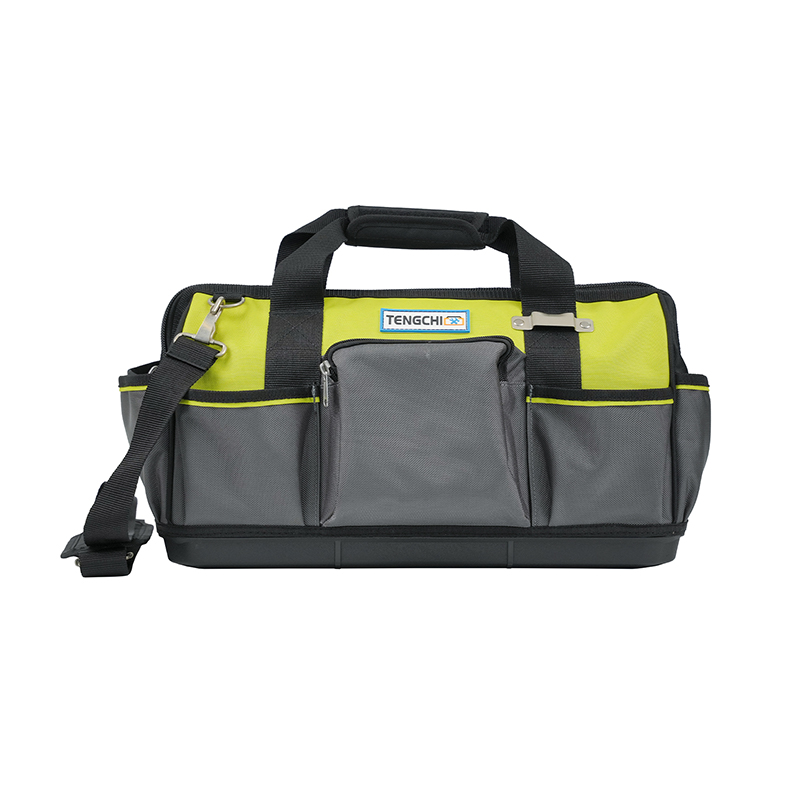
- Open-top tote bags: Wide, shallow bags with no lid — fast tool access and good visibility of contents. The plastic base is essential here because an open-top bag with a fabric base collapses when set down partially loaded. Typical capacity range of 40–60 liters. Suited to electricians, carpenters, and general contractors who need immediate access to a large number of hand tools.
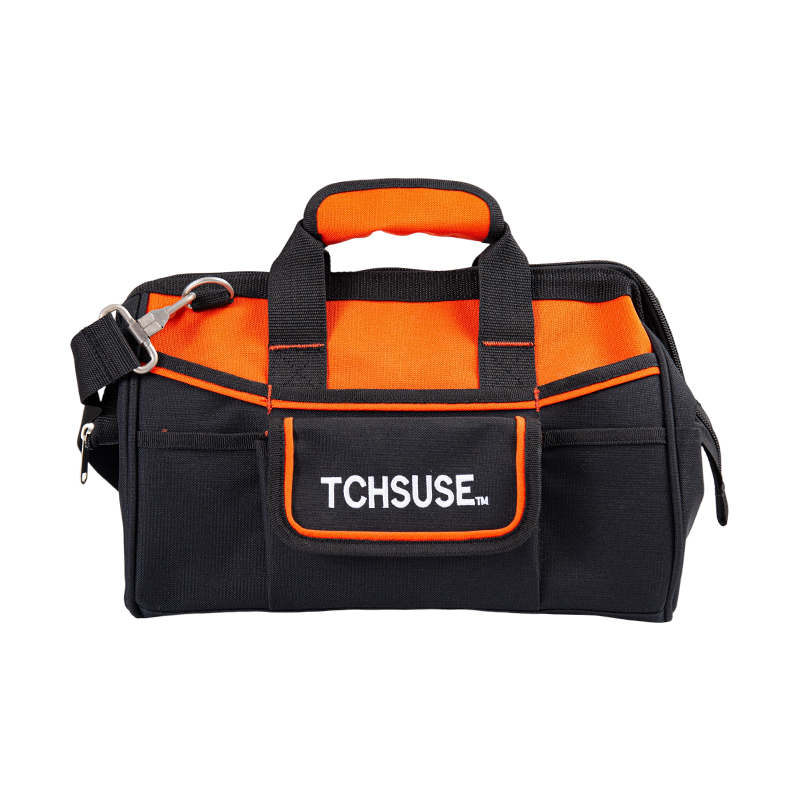
- Zipper-top tool bags: Enclosed bags with a main zipper closure — better weather protection than open-top but slower to access. Waterproof zipper tape on the main closure makes these genuinely effective in heavy rain. Capacity typically 20–40 liters. Suited to plumbers, HVAC technicians, and anyone who needs to transport tools in wet conditions regularly.
- Rolling tool bags: Large-format bags on wheels with a rigid plastic base and telescoping handle. Capacity of 60–100 liters or more. The plastic base doubles as the rolling platform and must be rated to the full tool load. Suited to service technicians and maintenance workers who transport large tool inventories between vehicles and worksites.
- Backpack tool bags: Dual-shoulder-carry format with a molded plastic base panel and padded back panel. Load-bearing capacity typically 15–25 kg. Suited to trades requiring hands-free carry during access — roofing, telecommunications tower work, or confined space entry.
- Bucket-style tool bags: Cylindrical form with a rigid plastic or reinforced fabric base, often used with tool roll inserts lining the interior wall. Excellent stability and very fast tool access. Commonly used by electricians and mechanics carrying a high density of hand tools.
Features Checklist: What to Verify Before Buying a Waterproof Tool Bag
Use the following checklist when evaluating a waterproof plastic base tool bag, whether purchasing online or in-store:
| Feature | What to Look For | Red Flags |
|---|---|---|
| Base material | Molded HDPE or ABS plastic, full coverage | Rubber feet only, thin cardboard insert, partial coverage |
| Fabric specification | PVC-coated or TPU-laminated, 600D minimum | No coating specified, generic "polyester" only |
| Zipper brand and size | YKK #8 or #10, ideally with water-resistant tape | No brand specified, thin coil, stiff operation in store |
| Handle attachment | Bar-tacked, through-bolted, or riveted to base | Handles stitched only to outer fabric layer |
| Interior lining | Smooth wipeable nylon or coated polyester | Raw fabric interior, no lining |
| Seam construction | Double-stitched or taped seams at base junction | Single-stitch seams, visible thread gaps |
| Weight capacity rating | Stated by manufacturer (typically 15–30 kg) | No capacity information provided |
How to Maintain a Waterproof Tool Bag and Extend Its Service Life
Even the best-constructed waterproof tool bag will degrade faster than necessary without basic maintenance. The following practices keep the bag performing as intended:
- Clean the plastic base regularly: Concrete dust, oil, and grit accumulate on the base and accelerate surface abrasion. Wipe down with a damp cloth after use in dirty environments. Inspect the base-to-fabric junction annually for separation or cracking.
- Re-treat DWR coatings annually: If the bag uses a DWR (durable water repellent) coating rather than a permanent laminate, reapply a spray-on DWR treatment such as Nikwax or Grangers once per year or when water is observed soaking in rather than beading off the fabric surface.
- Lubricate zippers: Apply a silicone-based zipper lubricant or beeswax to the zipper coil every 3–6 months. This prevents corrosion, reduces binding, and extends slider life significantly — particularly in coastal or humid environments.
- Avoid overloading: Consistently loading a bag beyond its rated weight capacity stresses the base attachment points and handle fixings. Distribute heavy tools across multiple bags or use a rolling format when carrying loads above 20 kg.
- Store partially open when not in use: Storing a sealed tool bag fully closed in a warm environment traps moisture and accelerates mold growth on fabric and rubber components. Leave the main compartment partially open when storing to allow ventilation.
- Inspect and repair stitching promptly: A small area of failed stitching at a stress point will enlarge rapidly under load. Re-stitching a 5 cm seam failure costs minutes; replacing a handle that has torn through the fabric costs a new bag.
Who Benefits Most from Waterproof Plastic Base Tool Bags
Not every tradesperson needs a waterproof tool bag — an indoor finish carpenter working in dry, climate-controlled conditions gains little from paying a premium for waterproofing. The value is highest for:
- Electricians and solar installers working on rooftops and in outdoor electrical enclosures where rain exposure is routine and moisture damage to precision tools and meters is costly
- Plumbers and drainage contractors who regularly set their bags on wet concrete floors, in crawl spaces, or near open drainage channels
- Landscapers and irrigation technicians who work in inherently wet environments and need tools accessible through rain and muddy ground conditions
- Marine and dock workers where salt spray, standing water, and boat deck conditions create persistent moisture exposure for all equipment
- General construction contractors working on sites without full weather protection, particularly during framing and roofing stages before a building is enclosed
For these trades, the cost of replacing moisture-damaged precision instruments, power tool batteries, or corroded hand tools over two or three years typically far exceeds the price premium of a properly specified waterproof tool bag with a plastic base — making it one of the more straightforward value decisions in tool storage equipment.
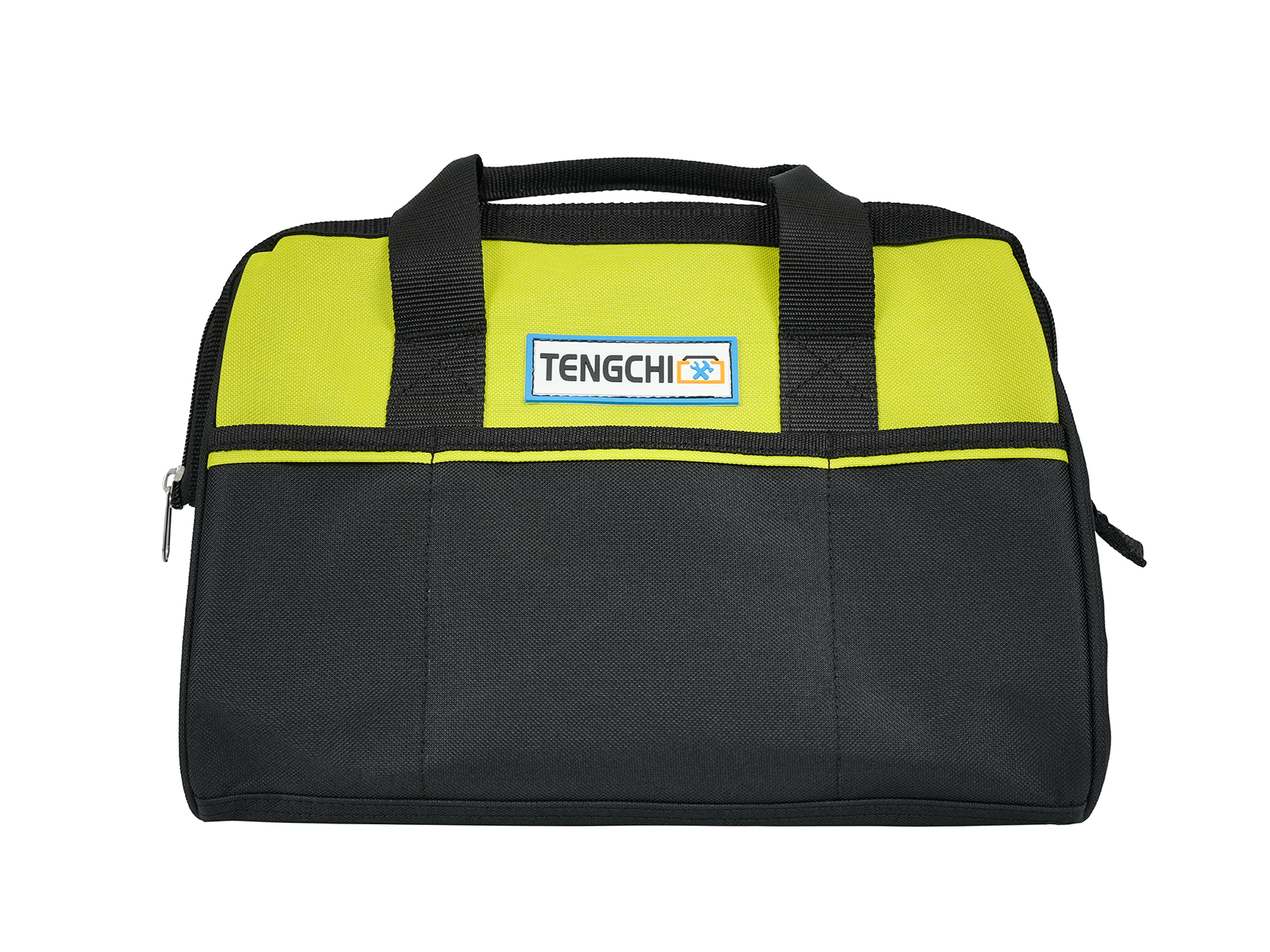
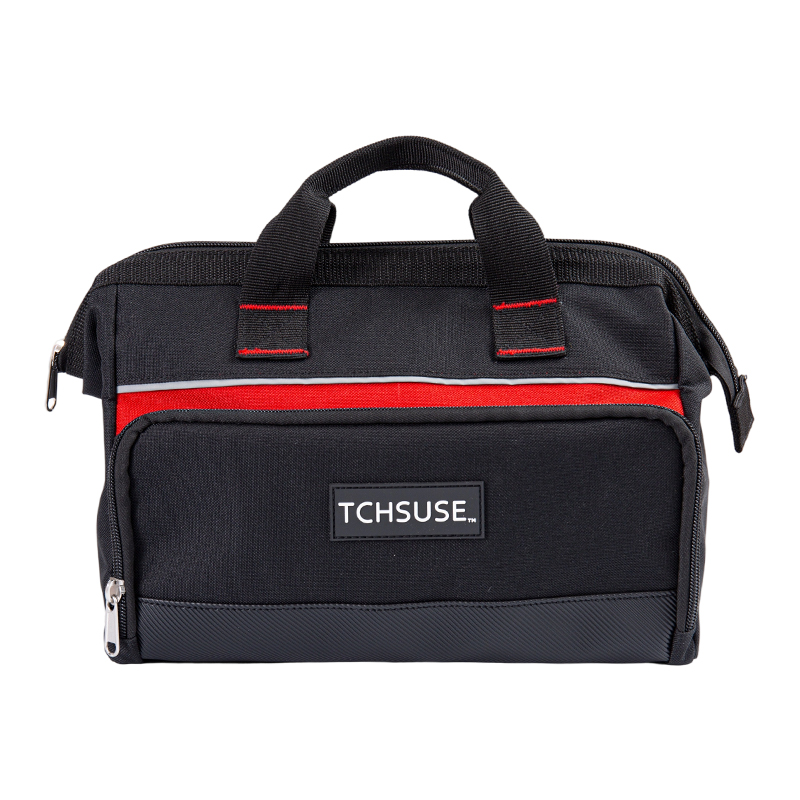

Yancheng Tengchi Tourism Products Co., Ltd. It is dedicated to
designing and producing high-quality tool bags, including
heavy-duty electrician bags.
Experienced staff and experts are always available to provide
you with professional guidance and solutions to technical
problems.
- Product
- Tool Bag
- Tool Backpack
- Capabilities
- Capabilities
- Custom
- About US
- About Tengchi
- Certification
- Quick Connect
- Custom
- Capabilities
- Contact



