
 English
  español


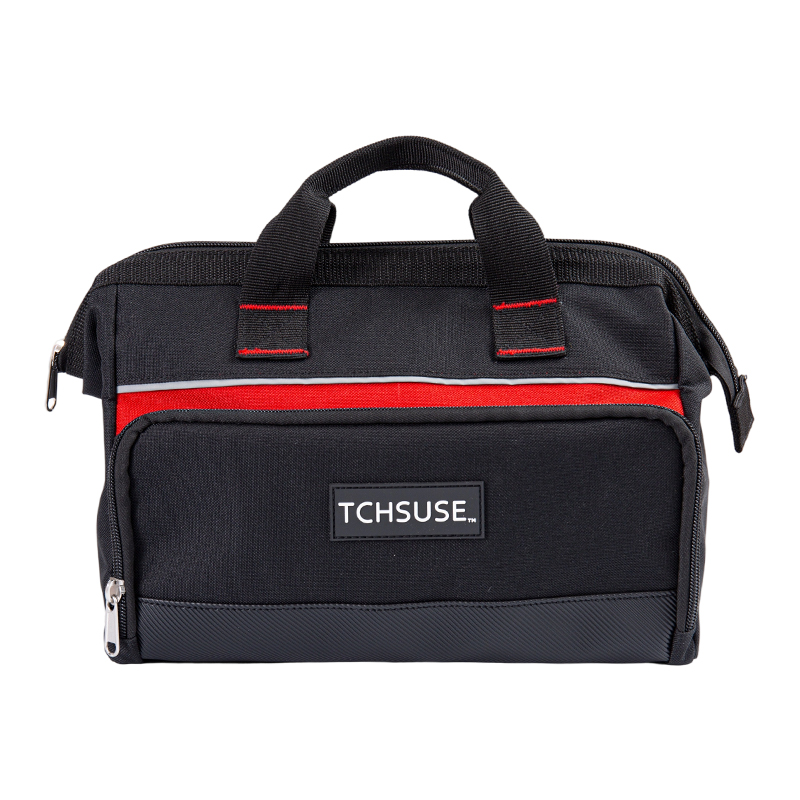
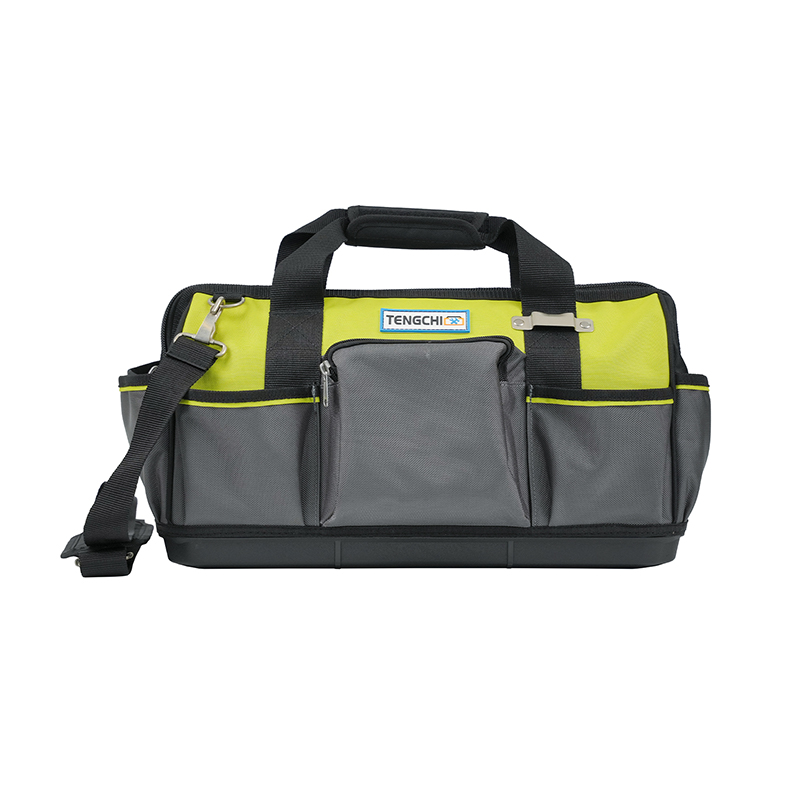
An electrician tool bag earns its keep on one thing above all: pocket count and organization, not just size. A dedicated electrician's bag typically packs 40 to 60+ individual pockets and loops into a compact footprint, letting you carry pliers, testers, strippers, connectors, and tape as separate, grab-without-looking items instead of one loose pile at the bottom of a generic bag.
That organization directly translates into time saved on every job — the difference between finding the right tool in two seconds versus digging through a bag for thirty.
Not all tool bags are built for the same trade. What works for a carpenter's larger hand tools often fails an electrician, whose kit is made up of many small, similarly-shaped items that need individual homes. Below, we break down what separates a purpose-built electrician tool bag from a general tool bag, how to evaluate pocket layout, and when a tool backpack makes more sense instead.
Why Pocket Layout Matters More Than Overall Size
A larger bag isn't automatically a better one for electrical work. Electricians typically carry 15-30+ small hand tools and accessories per job, and without dedicated slots, those items settle into a jumble that has to be sorted through by hand every time.
This is the core reason a purpose-built electrician tool bag outperforms a generic one for this trade — it's not about carrying more, it's about carrying the same amount in a way that keeps every tool individually accessible by feel, without needing to look inside the bag.
Electrician Tool Bags vs. General Tool Bags
The two categories overlap in basic function, but diverge significantly in pocket design and internal structure. Here's how they compare on the factors that matter most for electrical work:
| Factor | Electrician Tool Bag | General Tool Bag |
|---|---|---|
| Pocket count | High (40-60+), sized for small items | Lower, sized for fewer larger tools |
| Small-parts organization | Dedicated loops for wire nuts, connectors | Usually a single catch-all compartment |
| Main compartment size | Smaller — pockets do the heavy lifting | Larger, built for bulkier tools |
| Base rigidity | Firm base to keep the bag upright when open | Varies, often softer construction |
Practical note: If your kit is mostly a handful of larger tools (hammers, saws, levels), a general tool bag's bigger main compartment serves you better. If your kit is mostly small, similarly-shaped items you need to identify by touch, the pocket density of an electrician-specific bag pays off almost immediately.
How Pockets Are Typically Organized
A well-designed electrician tool bag groups pockets by tool type and frequency of use, not just by available space. Common zones include:
The best-designed bags also vary pocket depth and width across a single row, so a bag doesn't just have "many pockets" but pockets specifically sized to the tools electricians actually carry — narrow for screwdrivers, wider for pliers, elastic for tape.
Tool Bag or Tool Backpack: Which Fits Your Work Better
Beyond pocket layout, the bigger structural decision is carry style — a traditional open-top tool bag versus a tool backpack. Each suits a different kind of workday.
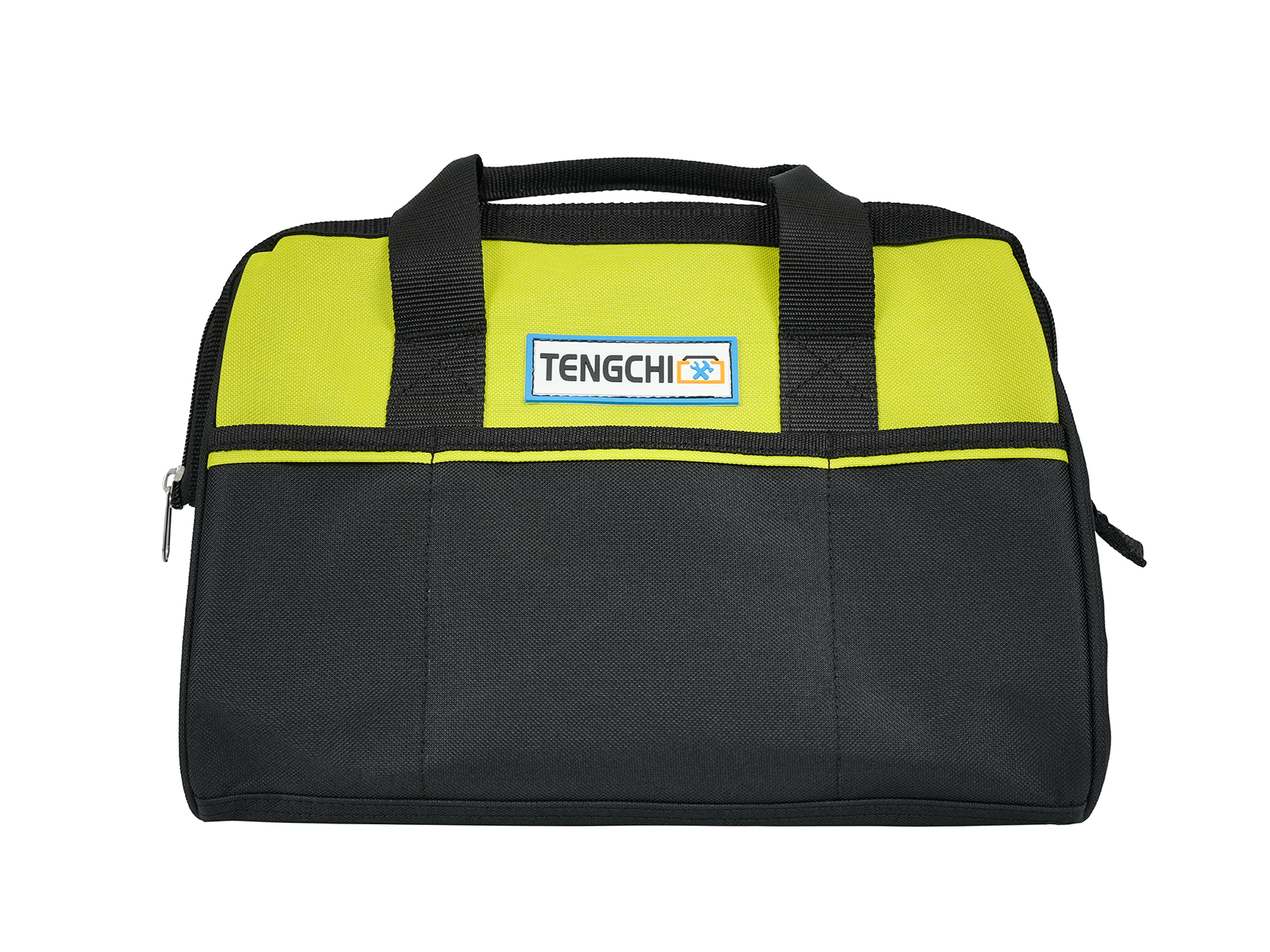
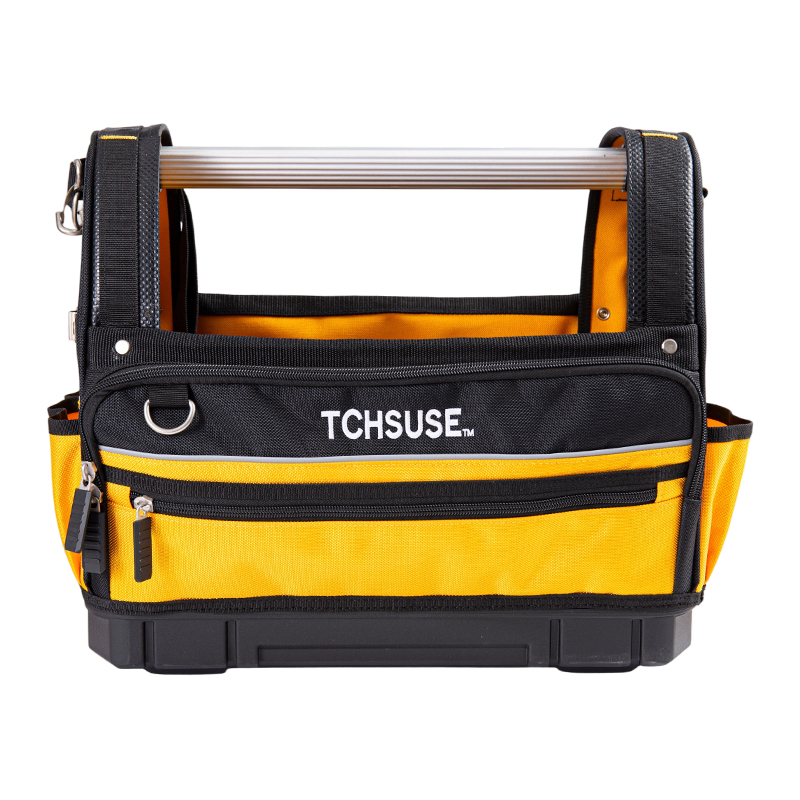
Choose a Tool Bag If You...
- Work mostly in one location per job, minimal walking
- Want to see and reach every pocket without unzipping
- Set the bag down and leave it open at a job site
- Prioritize fast in-and-out access over portability
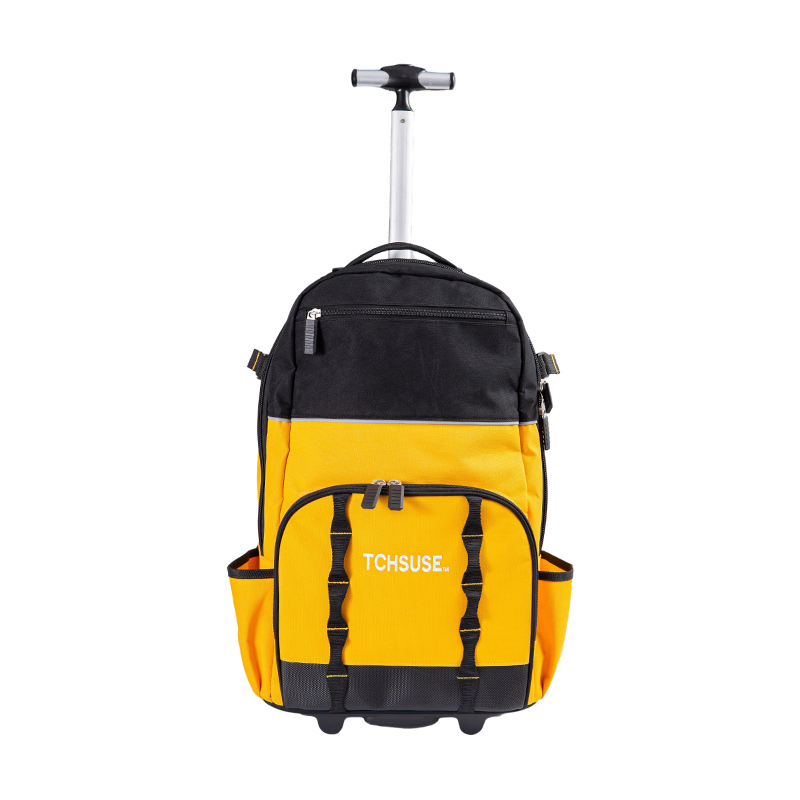
Choose a Tool Backpack If You...
- Move between multiple sites or floors in a day
- Need both hands free while climbing ladders or stairs
- Carry a laptop or tablet alongside your tools
- Prioritize comfortable, hands-free transport over layout
Neither format is objectively better — a bag optimizes for access speed once it's open on a table or floor, while a backpack optimizes for mobility and comfort when you're covering ground between tasks.
Durability Factors Worth Checking Before You Buy
Because a tool bag gets set down on rough surfaces, dragged across job sites, and loaded with metal tools daily, a handful of construction details determine how long it actually lasts:
- Base material — a reinforced or molded base resists wear from being set down on concrete, gravel, or rooftops repeatedly
- Stitching at stress points — bar-tacked or double-stitched seams at pocket corners and handle attachment points hold up far longer under repeated loading
- Zipper quality — heavy-duty zippers with metal pulls resist the grit and metal-dust exposure common on electrical job sites
- Handle and strap reinforcement — stitched-through handles (not just glued or riveted) hold up better under the weight of a fully loaded bag
- Water resistance — a treated or coated exterior fabric protects tools from job-site moisture without needing a separate cover
Frequently Asked Questions
How many pockets does an electrician actually need in a tool bag?
There's no fixed number, but most working electricians find 40+ pockets meaningfully reduces search time compared to bags with 15-20, since the goal is one dedicated spot per tool rather than sharing space across several similar items.
Should I choose an open-top bag or one with a full zip closure?
Open-top bags offer faster access when set down at a stationary job site, while fully zippered bags protect contents better during transport in a vehicle or when carried between multiple locations — the right choice depends more on your daily routine than on either being universally better.
Can a tool backpack hold as many tools as a traditional tool bag?
A well-designed tool backpack can match a similarly-sized tool bag in pocket count, though the vertical, worn-on-the-back format typically favors slightly lighter loads for comfort compared to a bag that rests on the ground while open.