
Email: [email protected]

 English
  español
Industry News
HOME / NEWS / Industry News / Steel Handle Tool Bag Guide: Durability, Size, and Sourcing from a Manufacturer
HOME > NEWS > Industry News > Steel Handle Tool Bag Guide: Durability, Size, and Sourcing from a Manufacturer
Steel Handle Tool Bag Guide: Durability, Size, and Sourcing from a Manufacturer
 2026.08.26
 Industry News
Every tradesperson has seen it happen: a heavily loaded tool bag is lifted by the handle, and the handle snaps, sending wrenches and screwdrivers across the floor. That moment separates a cheap bag from one that respects the work. A steel handle tool bag is designed to prevent exactly that failure point, but not all steel handles are equal. The handle tube diameter, the way it attaches to the base, and the fabric wrapped around the frame all determine whether the bag lasts a season or a decade. This article explains what to check when buying or specifying a steel handle tool bag, and what a professional should expect from a manufacturer.
Why the Steel Handle Tool Bag Gets the Job Done
When a bag is used daily on a job site, the handle receives more abuse than any other part. A steel handle resists bending and fatigue much better than a plastic or webbing handle, especially when the load is heavy and the bag is carried by the top grip alone. The steel tube transfers load directly to the bag body and, in better designs, to a rigid plastic base. That base keeps the bag standing upright, prevents tools from sagging to one side, and spreads the weight over a wider area.
For electricians, plumbers, and maintenance technicians who carry a mix of hand tools, fasteners, and small accessories, the steel handle tool bag is a practical choice. It stays stable when you set it down, opens wide enough to see the contents, and gives you a predictable grip even when you are wearing work gloves. The conclusion is simple: if your work requires carrying tools across a job site, a steel handle design is more reliable than a bag that depends only on soft fabric handles.
Construction Details That Separate a Strong Bag from a Weak One
Not every bag with a metal handle is built the same way. Before you buy or specify a steel handle tool bag, inspect these four areas:
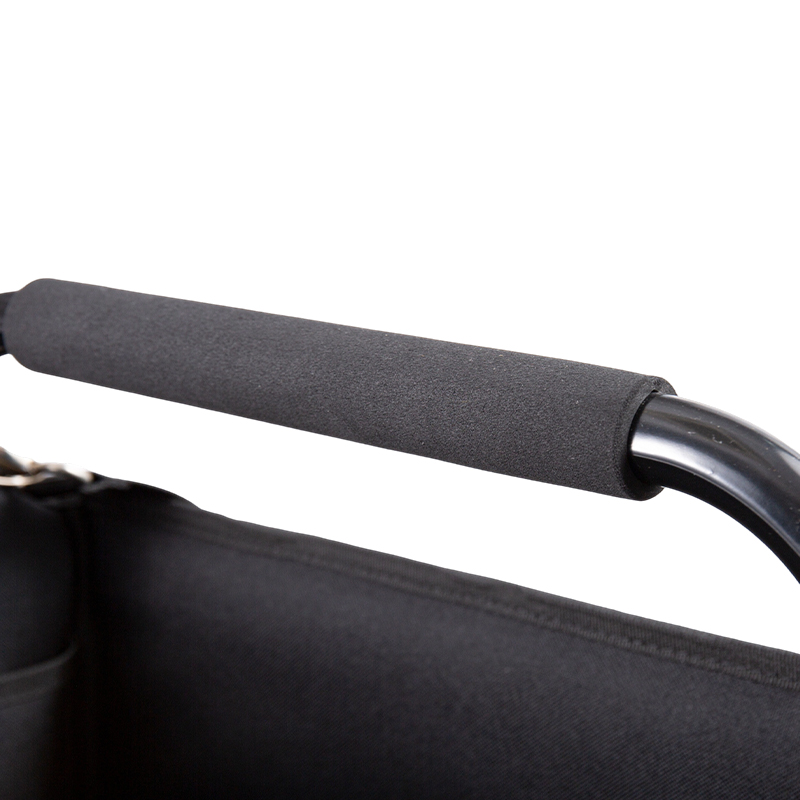
- Handle attachment: the steel tube should be fixed to the bag body through a stiffened sleeve or a metal rivet plate. If the handle can be twisted by hand, the connection is too weak.
- Plastic bottom: a molded plastic base adds rigidity and protects the bag from wet floors. Press on the center of the base; it should flex only slightly under pressure.
- Fabric: most steel handle tool bags use 600D oxford polyester or a similar heavy fabric. Check the fabric weight and look for a smooth, tight weave that resists tearing.
- Stitching: stress points such as the handle base, bottom corners, and pocket edges should have double stitching or bartacks. Loose threads or skipped stitches are an early warning sign.
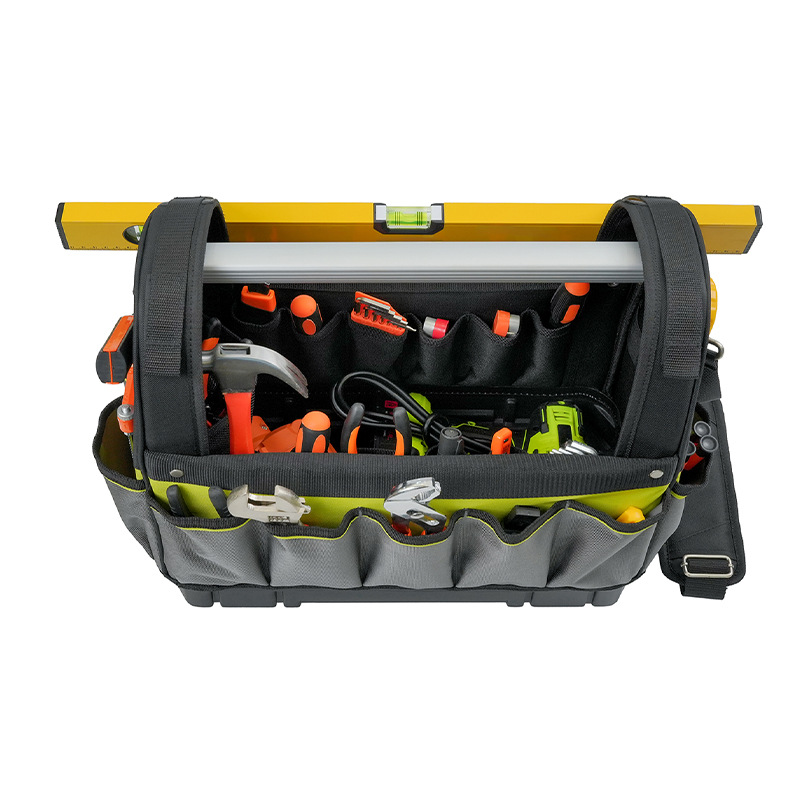
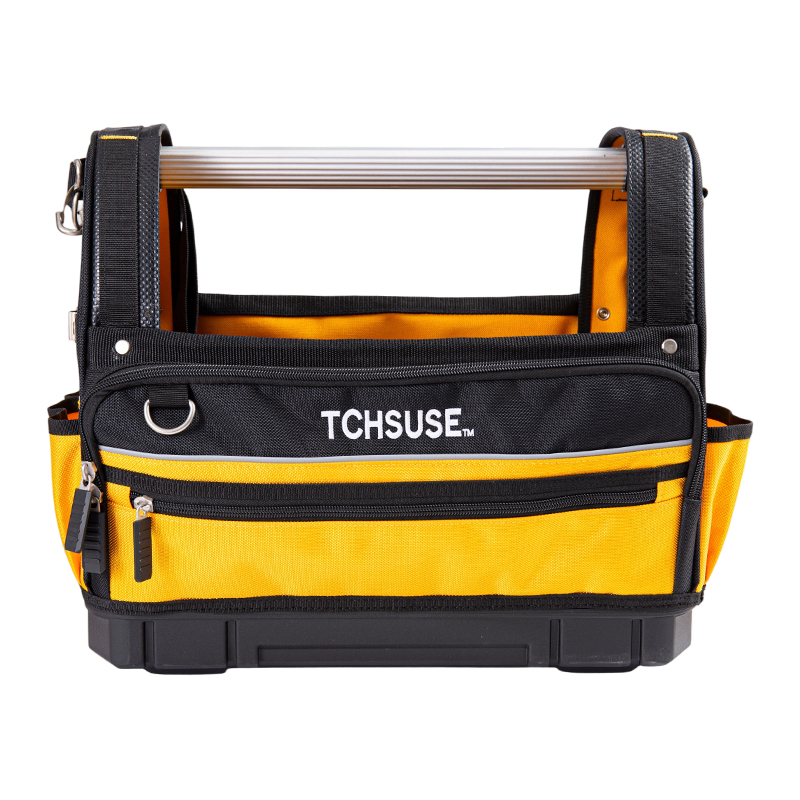
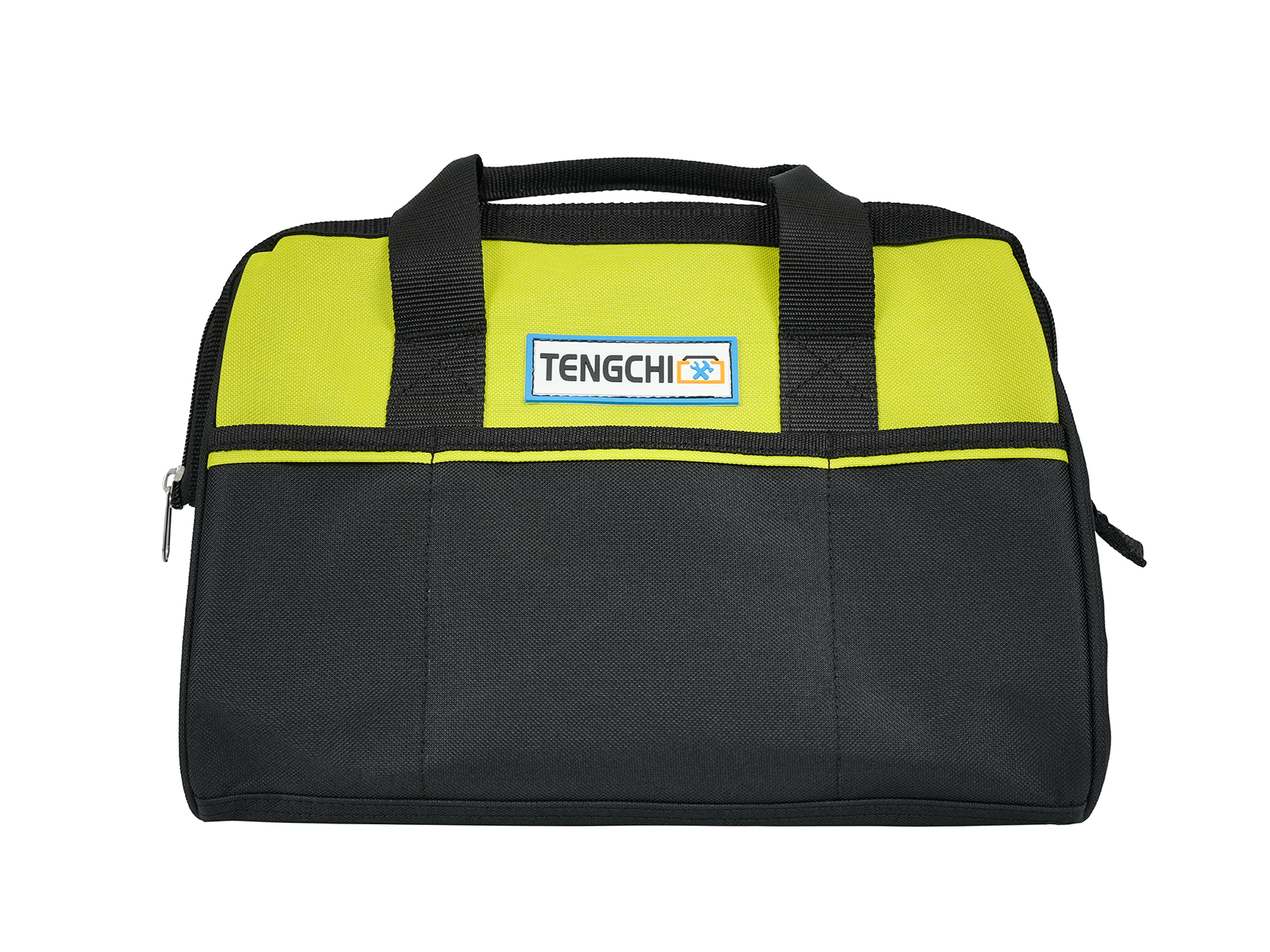
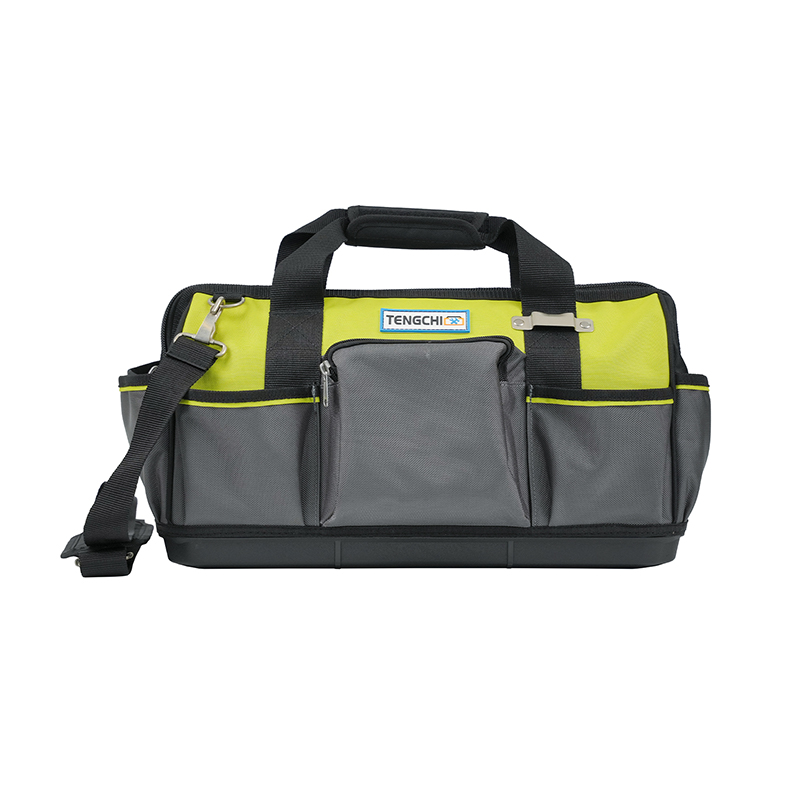
One model that shows how these details work together is the 17-19 inch steel tube tool bag with plastic bottom, which combines a polyester shell, a plastic base, and a steel tube handle in a single unit. The same construction logic applies across the category: the handle and base are the skeleton, and the fabric and stitching are the muscles that hold everything in place.
 Steel Handle Tool BagSteel pipe tool bags...View Product →
Sizing and Layout: Match the Bag to Your Daily Tasks
Steel handle tool bags typically range from 17 to 20 inches in length. The size you choose should match the volume of tools you actually carry, not the maximum you hope to fit. A 17-inch bag is easier to lift into a van and works well for compact kits. A 20-inch bag gives you room for larger wrenches, a drill, and bulkier accessories, but it gets heavy quickly when fully loaded.
On the factory floor, a 17-19 inch steel pipe tool bag with plastic bottom is a typical choice for technicians who carry a paired set of pliers, screwdrivers, and a small drill. The interior layout matters as much as the overall length. Look for dedicated pockets along the walls, a few larger compartments, and a center space that can hold a drill case or a set of sockets.
 Steel Handle Tool BagSteel pipe tool bags...View Product →
| Size Range | Typical Capacity | Best For |
|---|---|---|
| 17-18 inch | Basic hand tools, small parts | Electrical work, general maintenance |
| 19-20 inch | Larger wrenches, drill and accessories | Plumbing, HVAC, heavy repair |
| 18 inch folding | Compact kits that need to be stored flat | Mobile service, vehicle storage |
When you compare sizes, remember that the outer measurement includes the frame and handle. Check the usable interior width and height as well as the total length. A bag that is long but shallow may not hold a tall level or a cordless drill on its side.
Folding Steel Handle Bags: A Space-Saving Alternative
Not every workshop has endless storage space. If you keep your tools in a pickup truck or need to carry a backup set between sites, a folding steel handle tool bag gives you the same solid grip as a fixed-frame model while taking up less space when empty. The folding joint is the main thing to check. It should lock firmly when open and fold without feeling loose or sloppy.
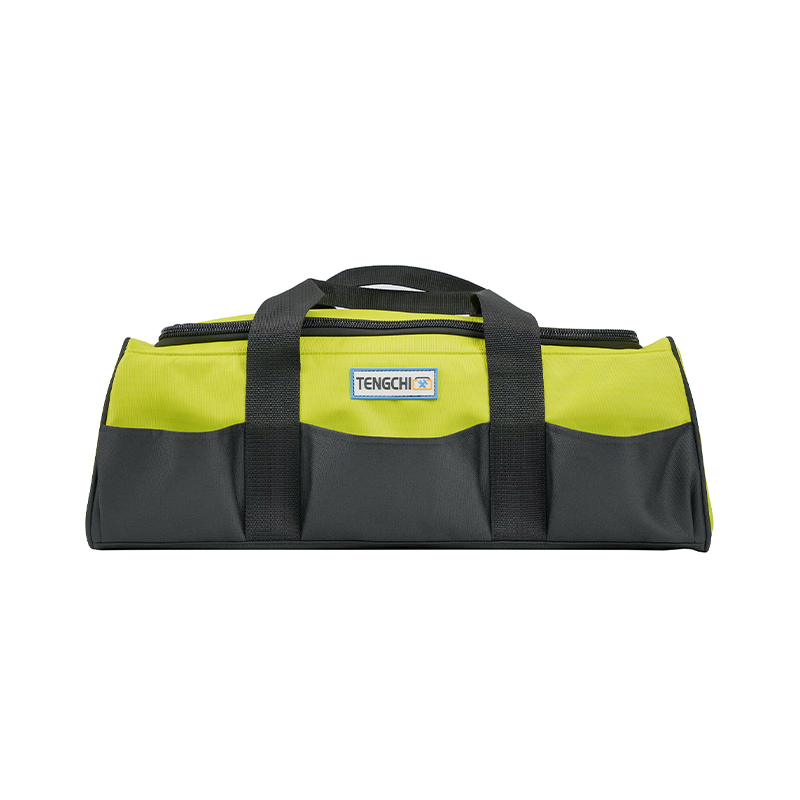
The 18 inch folding steel pipe tool bag is a good example of this balance. It still uses a steel pipe handle and a plastic bottom, but the collapsible construction makes it easier to store behind a seat or in a narrow cabinet. For lighter jobs or quick callouts, a folding bag can replace a larger rigid case without forcing you to give up the benefits of a steel handle.
 Steel Handle Tool BagSteel pipe tool bags...View Product →
Sourcing from a Manufacturer: What to Verify Before You Order
For procurement teams and business owners, a steel handle tool bag is not just a product; it is a specification. When you source from a manufacturer, ask for a detailed spec sheet covering the handle tube material and diameter, plastic base thickness, fabric weight, and stitch density. These numbers determine how the bag will behave under real working conditions.
Certifications and quality systems also matter. A factory with ISO 9001, ISO 14001, and ISO 45001 in place is more likely to produce consistent output and handle corrective actions professionally. Before placing a bulk order, request a sample and run simple tests: hang the loaded bag by the handle, repeat the lift a few times, and check whether the handle attachment loosens. Also test the bag on a wet surface to see how well the plastic bottom resists moisture.
Customization is another part of the conversation. Many buyers need a specific pocket layout, a logo, or a slightly different size. A manufacturer with in-house production can adjust these details without losing control of quality. For a deeper look at the same selection criteria, review our professional steel handle tool bag guide before you place your next order.
Steel handle tool bags remain one of the most dependable formats for tradespeople who need a stable, open, and rugged way to carry tools. The handle must be stout, the base rigid, and the fabric and stitching strong enough to survive years of use. When you know exactly what to inspect, you can buy with confidence, and if you are working with a supplier, you can communicate the right specifications from the start. To compare steel handle models with other carry options, you can browse the full range of tool bags on our site and see how each category fits into a professional workflow.

Yancheng Tengchi Tourism Products Co., Ltd. It is dedicated to
designing and producing high-quality tool bags, including
heavy-duty electrician bags.
Experienced staff and experts are always available to provide
you with professional guidance and solutions to technical
problems.
- Product
- Tool Bag
- Tool Backpack
- Capabilities
- Capabilities
- Custom
- About US
- About Tengchi
- Certification
- Quick Connect
- Custom
- Capabilities
- Contact



