
Email: [email protected]

 English
 español
Industry News
HOME / NEWS / Industry News / How Many Types of Power Tools Are There? A Complete Guide to Every Category
HOME > NEWS > Industry News > How Many Types of Power Tools Are There? A Complete Guide to Every Category
How Many Types of Power Tools Are There? A Complete Guide to Every Category
 2026.10.20
 Industry News
Ask five seasoned tradespeople how many types of power tools there are, and you will probably get five different answers. Some count by the power source that drives each tool. Others list them by the job they perform, from drilling and cutting to sanding and demolition. The truth is that the number depends on the system you use to categorize them.
In this article, we break down the most common classification frameworks, look at how each family of tools behaves on the job, and share practical advice on keeping a growing collection organized. Whether you are a working electrician, a weekend woodworker, or a procurement manager stocking a maintenance team, this overview should help you make sense of the power tool landscape.
Grouping Power Tools by Power Source
The first and most fundamental way to answer how many types of power tools there are is to look at what makes them run. This matters more than most beginners realize, because the power source determines where a tool can be used, how heavy it is, and how much maintenance it requires.
- Corded electric tools receive uninterrupted current from a wall outlet. They deliver higher sustained power and are ideal for workshops and stationary work.
- Cordless battery tools run on rechargeable lithium-ion packs. They dominate modern job sites because they are portable and the battery platforms have become powerful enough for demanding daily tasks.
- Pneumatic tools are driven by compressed air. Nailers, impact wrenches, and staplers are classic examples, valued for their light weight and repeatable performance.
- Gasoline and hydraulic tools handle heavy outdoor workloads such as cut-off saws, log splitters, and demolition breakers, where electricity and batteries are not practical.
| Power Source | Typical Tools | Best Environment |
|---|---|---|
| Corded electric | Drills, circular saws, angle grinders | Workshops and fixed workstations |
| Cordless battery | Impact drivers, reciprocating saws | Job sites and remote locations |
| Pneumatic | Nailers, impact wrenches, staplers | Production and assembly work |
| Gasoline / hydraulic | Cut-off saws, breakers, splitters | Outdoor and heavy demolition |
Most tradespeople today own a mix of all four families. A carpenter might keep a corded table saw in the workshop, a battery-powered impact driver on site, a pneumatic nailer on the bench, and perhaps a gas-powered cut-off saw for outdoor framing. That is why the next question is not just how many types of power tools there are, but how they divide by function.
Functional Families of Power Tools
If you ask manufacturers and distributors, they usually answer by function, because this is how power tools are designed, marketed, and stored. Broadly speaking, portable power tools split into six families.
| Family | Example Tools | Typical Users |
|---|---|---|
| Drilling and fastening | Drill driver, hammer drill, impact driver | Electricians, general contractors |
| Cutting | Circular saw, jigsaw, reciprocating saw, angle grinder | Carpenters, metalworkers, plumbers |
| Shaping and finishing | Orbital sander, router, planer, die grinder | Woodworkers, furniture makers |
| Assembly | Nailer, stapler, cordless screw gun | Finish carpenters, upholsterers |
| Demolition and heavy duty | Rotary hammer, breaker, jackhammer | Construction and renovation crews |
| Stationary | Drill press, table saw, band saw | Workshops and production lines |
The six families above cover the overwhelming majority of tools that an electrician, plumber, carpenter, or maintenance technician will handle in a normal week. Within each family there are further sub-types, which is why the total count grows quickly once you start listing individual models.
Drilling and Fastening
Drilling and fastening are the most common powered tasks in construction and maintenance. The family includes drill drivers, hammer drills, impact drivers, and impact wrenches. A drill driver handles holes and screw driving in softer materials, while a hammer drill adds a percussive action for masonry. Impact drivers deliver high torque with less strain on the wrist, making them a favorite for long days of fastening.
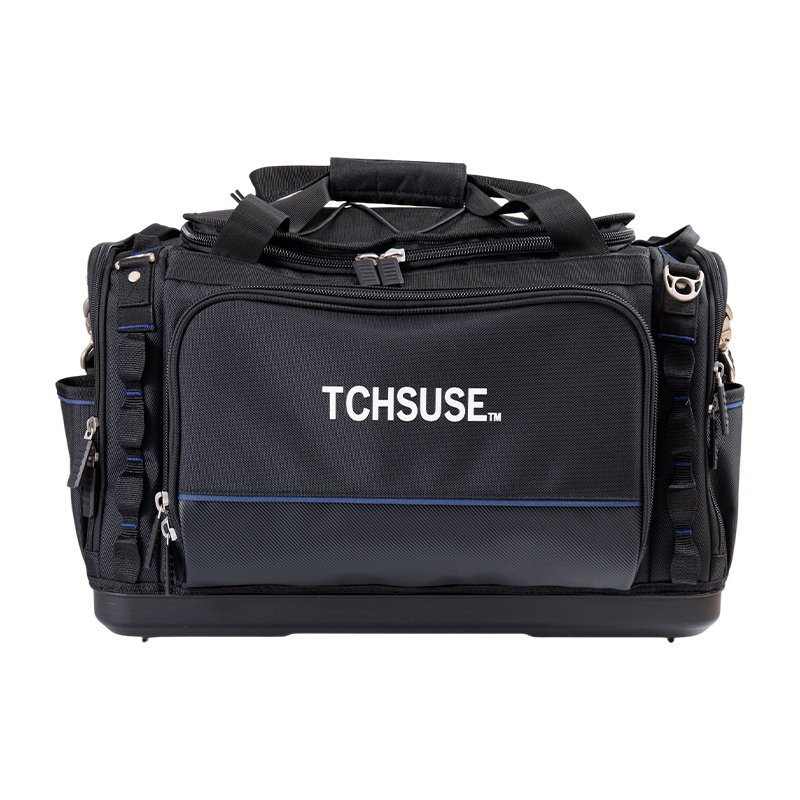
 Steel Pipe Tool Bag with Durable Plastic BaseThis sturdy bag keeps drills, bits, and drivers in one fixed place, preventing daily rummaging through the van. Its reinforced structure suits heavy use.View Product →
When these tools are part of a daily routine, organization becomes a genuine productivity issue. Drills, bits, drivers, and spare batteries multiply quickly. We have seen many tradespeople solve this with a durable steel-handle tool bag that keeps the main tool and its accessories in one fixed place, instead of digging through the back of a van every morning.
Cutting Tools
Cutting is the largest and most varied family. Circular saws make straight cuts in sheet goods. Jigsaws handle curves and cutouts. Reciprocating saws push through framing and pipes. Angle grinders cut, grind, and polish metal, tile, and concrete with the right disc. Because each tool uses different blades or discs, a cutting collection also brings a long list of consumables that need organized storage.
Shaping and Finishing
Sanders, routers, planers, and die grinders smooth, shape, and refine surfaces. Woodworkers treat these as precision instruments, while drywall finishers and automotive technicians rely on them for consistent surface preparation. These tools favor control over raw power, so they often stay in a workshop where they can be plugged in and ready to go.
Assembly Tools
Nailers, staplers, and screw guns speed up repetitive fastening. Pneumatic nailers are light and rapid, while battery-powered nailers have become popular for their portability. Finish carpenters often carry several nailers for different fastener sizes, which brings the storage question back: how do you protect delicate noses and stop nails from spilling across the van floor?
Demolition and Heavy-Duty Tools
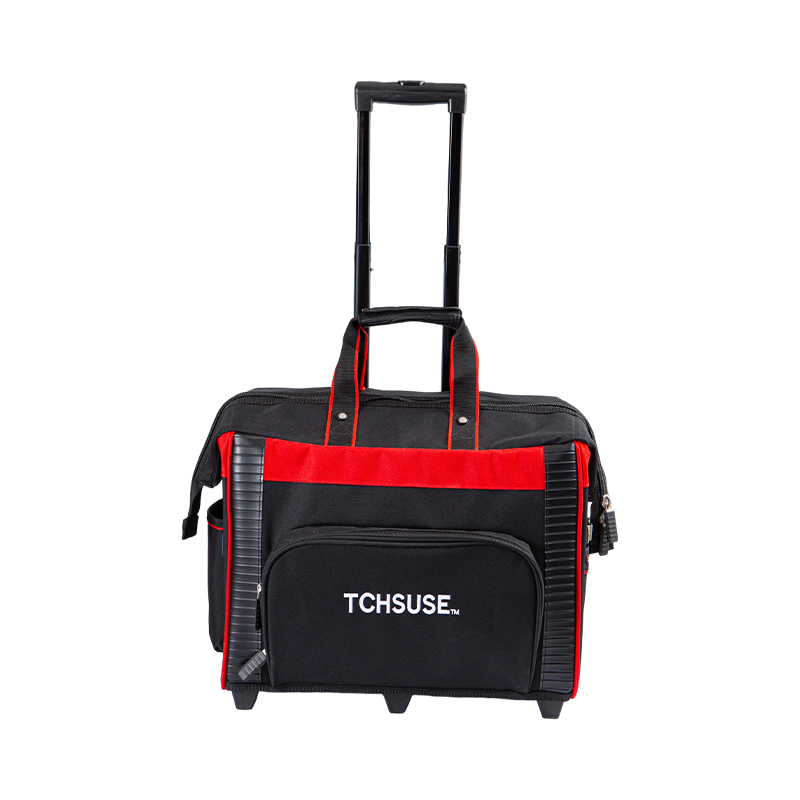
Rotary hammers, breakers, and large angle grinders make up the heavy end of the spectrum. These tools generate vibration, dust, and real physical strain, so they are usually carried separately from fine work tools. A rolling tool bag or trolley-style backpack earns its keep here, letting a technician move heavy equipment across a site without straining the shoulders.
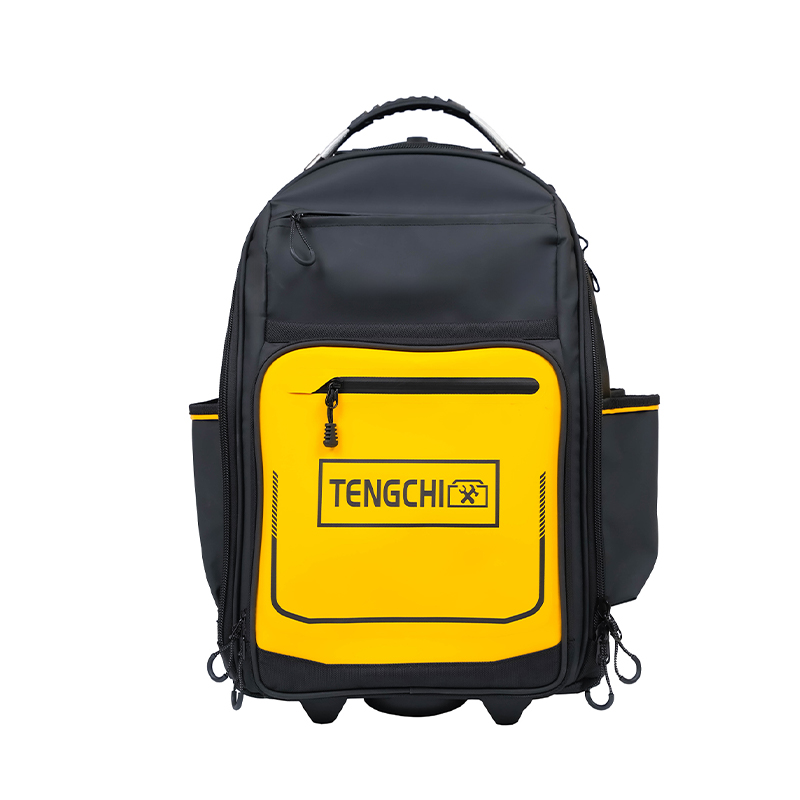
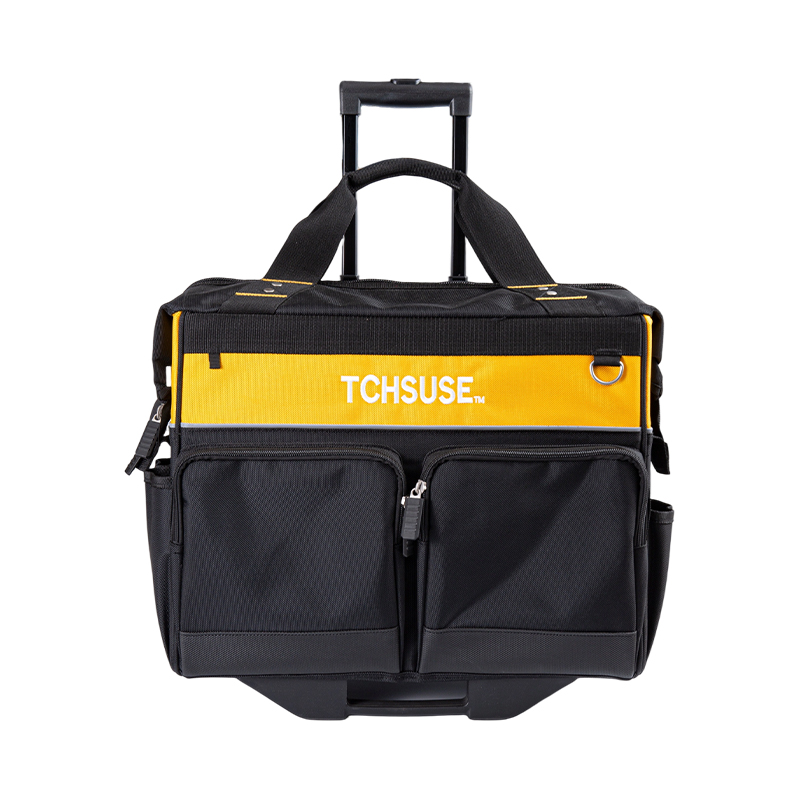
 Wheeled Pull Rod Tool Bag for Heavy EquipmentTransport rotary hammers and grinders across sites effortlessly with this rolling bag. Smooth wheels and retractable handle reduce physical strain and save trips.View Product →
On many projects, the difference between a good day and a bad one comes down to whether you can carry the correct tool to the right floor without making three extra trips.
Matching Storage to Your Power Tool Collection
Once you understand how many types of power tools there are, the practical question becomes how to store them. As a manufacturer of tool bags and tool backpacks, we have spent more than a decade watching professionals carry their gear, and a few patterns hold true across every trade. Heavy tools like drills and saws belong in bags with reinforced bases and stiff structure. Medium collections fit well in open-top tool bags where you can see and grab tools at a glance. Technicians who climb ladders or move between floors tend to prefer backpacks that keep both hands free.
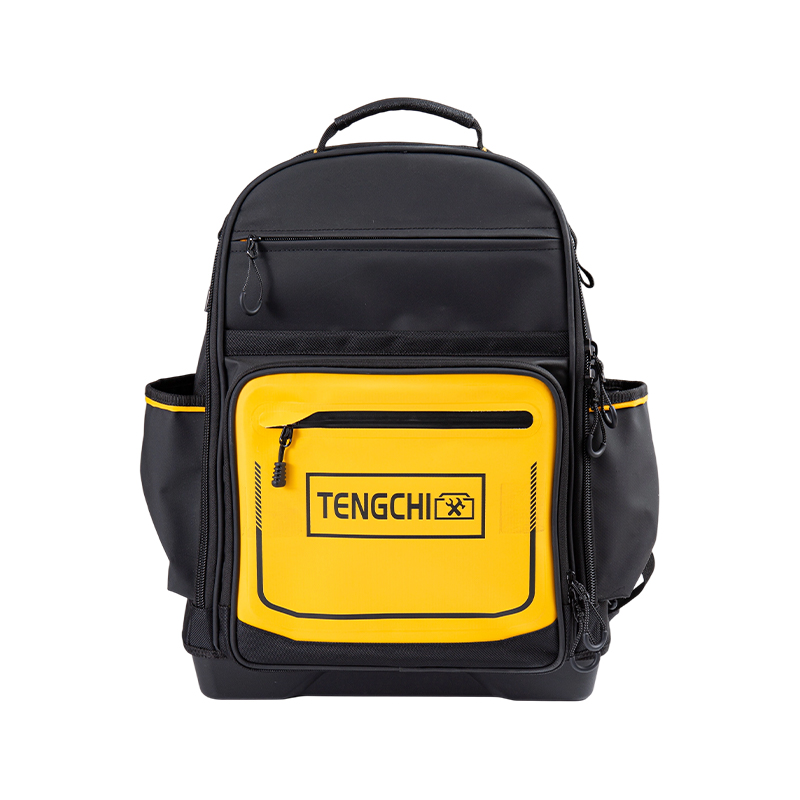
 Industrial Tool Backpack with Laptop CompartmentThis ergonomic backpack offers both-hand-free carrying for technicians on ladders. Its molded base and steel-reinforced handle support heavy tools, plus a 14-inch laptop slot.View Product →
If you are still deciding what to buy, take a moment to list the power tools you actually own, then look at how they are organized today. The right types of tool bags can save more time in a week than most people expect. And because power tool collections keep expanding, it is worth choosing a bag with room to grow rather than one that fits today's inventory exactly.
So How Many Types of Power Tools Are There, Really?
If you count by power source, the answer is four main families: corded, cordless, pneumatic, and gasoline or hydraulic. If you count by function, the number lands around six major families, with dozens of sub-types inside each one. Industry catalogs list hundreds of distinct models, but nearly all trace back to the same roots: drilling, cutting, shaping, assembling, and demolishing.
For most professionals, the practical takeaway is not a precise number but a clearer understanding of how their own collection fits together. When you know what each tool does and how it is powered, you also know what kind of storage it needs. If you would like to see how we build bags for these workloads, browse our range or get in touch with our team. We are happy to help you match a professional tool bag to the power tools you carry every day.


Yancheng Tengchi Tourism Products Co., Ltd. It is dedicated to
designing and producing high-quality tool bags, including
heavy-duty electrician bags.
Experienced staff and experts are always available to provide
you with professional guidance and solutions to technical
problems.
- Product
- Tool Bag
- Tool Backpack
- Capabilities
- Capabilities
- Custom
- About US
- About Tengchi
- Certification
- Quick Connect
- Custom
- Capabilities
- Contact


