
Email: [email protected]

 English
  español
Industry News
Tool Bag With Handle: Steel Handle Options & Buying Guide
 2026.04.08
 Industry News
A tool bag with a handle is the most practical way to carry and organize tools on the job. Among all handle types, a steel handle tool bag offers the highest load-bearing capacity, structural rigidity, and long-term durability — making it the preferred choice for tradespeople, electricians, plumbers, and contractors who regularly carry heavy tool loads. If you need a bag that holds its shape, survives rough job sites, and won't fail under weight, a steel-framed or steel-handled tool bag is the benchmark to evaluate against.
What Makes a Steel Handle Tool Bag Different
Most entry-level tool bags use nylon webbing or soft fabric handles that flex, deform, and eventually fray under heavy loads. A steel handle tool bag replaces or reinforces this with a rigid steel frame or steel bail handle, fundamentally changing how the bag performs.
The key structural differences include:
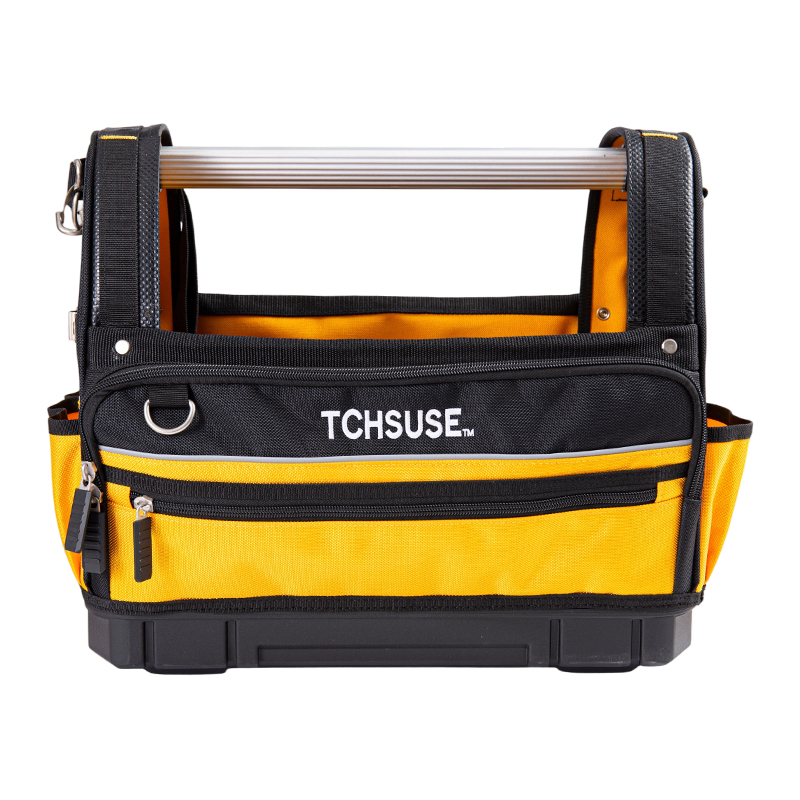
- Steel bail handle — a rigid arched handle, similar to a bucket handle, that pivots at each end and distributes weight evenly across the bag's frame.
- Steel frame base — a welded or powder-coated steel frame running along the bottom and sides of the bag, preventing sagging and keeping the opening wide for easy access.
- Riveted attachment points — industrial-grade rivets anchor the handle to the bag body, compared to stitched webbing loops that can tear away from fabric under sustained loads.
A quality steel handle tool bag can typically support 30 to 60 lbs (14–27 kg) of tool weight without handle deformation, compared to soft-handle bags that begin to show stress at 20–25 lbs.
Types of Tool Bags With Handles
Not all tool bags with handles are built the same way. Understanding the main types helps you match the bag to your specific work demands.
| Handle Type | Max Load (Approx.) | Rigidity | Best For |
|---|---|---|---|
| Steel Bail Handle | 40–60 lbs | High | Heavy trades, daily job site use |
| Steel Frame + Soft Grip Handle | 30–50 lbs | High | Electricians, plumbers, HVAC techs |
| Nylon Webbing Handle | 20–30 lbs | Low–Medium | Light-duty, occasional use |
| Rubber Grip Handle (No Frame) | 15–25 lbs | Low | DIY, home use, light tools |
| Aluminum Frame Handle | 25–40 lbs | Medium–High | Weight-sensitive trades, fieldwork |
For professional tradespeople, the steel bail handle or steel-framed bag consistently outperforms alternatives when tools exceed 25 lbs — a threshold that is easily reached with a standard set of hand tools, a cordless drill, and fasteners.
Key Features to Look for in a Steel Handle Tool Bag
Choosing the right bag goes beyond the handle material. The following features directly impact usability, durability, and organization on the job.
Bag Material and Base Construction
The bag body should be made from 600D to 1200D polyester or heavy-duty canvas. Higher denier ratings indicate denser, more abrasion-resistant fabric. The base is the highest-wear area — look for a molded plastic or steel-reinforced bottom panel that elevates the bag off wet or dirty surfaces and resists punctures from sharp tools inside.
Interior Pocket Layout and Tool Organization
A well-designed tool bag with a handle should offer:
- Interior sleeve pockets — vertical slots along the inner walls for screwdrivers, pliers, and chisels. Good bags include 10–30 sleeve pockets of varying widths.
- Exterior zippered pockets — for small parts, bits, blades, or documentation that needs to be accessed without opening the main compartment.
- Large open main compartment — accommodates bulky tools like hammers, levels, or cordless drills; a wide mouth opening (enabled by the rigid steel frame) is critical for fast access.
Handle Grip and Ergonomics
A bare steel handle becomes uncomfortable within minutes under load. Look for bags where the steel bail is wrapped in thermoplastic rubber (TPR) or foam padding at least 20–25mm thick. Some premium models use contoured ergonomic grip shapes that reduce hand fatigue by up to 30% compared to straight-bar handles in independent ergonomics testing.
Zipper Quality
Zippers are a common failure point. For heavy-duty tool bags, look for #10 YKK or equivalent metal or nylon-coil zippers. Bags with plastic zippers rated below #8 typically fail within 6–18 months under regular professional use. Double-pull zippers on the main compartment are especially convenient with a full bag.
Size Guide: Choosing the Right Capacity for Your Tool Load
Tool bags with handles are typically measured in inches (length × width × height) and sometimes listed by volume in liters. Matching bag size to actual tool load prevents overpacking — which stresses seams and handles — and underpacking, which wastes money on unnecessary bulk.
- Small (10–14 inches / 15–25L) — suitable for electricians or technicians carrying a defined set of hand tools; 15–20 lbs typical load.
- Medium (16–18 inches / 30–45L) — the most versatile size for general tradespeople; accommodates hand tools plus one or two cordless tools; 25–35 lbs typical load.
- Large (20–24 inches / 50–70L) — for contractors or mechanics needing to carry extensive tool sets including power tools, extension cords, or specialty items; 35–55 lbs typical load.
The 18-inch medium steel handle tool bag is the single most popular size among professional tradespeople, offering enough capacity for a full day's kit while remaining portable enough for stairs, ladders, and confined spaces.
Steel Handle vs. Other Handle Materials: A Practical Comparison
It's worth understanding where steel handles genuinely outperform alternatives — and where the trade-offs may matter to specific users.
| Criteria | Steel Handle | Aluminum Handle | Fabric/Webbing Handle |
|---|---|---|---|
| Load Capacity | Excellent | Good | Fair |
| Durability / Lifespan | 10+ years | 7–10 years | 2–5 years |
| Weight of Handle | Heavier | Light | Very Light |
| Bag Opening Rigidity | Stays wide open | Stays open | Collapses inward |
| Corrosion Resistance | Moderate (powder coat) | Good | N/A |
| Price Range | $40–$150+ | $35–$120 | $15–$60 |
The primary trade-off with steel is weight: a steel-framed 18-inch tool bag may weigh 3–5 lbs empty, versus 1.5–2 lbs for a fabric equivalent. For tradespeople walking long distances between sites, this added base weight can accumulate over a full workday.
Who Should Use a Steel Handle Tool Bag
A steel handle tool bag is not the right choice for every user, but it is clearly the best choice for specific work profiles:
- Electricians — carrying wire strippers, multimeters, conduit benders, and drill kits regularly exceeds 30 lbs; steel frames prevent bag collapse in confined spaces like panel boxes.
- Plumbers — heavy pipe wrenches, fitting tools, and copper fittings demand a bag that won't deform at the base or handle pivot points.
- HVAC technicians — manifold gauges, refrigerant tools, and hand tools collectively represent a demanding load profile for any bag.
- General contractors — daily mixed tool loads that vary in weight and composition benefit from a rigid, predictable bag structure.
- Workshop mechanics — who carry the bag short distances but need it to stand open and accessible while working.
DIY homeowners with light, occasional tool needs are typically better served by a mid-range fabric bag — the additional cost and weight of a steel handle bag provides minimal benefit for intermittent use under 20 lbs.
How to Extend the Life of Your Tool Bag With Handle
Even the best steel handle tool bag will wear prematurely without basic maintenance. The following practices can more than double the practical service life of a quality bag:
- Avoid chronic overpacking — consistently loading a bag beyond its rated capacity stresses seam stitching and handle rivets; stay within 80% of the rated load for daily use.
- Keep sharp tools sheathed — unprotected blades, drill bits, and chisels cutting through the inner lining from the inside is the most common source of bag material failure.
- Dry the bag after wet exposure — fabric left wet encourages mold, weakens stitching, and corrodes uncoated steel components; open the bag fully and air dry before storage.
- Lubricate zipper teeth annually — a small amount of zipper wax or beeswax on the zipper teeth prevents binding and reduces the mechanical stress of forcing a stuck zipper.
- Inspect rivet and handle pivot points quarterly — catch early loosening before it becomes a handle failure under load; tighten or replace any loose rivets immediately.
- Store flat or upright, not crushed — storing heavy objects on top of a tool bag deforms the steel frame over time and creases the fabric at stress points.
A well-maintained steel handle tool bag from a reputable brand can remain fully functional for 10 to 15 years of professional daily use — making the higher upfront cost a sound long-term investment compared to replacing a $25 fabric bag every two years.
Top Brands Offering Steel Handle Tool Bags
Several established tool storage brands produce steel handle or steel-framed tool bags that are widely trusted across the trades:
- Klein Tools — widely regarded as the industry standard for electricians; their 55-pocket and 33-pocket steel-frame canvas bags are professional benchmarks in North America.
- CLC Custom Leathercraft — offers a broad range of steel-framed open-top tool bags at accessible price points; popular in the construction trades.
- Stanley — produces steel-handle tote bags with reinforced bases aimed at both professionals and advanced DIYers.
- Veto Pro Pac — premium-tier bags with patented steel frames and vertical tool organization; favored by HVAC professionals; retail price typically $150–$300+.
- Bucket Boss — originated the canvas open-top tool bag category; many models feature steel bail handles with high-denier canvas bodies.
When comparing brands, prioritize handle attachment method, base panel material, and warranty coverage over cosmetic features. A manufacturer offering a lifetime warranty on the handle and frame is a strong signal of confidence in their construction quality.
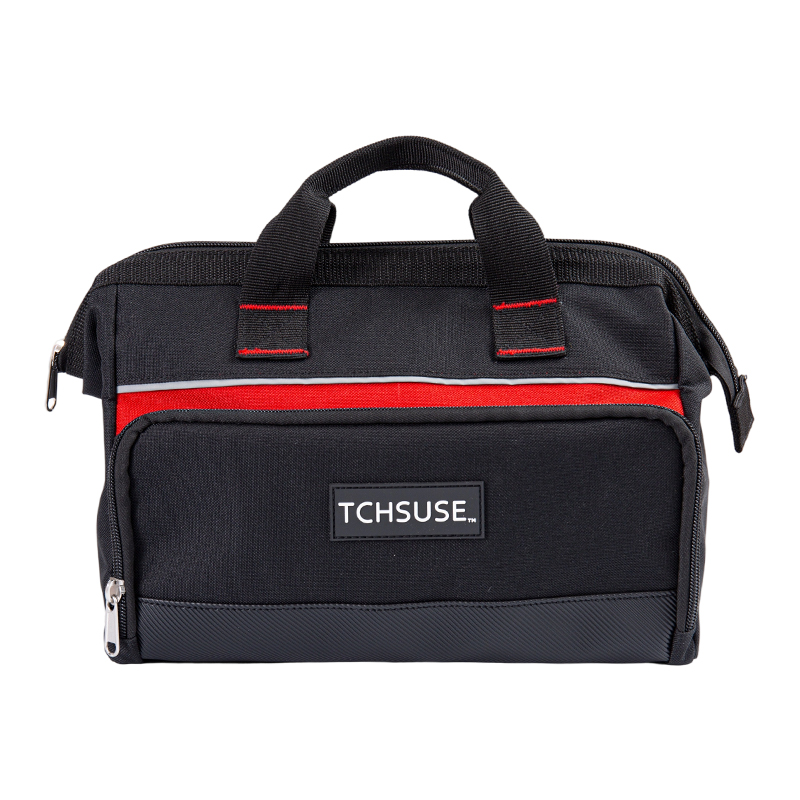
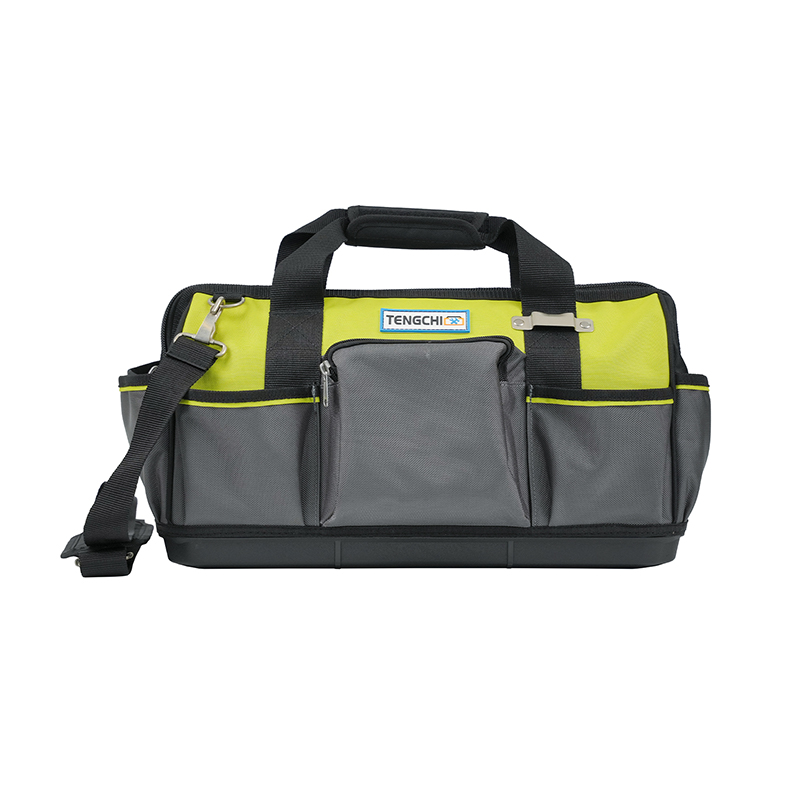

Yancheng Tengchi Tourism Products Co., Ltd. It is dedicated to
designing and producing high-quality tool bags, including
heavy-duty electrician bags.
Experienced staff and experts are always available to provide
you with professional guidance and solutions to technical
problems.
- Product
- Tool Bag
- Tool Backpack
- Capabilities
- Capabilities
- Custom
- About US
- About Tengchi
- Certification
- Quick Connect
- Custom
- Capabilities
- Contact



