
Email: [email protected]

 English
 español
Industry News
HOME / NEWS / Industry News / How to Store Tools Without a Garage: Smart Ideas for Apartments and Small Homes
HOME > NEWS > Industry News > How to Store Tools Without a Garage: Smart Ideas for Apartments and Small Homes
How to Store Tools Without a Garage: Smart Ideas for Apartments and Small Homes
 2026.10.29
 Industry News
Living without a garage is normal in many neighborhoods, but it raises one recurring question: where do all the tools go? The drill, the level, the wrenches, the random box of screws—they have a way of spreading into closets, corners, and the kitchen junk drawer. The answer is not a bigger house; it is a smarter system. We manufacture tool bags and tool backpacks for a living, so we spend our days thinking about how tools should be stored, carried, and organized. In this guide, we share practical, field-tested advice for keeping tools tidy and dry in homes where every square foot counts.
Start With a Clear Inventory
You cannot organize what you cannot see. Set aside an afternoon and pull every tool out of wherever it has landed. Sort everything into three piles: tools you use weekly, tools you use a few times a year, and tools you have not touched in years. The last pile is the hardest to deal with but the most freeing. Sell it, give it away, or move it to genuinely out-of-the-way storage. Once you know what is staying, group items by how often you use them rather than by type. The hammer and measuring tape belong near the door; the circular saw can live in a padded bag on a high shelf. Label each zone so that a helper, a partner, or future you can find things without opening every box.
Make Your Walls Work Harder
Walls are the most underused storage space in a home without a garage. A short pegboard in the laundry room, hallway, or even a utility closet can carry all the tools you reach for on a weekly basis. Hooks hold hammers and handsaws, a narrow shelf supports the drill, and tiny bins corral screws and wall anchors. Unlike a deep cabinet, a wall system takes up only a few inches of depth—and it keeps tools visible, which alone prevents a good amount of duplicate buying.
- Pegboards: flexible hook positions, easy to rearrange as your toolkit grows.
- French cleats: strong enough for routers, circular saws, and odd-shaped tools.
- Magnetic strips: perfect for drill bits, scissors, and anything with a steel body.
- Over-door organizers: ideal for sandpaper, safety glasses, and small fasteners.
Find Zones in Rooms You Already Have
Look at your home as a collection of micro-zones. A closet shelf can hold a row of tool bags instead of winter scarves. Under-bed containers work well for rarely used power tools if they are sealed against dust. The back of a bedroom door can carry an over-door organizer for hardware, and the top of a hallway cabinet is often the right height for a rolling tool bag. Match the storage spot to the tool's weight and use: light and frequent tools should be easy to reach, while heavy and occasional ones can live in more awkward spots.
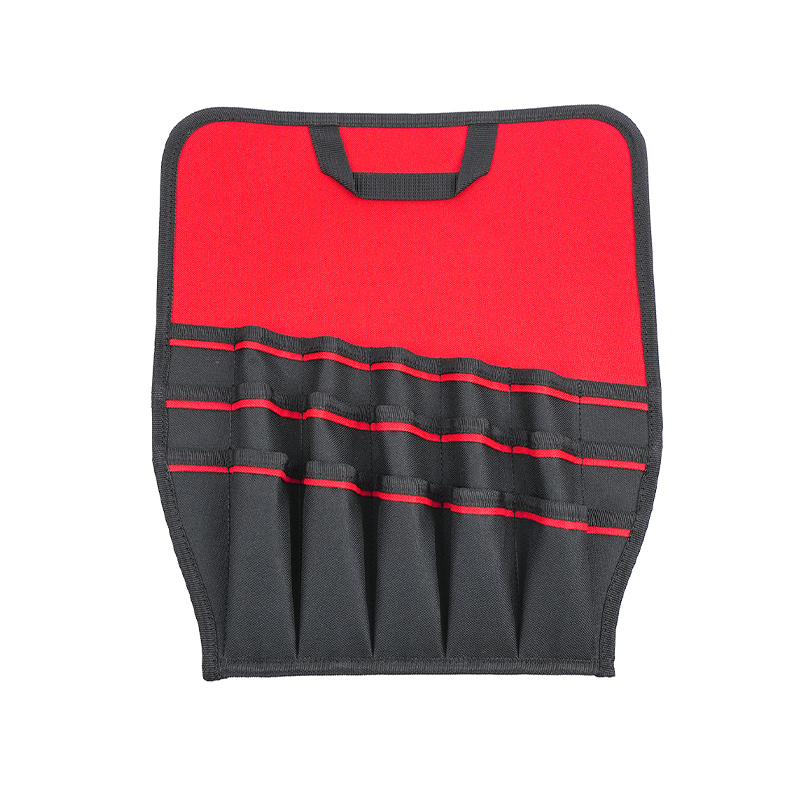
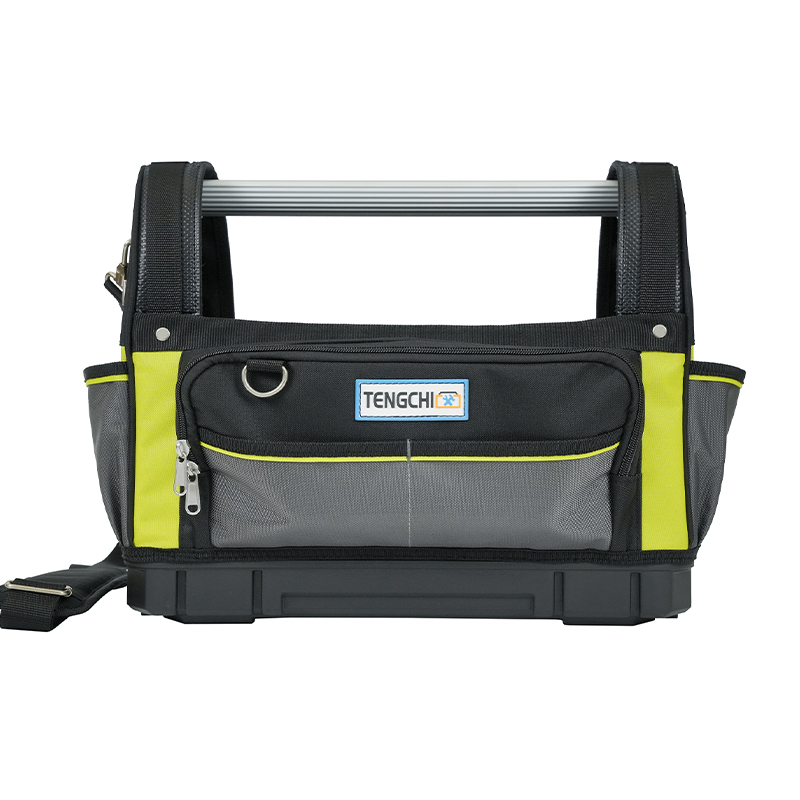
An open-top tool bag is one of our favorite pieces of "furniture" for small homes. It stands on a closet shelf or under a bench, and when a project appears, the whole system lifts out in one motion. Because there is no zipper to fight, you can see every tool at a glance and grab what you need without unloading everything.
 Multi-Pocket Open Tool Bag with Plastic BaseAn open-top design lets you see every tool at a glance, while the plastic bottom keeps contents dry and protects against wear—ideal for compact storage.View Product →
Use Storage That Moves With the Job
When you do not have a garage, storage often has to travel. That is why we recommend building your system around portable tool bags and backpacks rather than fixed cabinets. A tool backpack is especially useful in apartments: it hangs on a coat hook, sits neatly in the front closet, and when a job calls, you put it on and walk. For anyone who climbs stairs or moves between rooms, hands-free carrying is a quiet game changer.
Features worth paying for
- Molded or plastic base: survives wet ground and stops the bag from sagging.
- Multiple interior pockets: keep small parts from sinking to the bottom.
- Sturdy zippers and reinforced stitching: the first things to fail on low-cost bags.
- Padded shoulder straps or back panel: matters if you carry the bag more than a few meters.
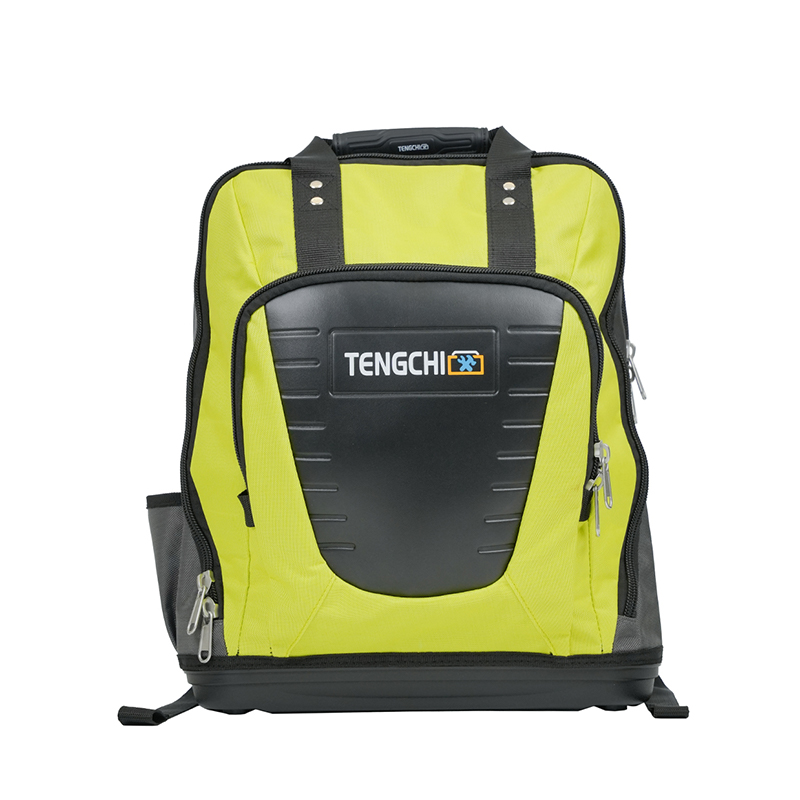
Choosing between a tool bag and a backpack comes down to how you work. We compared both in our guide to the best ways to store tools with tool bags and tool backpacks, but the short version is simple: bags offer wide openings and easy sorting, while backpacks free your hands and handle stairs with less drama. Either way, a reinforced bottom and heavy-duty zippers decide whether the bag survives being set down on dirty floors and loaded into a car boot.
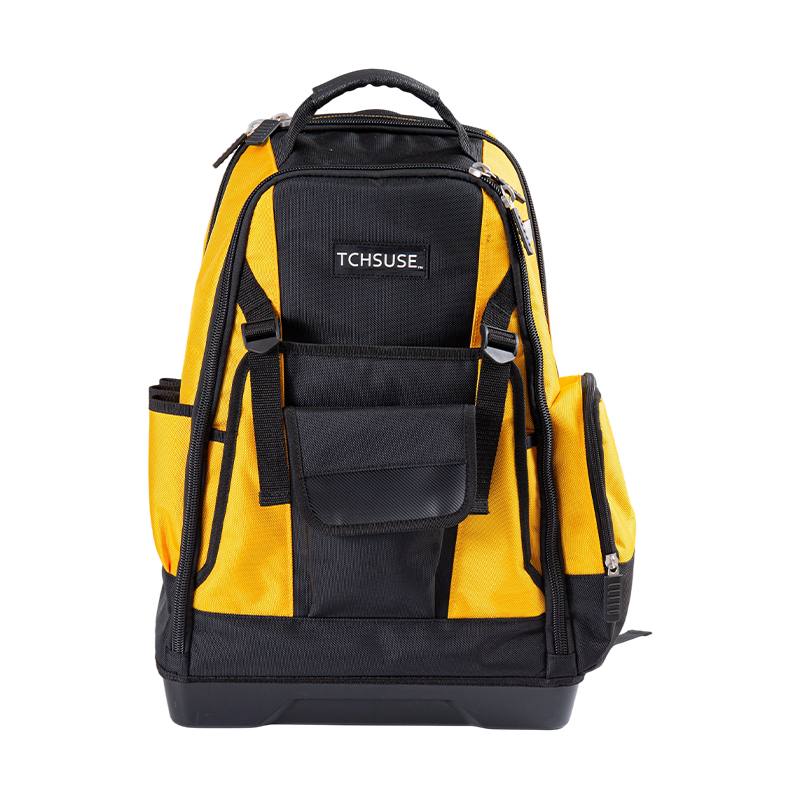
 Plastic-Base Tool Backpack for Hands-Free CarryingA rigid base keeps the backpack stable on wet or uneven surfaces, and the ergonomic carry system frees your hands for stairs and tight spaces.View Product →
Outdoor Storage When There Is No Other Choice
If the only option is a garden shed, a balcony, or a shared storage room, protection comes first. Moisture is the biggest enemy. Even a hobby-grade toolkit will rust and swell inside a damp shed. Keep bags and cases off the floor with a pallet or shelf, add desiccant packs to small boxes, and choose bags made from water-resistant fabric. A rigid plastic base helps too. We have explained how plastic-base tool bags improve durability, and the short version is that a solid bottom keeps tools dry when the bag is set on wet concrete or dewy grass—and it stops the fabric from wearing through. A wheeled rolling tool bag is worth considering for heavy sets, because it lets you move 20 kilograms from the car to the workspace without dragging yourself down.
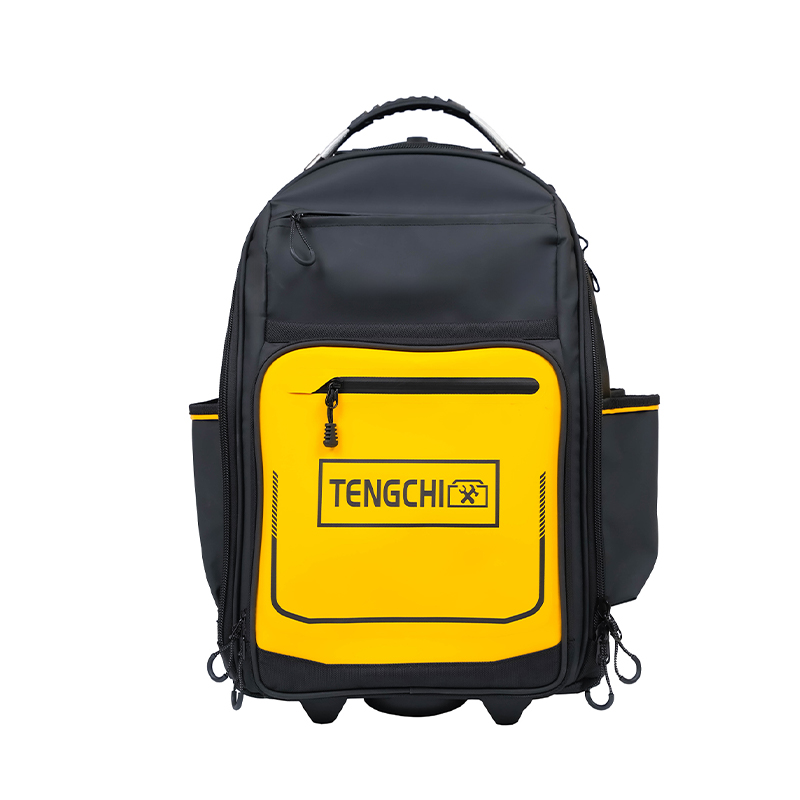
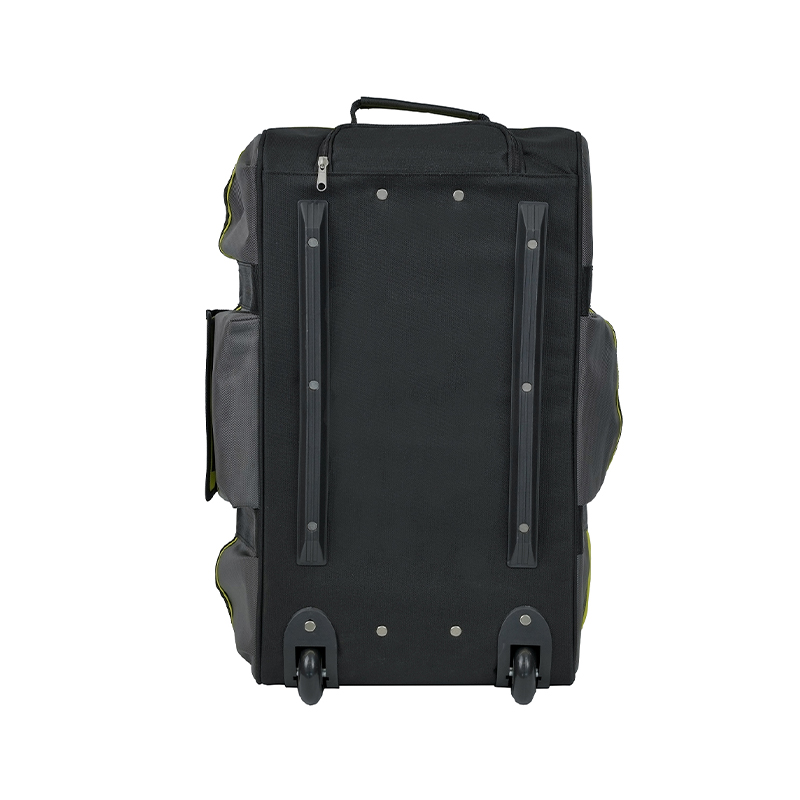 Wheeled Trolley Tool Bag for Heavy LoadsWith a trolley-style handle and reinforced base, this bag lets you move large tool sets smoothly across flat ground, reducing strain on long hauls.View Product →
Keep It Organized for the Long Run
No system survives if tools never go back to their home. Build one simple rule: every tool has a place, and that place is close to where the tool is used most often. Keep small parts in clear, labeled containers, and do a five-minute walk-through once a month to return strays. Whether you are a weekend DIYer or a tradesperson working from a van, the goal is the same: you should be able to put a hand on any tool within a minute.
A quick comparison of the approaches we have covered:
| Approach | Best for | What to watch |
|---|---|---|
| Wall-mounted pegboards | Daily tools, visibility | Need sturdy wall anchors |
| Closet shelves and over-door organizers | Small parts and lighter tools | Respect the weight limit |
| Portable tool bags and backpacks | Tools that move between rooms and job sites | Choose a size you can lift when loaded |
| Under-bed bins | Rarely used power tools | Keep them sealed against dust |
| Outdoor shed or balcony boxes | Large seasonal equipment | Must be watertight and lockable |
The secret to storing tools without a garage is combining a few approaches that fit the way you actually work. Start with a clear inventory, use your walls, reserve a corner of a closet, and let portable tool bags carry the load. Your tools will stay dry, findable, and ready for the next project.
Related Products

Yancheng Tengchi Tourism Products Co., Ltd. It is dedicated to
designing and producing high-quality tool bags, including
heavy-duty electrician bags.
Experienced staff and experts are always available to provide
you with professional guidance and solutions to technical
problems.
- Product
- Tool Bag
- Tool Backpack
- Capabilities
- Capabilities
- Custom
- About US
- About Tengchi
- Certification
- Quick Connect
- Custom
- Capabilities
- Contact


