
Email: [email protected]

 English
  español
Industry News
Best Ways to Store Tools: Tool Bag vs Tool Backpack
 2026.05.13
 Industry News
The best way to store tools depends on where and how you use them: a tool backpack is the top choice for mobile tradespeople who carry tools to multiple job sites, a tool bag suits technicians with a defined set of hand tools, and a fixed workshop storage system — pegboard, tool chest, or wall-mounted panel — is best for stationary workspaces. No single solution fits every situation, but the right match dramatically reduces lost tools, damage from improper storage, and time wasted searching for equipment.
According to a survey by the Home Improvement Research Institute, the average tradesperson loses 1–2 tools per month due to disorganization — a cost that adds up to hundreds of dollars annually. Choosing the correct storage method eliminates most of this waste. This article breaks down each major storage type, explains what makes tool bags and tool backpacks different, and gives you a practical framework for organizing tools correctly regardless of which system you choose.
Tool Bag vs. Tool Backpack vs. Workshop Storage: Which Suits Your Work Style
Before choosing a storage method, the most important question is: where do your tools go every day? The answer determines which system will actually get used consistently — because the best storage solution is always the one that fits naturally into how you work.
| Storage Type | Best For | Typical Capacity | Key Advantage | Key Limitation |
|---|---|---|---|---|
| Tool Backpack | Mobile tradespeople, electricians, IT techs, traveling contractors | 30–50 liters / 40–80 tools | Hands-free carry; weight distributed across both shoulders | Less immediate tool visibility than open-top bag |
| Tool Bag (open top) | Plumbers, HVAC techs, general contractors with fixed tool kits | 18–26 inches / 30–60 tools | Instant top-down visibility; fast tool access on site | One-shoulder or hand carry; heavier loads are fatiguing |
| Tool Chest / Cabinet | Mechanics, machinists, workshop-based professionals | Hundreds of tools; modular drawers | Maximum organization; protects precision tools from humidity | Not portable; significant floor space required |
| Pegboard / Wall Panel | Home workshops, garages, shared tool rooms | Varies; typically 20–100 tools per panel | 100% tool visibility; quick inventory check | No protection from dust, moisture, or UV |
| Rolling Tool Cart / Tote | Contractors moving tools across large job sites or between floors | Large; accommodates power tools and hand tools together | Reduces physical strain for heavy loads | Difficult on stairs, uneven terrain, or confined spaces |
Tool Backpacks: The Best Option for Mobile Tool Carry
A tool backpack is the superior portable storage solution when you regularly move between job sites, climb ladders, navigate tight spaces, or need to carry a full kit while keeping both hands free. Compared to a traditional tool bag carried in one hand, a backpack distributes weight across the shoulders and hips — reducing upper-body fatigue by a measurable margin on long days.
Ergonomic studies in occupational health show that carrying loads greater than 10% of body weight in one hand or over one shoulder increases musculoskeletal injury risk significantly over a working career. A 20-lb (9 kg) loaded tool bag — a common weight for electricians or IT technicians — exceeds this threshold for most adults. A backpack-style carry reduces that strain considerably.
What to Look for in a Tool Backpack
- Load capacity and frame: Look for an internal frame or rigid back panel if you carry more than 15 lbs (7 kg) regularly. A soft-sided backpack without structure collapses unevenly and still causes shoulder fatigue.
- Pocket organization: The best tool backpacks have a wide-opening main compartment, multiple exterior pockets for frequently used tools, and interior loops or sleeves for drivers, pliers, and wrenches. Look for at least 15–25 interior pockets and loops in a professional-grade model.
- Base material: A reinforced, waterproof base (molded plastic or rubberized fabric) protects tools from ground moisture and prevents the bag from absorbing water on wet surfaces — a common failure point in cheaper models.
- Fabric durability: 1680D or 1800D ballistic nylon or polyester is the standard for professional tool backpacks. Consumer-grade bags often use 600D polyester, which shows wear within 6–12 months under daily site use.
- Shoulder and back padding: Padded shoulder straps and a ventilated or padded back panel are essential for comfort over full working days. A chest strap or hip belt significantly reduces shoulder fatigue when carrying heavy loads.
- Zipper quality: YKK zippers or equivalent are the industry benchmark. Cheap zippers fail under the weight of a fully loaded bag — look for large-gauge (#8 or #10) zipper pulls on main compartments.
Who Benefits Most from a Tool Backpack
- Electricians who carry wire strippers, multimeters, conduit benders, and hand tools up ladders and through crawl spaces
- IT and AV technicians who travel between buildings or floors carrying cable testers, punch-down tools, drills, and laptops simultaneously
- Carpenters and finish workers who move frequently across a large job site and need tools accessible without setting anything down
- DIY homeowners who want one organized bag for all maintenance tools rather than multiple separate cases
Tool Bags: Fast Access and Proven Reliability for On-Site Work
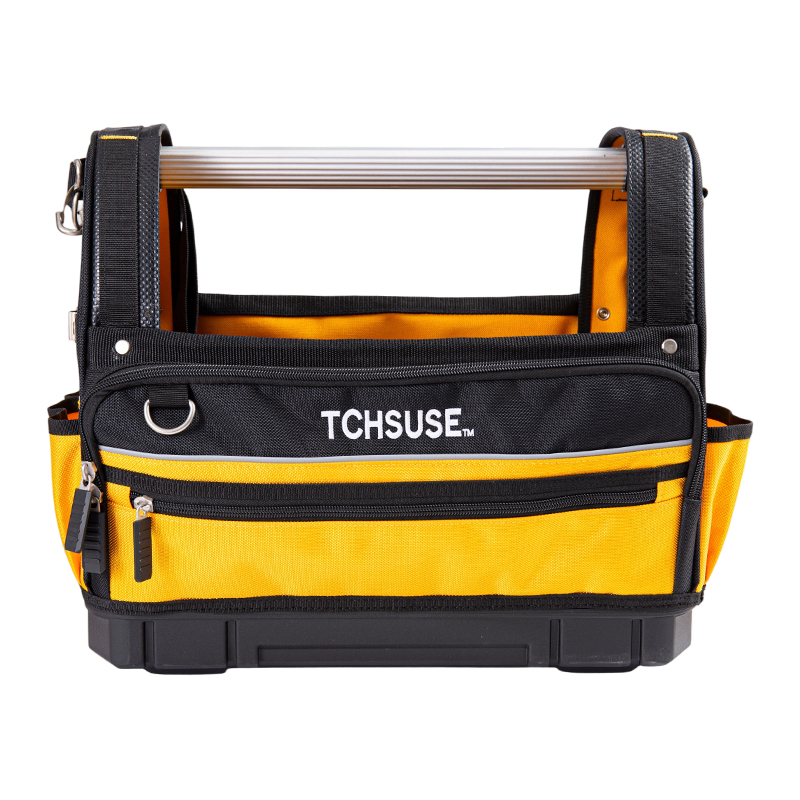
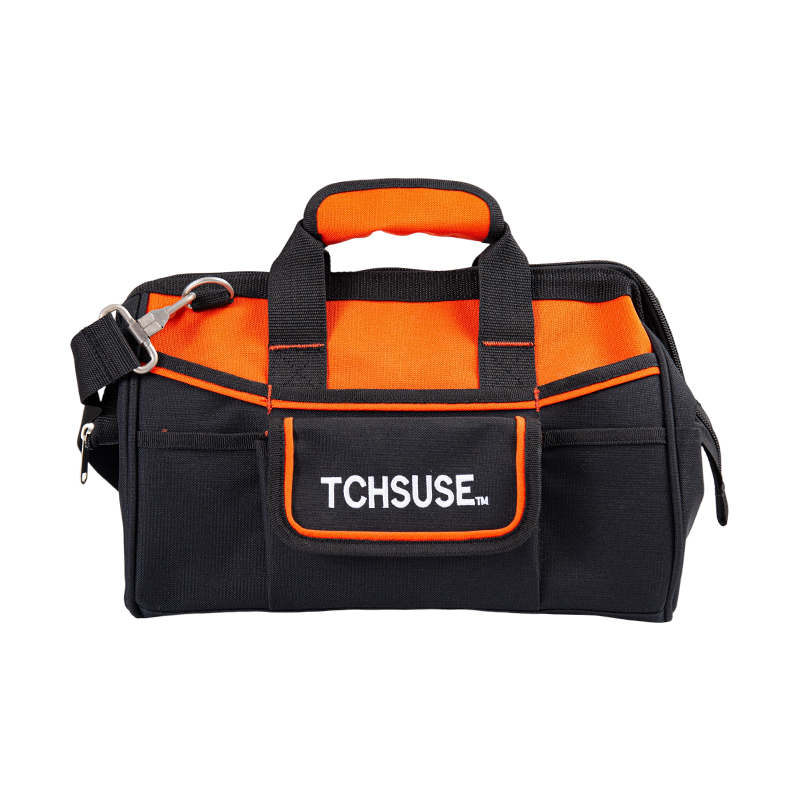
The open-top tool bag remains the preferred choice for trades where speed of access matters more than portability comfort — plumbing, HVAC service, appliance repair, and general maintenance work where the bag sits beside you on the floor and you reach in repeatedly throughout the day.
The defining advantage of an open-top tool bag is immediate top-down visibility of all tools at once. You don't need to unzip pockets or dig through compartments — every tool is visible and reachable in a single motion. For a plumber working under a sink who needs a specific wrench fast, this matters.
Choosing the Right Tool Bag Size
Tool bags are measured by their mouth opening length. Standard sizes and their appropriate uses:
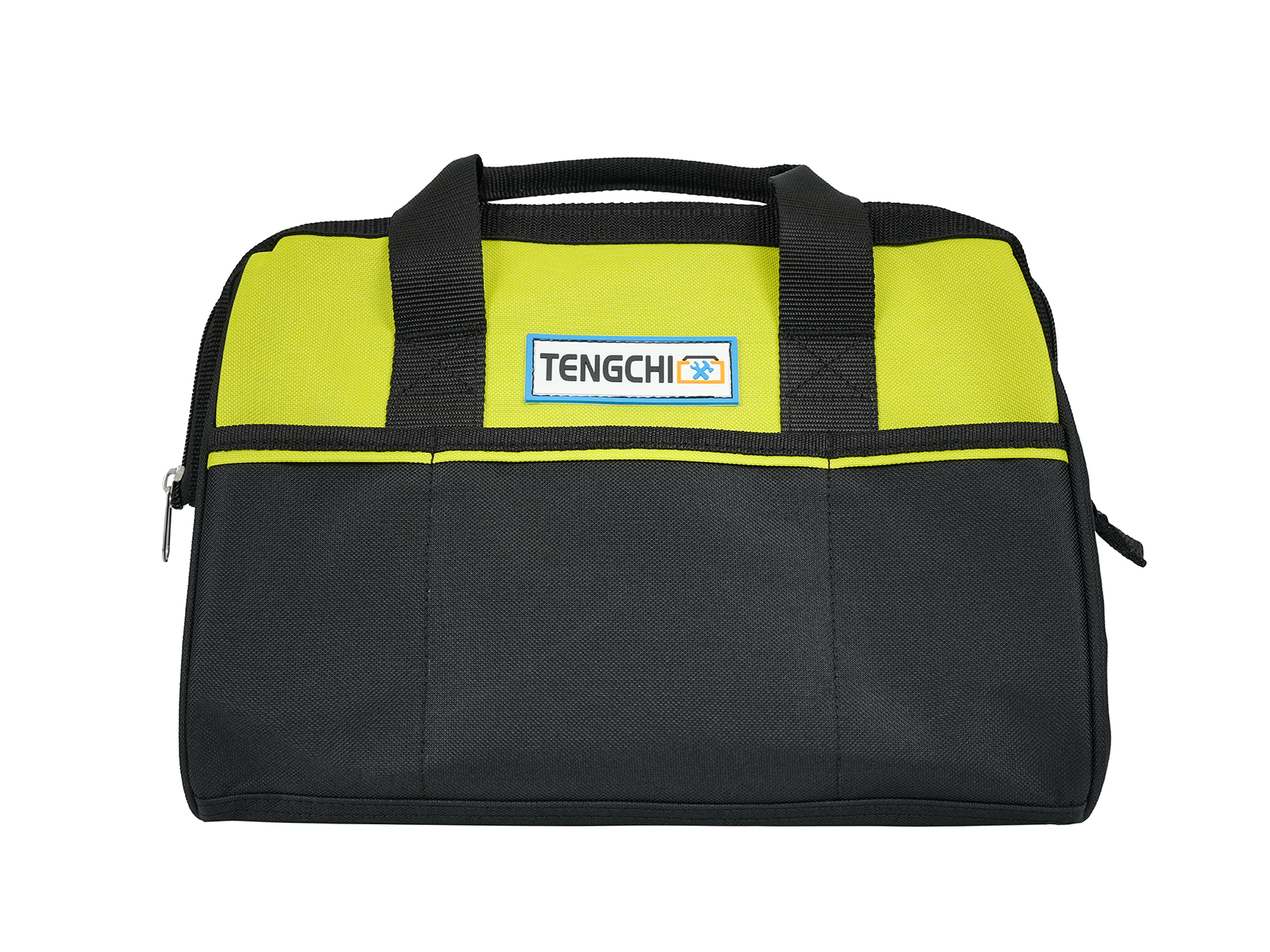
- 12–14 inches: Light kit for service calls — screwdrivers, pliers, tape, voltage tester. Good for appliance repair technicians or cable installers.
- 16–18 inches: The most common professional size. Fits a full set of hand tools including larger wrenches, a hammer, and multiple drivers with room for a compact power tool.
- 20–24 inches: Heavy-duty bags for plumbers, HVAC techs, or general contractors carrying pipe wrenches, crimpers, and large-format tools. These typically weigh 30–50 lbs (14–23 kg) when loaded — a significant carry.
Key Features That Separate Good Tool Bags from Poor Ones
- Molded base: A rigid plastic or metal-reinforced base keeps the bag upright when set down, prevents sharp tools from wearing through the bottom, and keeps contents dry. This is the single most important quality indicator in a tool bag.
- Interior pockets and loops: Exterior pockets for frequently grabbed tools (markers, tape measures, utility knives) and interior loops for drivers and pliers prevent everything from piling into an unsorted heap.
- Handle quality: A padded, reinforced handle with a metal or nylon wrap at stress points is essential. Handle failure on a heavy bag is a common failure mode in mid-range products.
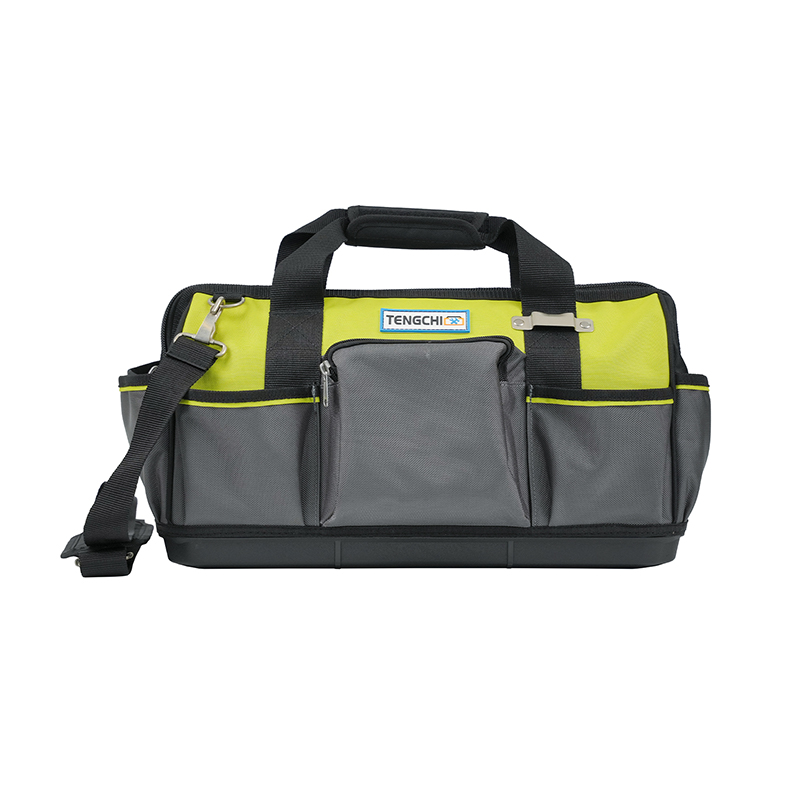
- Shoulder strap option: For bags over 16 inches, a removable padded shoulder strap significantly reduces hand fatigue when carrying across a job site.
Workshop Tool Storage: Pegboards, Tool Chests, and Wall Systems
For tools that live in a fixed workspace — a garage, workshop, or trade vehicle — portable bags and backpacks are not the primary storage system. Stationary storage solutions offer superior organization, protection for precision tools, and the kind of visual inventory control that prevents buying duplicates of tools you already own.
Pegboard and Slotted Wall Panels
A pegboard system with labeled hook outlines is the fastest way to audit tool inventory — missing tools are immediately visible as empty hooks. A standard 4×8 ft (1.2×2.4 m) pegboard panel can organize 50–80 hand tools in a single glance. The key to making pegboards effective long-term is tracing tool outlines in paint or marker so tools always return to the same position. Without outlines, pegboards devolve into disorganized hook collections within weeks.
Modern alternatives to traditional pegboard include slotted steel panels (like the Gladiator GearWall or similar systems) and French cleat walls — a system of angled wooden or metal strips on which custom holders can be repositioned anywhere along the wall. French cleats are particularly popular in custom workshops because they allow storage configurations to evolve without drilling new holes.
Tool Chests and Roller Cabinets
A tool chest (upper cabinet) paired with a roller cabinet (lower cabinet on wheels) is the gold standard for mechanics, machinists, and serious hobbyists. The combination provides:
- Drawer liners: Foam or rubber-lined drawers prevent tools from sliding and damaging each other. For precision instruments (micrometers, calipers), foam inserts cut to shape are essential — contact damage can affect calibration.
- Humidity control: Sealed drawers protect tools from the humidity fluctuations that cause rust on carbon steel tools. A silica gel desiccant pack in each drawer further reduces moisture. Tools stored in open pegboard workshops in humid climates can develop surface rust within 2–4 weeks without oil treatment.
- Category separation: The drawer system naturally enforces grouping by tool type — one drawer for sockets, one for wrenches, one for measuring tools — without any additional effort.
- Security: Lockable drawers protect expensive tool investments. A professional mechanic's tool set can represent $5,000–$30,000 in value, making secure storage a genuine financial concern.
How to Organize Tools Inside Any Storage System
The storage container — whether a tool backpack, tool bag, or drawer cabinet — only works as well as the organization system inside it. The same principles apply regardless of the container type.
Organize by Frequency of Use, Not by Tool Category
The most intuitive approach — grouping all screwdrivers together, all pliers together — is not the most efficient. Instead, organize by how often you reach for something:
- Constant use tools (tape measure, utility knife, pencil, phone) go in exterior pockets or the front of the bag — reachable in under 3 seconds without opening the main compartment.
- Daily use tools (screwdrivers, pliers, adjustable wrench, voltage tester) go in the main compartment's exterior loops and pockets — visible and reachable immediately upon opening.
- Occasional use tools (specialty bits, less-used sockets, test leads) go in the bottom or rear compartments — accessed less frequently, positioned to not block daily-use items.
Weight Distribution for Backpacks and Bags
Improper weight loading causes two problems: physical fatigue and tipping. For tool backpacks, heavy items (drills, heavy wrenches, power packs) belong closest to your back and low in the pack — this keeps the center of gravity close to your spine and reduces the lever-arm effect that causes back strain. Light, bulky items go toward the exterior and top.
For open-top tool bags, place the heaviest tools in the center and bottom. Tools placed at the edges of a tall, narrow bag create a bag that tips sideways on uneven surfaces — a common cause of tool scatter on job sites.
Protect Cutting Edges and Sharp Points
Loose chisels, utility knife blades, drill bits, and saw blades in the bottom of a bag damage other tools through contact, ruin cutting edges through mutual abrasion, and create safety hazards when reaching in blind. Use:
- Blade guards or edge caps on chisels and hand plane blades — even a cheap rubber cap extends edge life significantly
- Drill bit rolls or indexed cases to separate bits and prevent tip damage from contact
- Dedicated side pockets for retractable utility knives so the blade is never exposed in the main compartment
Protecting Tools from Rust, Moisture, and Environmental Damage
Storage is not only about organization — it's about preservation. Carbon steel tools begin to rust within 24–48 hours of exposure to humidity above 70% relative humidity without protective treatment. High-quality storage and basic maintenance habits prevent this.
Moisture Control Inside Tool Bags and Backpacks
- Never store tools in a sealed bag when wet or after working in rain — open the bag and allow it to dry before closing, to prevent condensation buildup inside.
- Place a small silica gel desiccant pack (10–20g) in the main compartment of any tool bag stored in a vehicle or humid environment. Replace or regenerate packs every 3–6 months.
- Apply a thin film of tool oil (3-in-1 oil, WD-40 long-term protectant, or Boeshield T-9) to bare metal surfaces of hand tools before long-term storage. This thin coating is sufficient to prevent oxidation for 6–12 months in most environments.
Vehicle Storage Considerations
Tools stored in vehicle cargo areas experience extreme temperature cycles — from below freezing in winter to above 140°F (60°C) in a parked summer vehicle. These temperature swings cause condensation inside sealed bags as temperatures drop rapidly at night, accelerating rust. For tools stored long-term in vehicles:
- Use van racking or vehicle-specific drawer systems rather than loose bags on the floor, to prevent tool movement and damage during transit
- Choose tool backpacks and bags with waterproof-base construction to insulate against floor condensation
- Avoid storing power tool batteries in vehicles during temperature extremes — lithium-ion cells degrade significantly faster when repeatedly cycled through high heat storage
Storing Specific Tool Types: Best Practices by Category
Different tool categories have specific storage requirements based on their construction, precision requirements, and safety considerations.
| Tool Category | Recommended Storage | Key Protection Need | Common Storage Mistake |
|---|---|---|---|
| Hand tools (screwdrivers, pliers, wrenches) | Tool bag, backpack loops, drawer with liner | Rust prevention; handle grip integrity | Storing wet or oily tools that stain bag fabric and handles |
| Power tools (drills, impact drivers, sanders) | Original case or molded insert case; tool backpack main compartment | Impact protection; dust exclusion from motor vents | Storing with battery attached (accelerates battery self-discharge) |
| Measuring and precision tools (levels, squares, calipers) | Dedicated foam-lined case or padded sleeve; separate drawer | Calibration accuracy; scratch prevention on reference surfaces | Stacking heavy tools on top of levels or squares, causing warping |
| Cutting tools (chisels, plane blades, router bits) | Edge-guarded chisel roll; indexed router bit case | Edge protection; preventing contact with other metal tools | Loose in a drawer or bag bottom — dulls edges rapidly |
| Sockets and bits | Indexed socket rail or tray; bit holder in tool backpack pocket | Size identification; preventing mix-up of metric and imperial | Loose sockets in a bag — difficult to size-match quickly on site |
| Lithium-ion batteries | Dedicated battery bag or fireproof LiPo storage pouch for long-term | Temperature control; protection from physical damage to cells | Storing fully discharged — store at 40–60% charge for longevity |
Building a Tool Inventory System to Prevent Loss
Even the best storage system fails if tools leave the job site without returning to their designated spot. A simple inventory habit closes this loop.
The End-of-Day Packing Check
The single most effective tool-loss prevention habit is a physical end-of-day packing check before leaving any job site. This means deliberately scanning the work area — not just picking up what's visible — and physically touching each tool as it goes back into the bag. Professionals who do this consistently report near-zero tool loss compared to those who pack reactively.
Marking and Identifying Your Tools
- Paint pen or engraving: Mark your name or company initials on tool handles and shanks. An engraved tool left behind on a shared job site has a high recovery rate; an unmarked one does not.
- Colored tape bands: Wrapping tool handles with a distinctive color of electrical tape is quick, cheap, and instantly identifies your tools in a shared workspace. Use a different color per person on multi-person crews.
- Tool tracking tags: Small Bluetooth trackers (Tile, Apple AirTag) can be attached to high-value tool bags or power tool cases. While they don't track individual hand tools, they confirm whether your bag made it back to the vehicle — a surprisingly common oversight at the end of long days.
Photographing Your Kit
For insurance and replacement purposes, photograph your full tool inventory annually with a smartphone. Store the images in cloud storage. For a professional with $3,000–$10,000 in tools, this photograph record is the difference between a successful insurance claim and a total loss with no documentation.
Practical Tips to Keep Any Tool Storage System Working Long-Term
Storage systems degrade into disorganization gradually — usually not through a single failure but through accumulated small exceptions. Preventing this requires a few consistent habits rather than periodic reorganization marathons.
- One in, one out: Every time a new tool is added to a bag or workshop system, an old or duplicate tool is removed or relocated. This prevents slow accumulation of tools that no longer belong in your daily kit, which is the primary cause of overpacked, disorganized bags.
- Fix broken storage immediately: A torn pocket, a broken zipper, or a fallen pegboard hook left unrepaired for even a week will accumulate misplaced tools. Repair or replace damaged storage components within 24–48 hours.
- Quarterly cleanout: Every three months, empty the tool bag or backpack completely, clean the interior, inspect for wear, and repack deliberately. This process typically reveals 3–5 tools that no longer belong in the kit and identifies damaged or missing items before they become a problem on the job.
- Separate personal from work tools: Mixing personal home tools with work tools leads to both sets becoming disorganized. Maintain separate designated storage for each context, even if it's just a separate shelf or secondary bag.
- Invest in quality storage upfront: A professional-grade tool backpack costs $80–$200 compared to $20–$40 for a consumer bag. The difference in durability over 3–5 years of daily use makes the premium version significantly cheaper per year — and the organization it enables protects tools worth many times that investment.
Related Products

Yancheng Tengchi Tourism Products Co., Ltd. It is dedicated to
designing and producing high-quality tool bags, including
heavy-duty electrician bags.
Experienced staff and experts are always available to provide
you with professional guidance and solutions to technical
problems.
- Product
- Tool Bag
- Tool Backpack
- Capabilities
- Capabilities
- Custom
- About US
- About Tengchi
- Certification
- Quick Connect
- Custom
- Capabilities
- Contact



