
Email: [email protected]

 English
  español
Industry News
HOME / NEWS / Industry News / Rolling vs. Standard Tool Backpacks: Which is Best for Your Daily Commute?
HOME > NEWS > Industry News > Rolling vs. Standard Tool Backpacks: Which is Best for Your Daily Commute?
Rolling vs. Standard Tool Backpacks: Which is Best for Your Daily Commute?
 2026.02.25
 Industry News
In the modern industrial and service sectors, the way a professional carries their gear has become just as important as the tools themselves. Whether you are an electrician navigating a sprawling construction site, an HVAC technician climbing stairs in high-rise apartments, or a field engineer traveling between cities, your tool bag is your mobile headquarters.
For years, the standard tool backpack was the go-to solution for hands-free mobility. However, the emergence of the Rolling Tool Backpack has sparked a new debate: is it better to carry the weight on your shoulders or roll it on the ground? This guide explores the nuances of both designs to help you determine which is best for your specific daily commute.
The Anatomy of Modern Tool Storage
The Standard Tool Backpack
A standard tool backpack is designed for maximum portability. It focuses on weight distribution across the back and shoulders, utilizing padded straps and chest buckles. It is the ultimate choice for those who need to keep their hands free to climb ladders or navigate rough, uneven terrain where wheels would fail.
The Rolling Tool Backpack
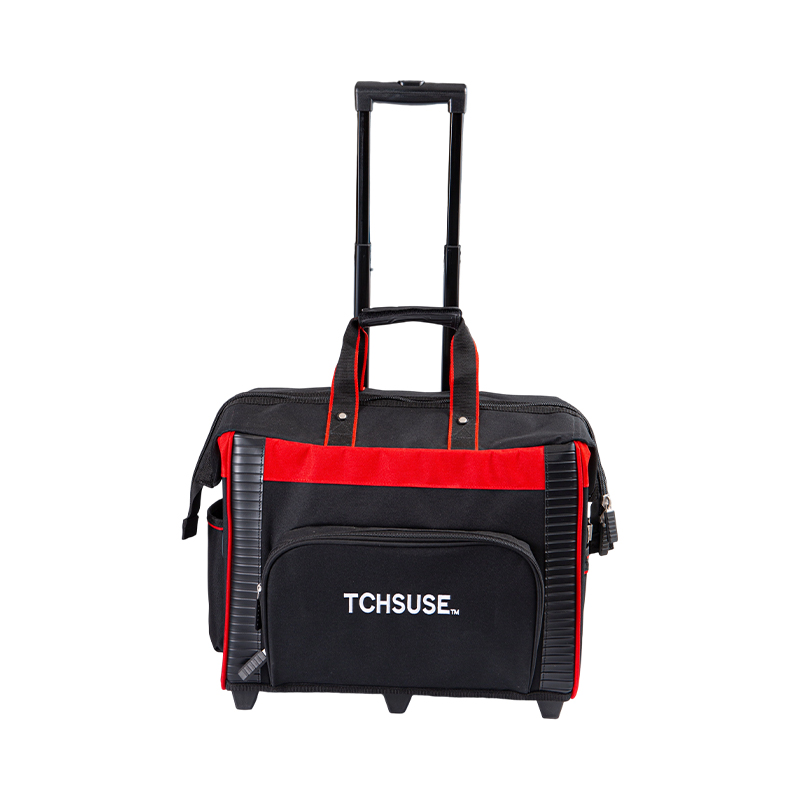
A Rolling Tool Backpack is a hybrid innovation. It combines the organizational pockets of a traditional backpack with a telescoping handle and heavy-duty wheels. The primary goal of this design is to eliminate the physical strain of carrying 30, 40, or even 50 pounds of steel tools over long distances.
Comfort and Health: Protecting Your Most Valuable Asset
As a professional, your body is your most important tool. Long-term use of poorly designed gear can lead to chronic back pain, shoulder strain, and fatigue.
Weight Management
The most obvious advantage of a Rolling Tool Backpack is the relief it provides to your spine. Even a high-end ergonomic backpack puts significant pressure on the lumbar region. If your daily commute involves walking long distances from a parking lot to a job site, or navigating large airport terminals, rolling the weight is a much healthier option.
The Hybrid Advantage
Quality rolling models are still equipped with shoulder straps. This means that if you encounter a flight of stairs or a muddy patch of ground, you can still wear it as a backpack. However, it is important to note that because of the internal handle mechanism and wheels, a Rolling Tool Backpack is inherently heavier (empty) than a standard one. You must weigh the benefit of rolling against the extra few pounds you'll feel when you do have to put it on your back.
Storage Capacity and Internal Organization
When you are on-site, time is money. Searching for a lost screwdriver or a specific wrench can add up to hours of lost productivity over a month.
Pocket Density
Both styles offer impressive organization, but they utilize space differently.
- Standard Backpacks often have a slimmer profile to stay close to the body’s center of gravity.
- Rolling Tool Backpacks tend to have a wider, deeper base to accommodate the wheel axle. This extra depth often allows for larger items, such as power drills, impact drivers, or large plastic parts boxes, to sit at the bottom of the main compartment.
Protecting Electronics
In 2026, a technician’s "tools" aren't just hammers and pliers—they are laptops, tablets, and diagnostic sensors. A high-quality Rolling Tool Backpack usually features a reinforced, padded compartment specifically for electronics. Because the base is often hard plastic (to support the wheels), it provides an extra layer of protection against moisture and impact when the bag is set down on a damp or concrete floor.
Durability: Wheels vs. Fabric
A tool bag in a professional environment leads a hard life. It gets dragged across gravel, splashed with oil, and tossed into the back of trucks.
### Wheel Engineering
The "Achilles' heel" of a cheap rolling bag is the wheel system. However, professional-grade Rolling Tool Backpacks use oversized, threaded wheels with sealed bearings. These are designed to handle debris and uneven surfaces. When selecting a bag, look for wheels that are recessed or protected by a skid plate to prevent damage when going over curbs.
Fabric and Zippers
In both styles, the fabric should be a high-denier ballistic polyester (1200D or higher). Zippers are the most common point of failure. Look for heavy-duty YKK zippers with oversized pulls that can be operated while wearing work gloves. Because a rolling bag is often tilted and dragged, the bottom should be made of a molded, waterproof hard-shell material.
The "Last Mile" Challenge: Navigating the Jobsite
Your "commute" doesn't end at the front door of the building; it ends at the specific spot where you perform the work.
Tight Spaces and Ladders
If your work requires you to climb vertical ladders or squeeze into crawlspaces, a standard backpack is superior. It keeps the profile of your body slim and balanced. A rolling bag can be cumbersome in these environments due to the rigid handle assembly.
Long Hallways and Smooth Floors
If you work in hospitals, schools, or data centers, the Rolling Tool Backpack is king. These environments feature long, flat hallways where carrying a heavy bag is unnecessary and tiring. The ability to glide your tools silently across the floor allows you to arrive at the specific work zone fresh and ready to work, rather than out of breath from a heavy load.
Maintenance and Longevity
To get the most out of your investment, you need to understand the maintenance requirements.
- Standard Backpacks: Maintenance is mostly about cleaning the fabric and ensuring the straps aren't fraying. They are simpler machines with fewer moving parts.
- Rolling Tool Backpacks: You will need to occasionally check the telescoping handle for smooth operation and clear any hair or debris from the wheel axles. A small drop of lubricant on the wheel bearings once a year can extend the life of the bag significantly.
Professional Appearance and Client Perception
In the service industry, your appearance speaks to your competence. A neat, organized Rolling Tool Backpack looks professional. It suggests that you are prepared, carry a full kit, and value your equipment.
For independent contractors, pulling up to a client's home or office with a clean, wheeled organizer creates an immediate impression of modern efficiency. It signals that you use the best gear to provide the best service.
Final Comparison Table: At a Glance
| Feature | Standard Tool Backpack | Rolling Tool Backpack |
| Best For | Climbing, Tight Spaces, Short Distances | Long Walks, Heavy Tools, Flat Surfaces |
| Physical Strain | High (On shoulders/back) | Low (Rolls on ground) |
| Empty Weight | Lightweight | Heavier (Due to handle/wheels) |
| Internal Space | Great for hand tools | Better for power tools/batteries |
| Mobility | All-terrain | Primarily flat/smooth surfaces |
| Durability | Very High (Simple design) | High (Requires wheel/handle care) |
Which One Should You Choose?
The decision between a rolling or a standard tool backpack ultimately depends on your "average" day.
Choose a Standard Tool Backpack if:
- You spend a significant portion of your day on ladders or scaffolding.
- Your job sites are mostly dirt, mud, or uneven terrain.
- You carry a lightweight kit (under 20 lbs).
Choose a Rolling Tool Backpack if:
- You carry heavy power tools, batteries, and diagnostic equipment.
- You have to walk long distances from your vehicle to the work area.
- You want to prioritize long-term back and joint health.
- You work in environments with finished floors and long corridors.
The Rolling Tool Backpack represents a shift toward a more ergonomic and efficient workplace. While it requires a slightly higher initial investment, the reduction in physical fatigue and the increase in organization often lead to a more productive—and more comfortable—professional life.

Yancheng Tengchi Tourism Products Co., Ltd. It is dedicated to
designing and producing high-quality tool bags, including
heavy-duty electrician bags.
Experienced staff and experts are always available to provide
you with professional guidance and solutions to technical
problems.
- Product
- Tool Bag
- Tool Backpack
- Capabilities
- Capabilities
- Custom
- About US
- About Tengchi
- Certification
- Quick Connect
- Custom
- Capabilities
- Contact



