
Email: [email protected]

 English
  español
Industry News
HOME / NEWS / Industry News / Hands-Free Efficiency: Why the Plastic Bottom Backpack is Replacing Traditional Tool Carts
HOME > NEWS > Industry News > Hands-Free Efficiency: Why the Plastic Bottom Backpack is Replacing Traditional Tool Carts
Hands-Free Efficiency: Why the Plastic Bottom Backpack is Replacing Traditional Tool Carts
 2026.02.18
 Industry News
In the fast-paced world of electrical contracting and industrial maintenance, time is the most valuable commodity. For decades, the standard method for transporting a heavy array of pliers, testers, screwdrivers, and power tools was the rolling tool cart or the open-top tote. While these served their purpose, the modern job site—characterized by high-rise constructions, cramped crawl spaces, and unpredictable outdoor environments—demands a more agile solution.
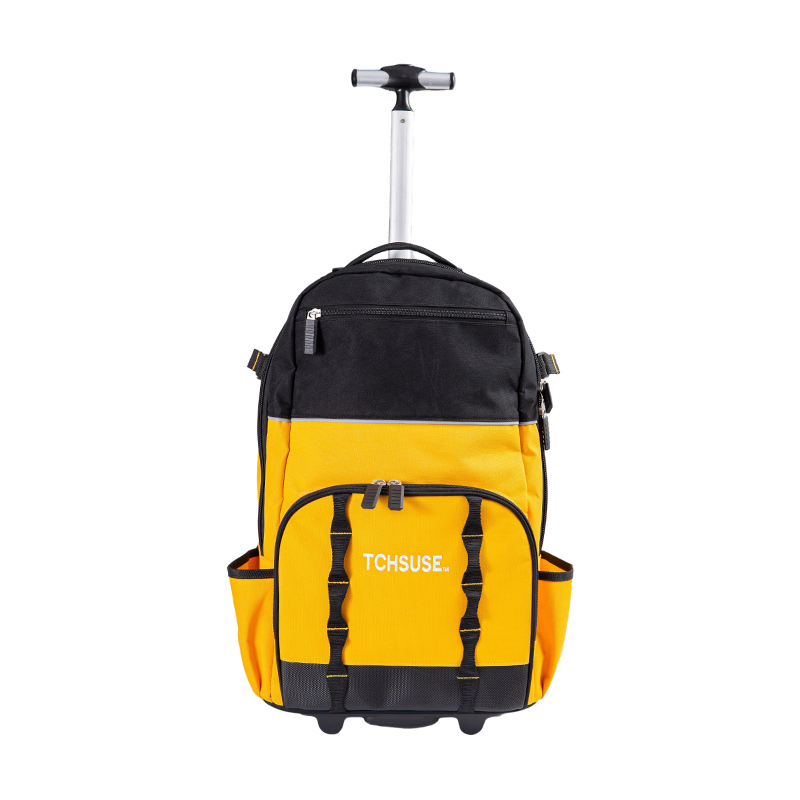
Enter the Electrician Plastic Bottom Tool Backpack. This specialized piece of gear has rapidly moved from a niche accessory to an industry essential. By combining the massive storage capacity of a traditional bag with the hands-free mobility of a rucksack and the rugged protection of a hard-shell case, it is fundamentally changing how electricians work.
In this deep dive, we explore the shift toward "hands-free efficiency" and why the plastic bottom backpack is becoming the new gold standard on the job site.
The Mobility Revolution: Hands-Free is Safety-First
The primary reason for the decline of the tool cart in specialized trades is simple: accessibility. A cart requires a flat, paved surface and an elevator to be effective.
Navigating Vertical Challenges
On a modern construction site, the work isn't always on the ground floor. Electricians are often required to climb ladders, navigate scaffolding, or trek across muddy, unpaved terrain. Carrying a traditional tool bag in one hand or dragging a cart behind you is not only exhausting—it’s a safety hazard.
An Electrician Plastic Bottom Tool Backpack allows the worker to maintain "three points of contact" while climbing. By distributing the weight of 30 to 50 pounds of tools across the back and shoulders, it leaves the hands free to hold railings, operate lifts, or carry delicate components like light fixtures or sensors.
Efficiency in Tight Spaces
Maintenance electricians working in data centers or mechanical rooms often deal with narrow aisles where a cart would be a hindrance. A backpack allows a technician to move through tight quarters without bumping into expensive equipment or blocking the path for others.
Why the "Plastic Bottom" is a Game Changer
While tool backpacks have existed for years, the introduction of the molded plastic bottom solved the two biggest complaints professionals had about soft-sided bags: water damage and instability.
Protection from the Elements
A job site is rarely clean or dry. Whether it’s a flooded basement, a muddy trench, or a spill on a concrete floor, moisture is the enemy of expensive electrical testers and hand tools.
The Electrician Plastic Bottom Tool Backpack features a rugged, waterproof base (usually made of high-impact polypropylene). This allows the electrician to set their bag down in a puddle or on wet grass without a second thought. The hard base acts as a levee, keeping the internal fabric and the tools inside bone-dry.
The "Stay-Upright" Factor
Traditional soft-bottom bags have a tendency to tip over when opened, spilling tools across the floor. This is more than just an annoyance; it causes lost time and potential damage to precision instruments. The molded base provides a rigid, flat foundation that ensures the backpack stays perfectly upright, even when fully loaded with top-heavy tools. This transforms the backpack into a stationary "tool station" once it’s placed on the ground.
Organizational Mastery: More Than Just a Bag
If you look inside a high-quality Electrician Plastic Bottom Tool Backpack, you’ll see that it isn’t just a hollow sack. It is an engineered organizational system designed specifically for the way an electrician works.
- Layered Compartments: Most professional models feature 30 to 50 individual pockets of varying sizes. This allows for "vertical storage," where every tool has a dedicated home.
- Specialized Pockets: Modern backpacks include hard-shell "tech pockets" for smartphones or tablets, padded sleeves for laptops (essential for programming PLC systems), and reinforced loops for long screwdrivers.
- Visibility: Many manufacturers use high-contrast orange or yellow interior linings. This makes it significantly easier to find a black-handled tool in low-light conditions, such as an attic or a basement during a power outage.
Ergonomics: Protecting the Professional’s Health
Heavy lifting is part of the job, but chronic back and shoulder pain shouldn't be. Traditional shoulder bags put an asymmetrical load on the spine, leading to long-term musculoskeletal issues.
The Electrician Plastic Bottom Tool Backpack is designed with ergonomics at its core:
- Load-Bearing Straps: Wide, padded shoulder straps distribute weight evenly across the trapezius muscles.
- Chest and Waist Belts: High-end models include sternum straps and waist belts that shift a portion of the load to the hips—the body’s natural center of gravity.
- Airflow Padding: Back panels are often designed with "air channels" or mesh to prevent the "sweaty back" syndrome that occurs during long walks across large job sites.
Cost-Benefit Analysis: Backpack vs. Cart
While a premium Electrician Plastic Bottom Tool Backpack might represent a higher upfront investment than a basic tote, the ROI is found in three areas:
- Tool Longevity: Preventing rust from moisture and damage from impact (thanks to the plastic base) extends the life of tools that cost thousands of dollars.
- Reduced Downtime: The time spent walking back and forth to a tool cart located in another room adds up. Having the entire "kit" on your back at all times can save 30 to 60 minutes of labor per day.
- Professional Image: Clients and contractors notice gear. A well-organized, rugged backpack signals a level of professionalism and readiness that a cluttered cart or a flimsy bag cannot match.
Maintenance and Care
To get a decade of use out of your Electrician Plastic Bottom Tool Backpack, follow these simple maintenance tips:
- Clean the Base: Periodically wipe the plastic bottom to remove grease or corrosive chemicals that could eventually degrade the plastic.
- Zipper Care: Use a dry lubricant or paraffin wax on the zippers once a year to ensure they glide smoothly, especially if you work in dusty environments.
- Avoid Overloading: While these bags are tough, exceeding the weight limit can strain the stitching at the top handle. Use the shoulder straps for the heavy lifting.

Yancheng Tengchi Tourism Products Co., Ltd. It is dedicated to
designing and producing high-quality tool bags, including
heavy-duty electrician bags.
Experienced staff and experts are always available to provide
you with professional guidance and solutions to technical
problems.
- Product
- Tool Bag
- Tool Backpack
- Capabilities
- Capabilities
- Custom
- About US
- About Tengchi
- Certification
- Quick Connect
- Custom
- Capabilities
- Contact



