
Email: [email protected]

 English
  español
Industry News
Best Tool Bags for Electricians: Types & Buying Guide
 2026.04.22
 Industry News
The best tool bag for electricians depends on your specific work environment — but for most professionals, an open-top tool bag with reinforced pockets and a steel handle offers the ideal combination of fast access, durability, and carrying capacity. For electricians who move between job sites, a rolling tool bag significantly reduces physical strain. For those who work on ladders or in tight spaces, a tool belt bag keeps essentials within arm's reach.
In short: there is no single "best" tool bag — but there is a best type for each scenario. This guide breaks down every major category, from technician tool bags to multi-purpose tool bags, with the data and comparisons you need to make the right call.
Why the Right Tool Bag Matters for Electricians
Electricians handle a uniquely demanding toolkit. A typical journeyman electrician carries anywhere from 40 to 80 individual tools on an active job site, including wire strippers, pliers, voltage testers, conduit benders, fish tape, and screwdrivers in multiple sizes. Without a well-organized bag, locating the right tool costs time — and in electrical work, time-on-task directly impacts both productivity and safety.
According to a survey by the Electrical Contractors Association, inefficient tool organization is cited by 63% of electricians as a leading contributor to on-site delays. A purpose-built electrician tool bag addresses this through dedicated pockets, visible tool slots, and structured internal layouts that let you find what you need in seconds — not minutes.
Beyond organization, the right bag protects expensive equipment. A quality multimeter alone can cost $100 to $500; a thermal imaging camera used by electricians can exceed $1,000. Bags with padded compartments and weather-resistant exteriors help protect this investment across years of daily use.
Types of Tool Bags Electricians Use Most
Understanding the distinct categories of electrician tool bags is the foundation of making the right purchase. Each type serves a different working style and job environment.
Open-Top Tool Bag
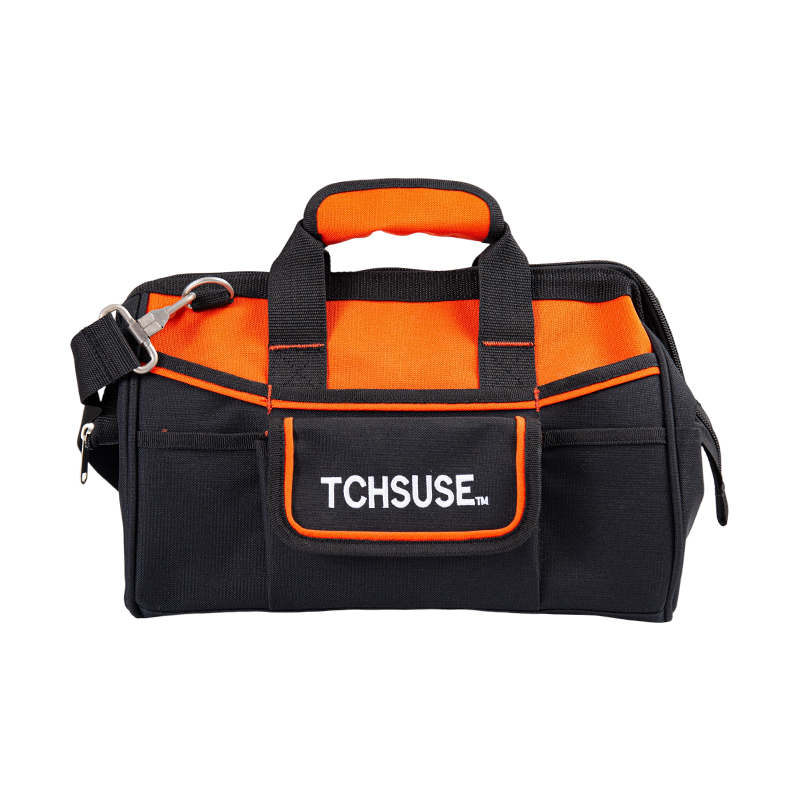
The open-top tool bag is the most widely used bag type among electricians. Its wide, zipperless opening provides instant 360-degree access to tools without the friction of a zipper or lid. Most open-top bags feature a rigid base, multiple exterior pockets, and an interior lined with tool loops and pockets of varying sizes.
A typical professional open-top tool bag for electricians measures around 15–18 inches wide and 11–13 inches tall, with 30 to 50 individual pockets and loops.
Rolling Tool Bag
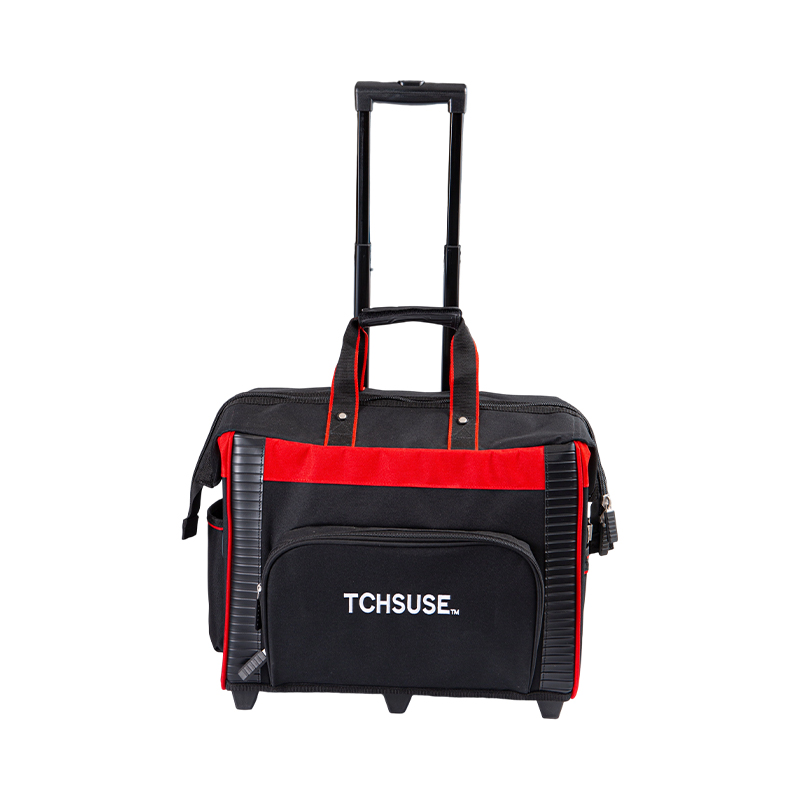
A rolling tool bag is essentially a wheeled technician tool bag designed for electricians who carry heavy loads across large job sites, warehouses, or commercial buildings. The rolling mechanism eliminates the physical strain of carrying a loaded bag — particularly important given that a fully loaded electrician's bag can weigh 30 to 60 lbs.
High-quality rolling tool bags feature heavy-duty inline skate wheels, telescoping handles, and reinforced bottom panels. Rolling bags are best suited for commercial electricians who work in one location for extended periods rather than moving frequently between elevated positions.
Steel Handle Tool Bag
The steel handle tool bag is distinguished by its rigid metal top handle — either a single steel bar or a reinforced frame — which prevents the bag from collapsing when set down and provides a firm, consistent grip even when the bag is fully loaded. This design is popular among electricians who frequently place their bag on elevated surfaces, in vehicle cargo areas, or on scaffolding where a floppy or soft-sided bag would be impractical.
The steel handle also doubles as a structural frame, keeping the bag's mouth open and tools visible at all times.
Tool Belt Bag
A tool belt bag combines the portability of a waist-worn tool belt with the storage capacity of a bag. These are typically worn on the hip or around the waist and keep the most frequently used tools — wire strippers, voltage testers, screwdrivers, and electrical tape — immediately accessible without bending down to a floor bag.
For electricians working on ladders, in crawl spaces, or in attics, a tool belt bag is often the single most productivity-enhancing piece of equipment they carry.
Technician Tool Bag
A technician tool bag is designed for precision instrument-heavy work — common among electricians who specialize in panel work, low-voltage systems, or instrumentation. These bags typically feature padded internal dividers, zippered lid pockets for meters and documentation, and anti-static lining options for sensitive electronic equipment. They resemble laptop bags in form but are built to withstand tool weight and field conditions.
Multi-Purpose Tool Bag
A multi-purpose tool bag is a versatile option designed to serve electricians, HVAC technicians, plumbers, and general contractors alike. These bags prioritize flexible storage — with adjustable dividers, modular pouches, and a mix of hard and soft compartments — over trade-specific organization. They are well-suited for residential electricians who also handle general maintenance tasks or small contractors who don't want separate bags for each trade.
Tool Bag Type Comparison at a Glance
| Bag Type | Best For | Key Advantage | Typical Pocket Count | Price Range |
|---|---|---|---|---|
| Open-Top Tool Bag | General electricians, daily use | Fast 360° tool access | 30–50+ | $30 – $150 |
| Rolling Tool Bag | Commercial electricians, heavy loads | Reduces physical strain | 20–40+ | $80 – $300 |
| Steel Handle Tool Bag | Site professionals, elevated placement | Rigid structure, always open | 25–60+ | $60 – $350 |
| Tool Belt Bag | Ladder work, confined spaces | Hands-free instant access | 10–25 | $25 – $200 |
| Technician Tool Bag | Panel, low-voltage, instrumentation | Padded, instrument-safe storage | 15–35 | $50 – $250 |
| Multi-Purpose Tool Bag | Versatile tradespeople, mixed tasks | Flexible, adjustable layout | 20–45 | $25 – $180 |
What to Look for When Buying an Electrician Tool Bag
Not all tool bags marketed to electricians are built equal. Evaluating a bag across these core criteria will help you avoid costly mistakes:
Material and Durability
The outer shell material determines longevity in field conditions. The most durable options use 1680D or 1800D ballistic nylon — a weave density high enough to resist cuts, abrasion, and moisture. Cheaper bags use 600D polyester, which degrades faster under daily jobsite stress. For the base, look for injection-molded plastic or steel-reinforced bottoms that prevent the bag from collapsing or warping when loaded.
Number and Layout of Pockets
Electricians need differentiated storage — not just one large cavity. The ideal electrician tool bag has a combination of: tall exterior pockets for screwdrivers and pliers, shallow pockets for tape measures and voltage pens, zippered pockets for small parts like wire connectors and staples, and a wide main compartment for bulkier items like fish tape or cable reels. A bag with 35 or more total pockets and loops is a strong baseline for a working electrician.
Weight and Load Capacity
An empty tool bag should not be burdensome itself. Professional-grade bags typically weigh 2 to 5 lbs empty. Load capacity — how much weight the bag can safely carry without handle failure or seam separation — should be at least 50 lbs for a full-sized electrician bag. Check the handle stitching: double- or triple-stitched handles with reinforced attachment points are a minimum requirement for heavy loads.
Water and Weather Resistance
Electricians work outdoors, in basements, and in construction environments where moisture is unavoidable. A water-resistant base and treated fabric exterior protect both the bag and its contents. Look for PVC-lined or coated base panels and fabric with a DWR (Durable Water Repellent) treatment. Note that "water-resistant" is not the same as "waterproof" — if you regularly work in heavy rain, consider a bag with a rain cover or a semi-rigid exterior shell.
Handle and Carrying Options
The best electrician tool bags offer multiple carrying modes. Look for a padded top handle, a removable or adjustable shoulder strap, and — for heavier bags — a steel or reinforced handle frame. Shoulder straps should be at least 1.5 inches wide with a non-slip pad to prevent slippage on the shoulder. For rolling bags, test that the telescoping handle locks securely at multiple heights and that the wheels can handle rough surfaces like gravel and concrete.
Interior Visibility
In low-light conditions — attics, crawl spaces, early morning exterior work — a tool bag with a bright-colored (typically orange or yellow) interior lining makes tool identification dramatically faster. Some premium bags include LED interior lights activated by opening the bag. This detail is small but consistently praised by professional electricians as a genuine time-saver.
How to Choose the Right Tool Bag for Your Electrician Role
Your role and daily working conditions should drive your bag selection. Use this framework to narrow your choice:
- Residential electrician (single-family homes, remodels): An open-top tool bag (15–18 inches) with 35+ pockets is the most practical choice. You move between rooms and floors frequently, so lightweight and fast access matter most. Budget: $40–$120.
- Commercial electrician (offices, retail, warehouses): A rolling tool bag allows you to carry the full toolkit without fatigue across large floor plans. Pair it with a tool belt bag for on-person essentials. Budget: $100–$300 for rolling; $30–$80 for belt bag.
- Industrial electrician (factories, plants, heavy equipment): A steel handle tool bag with a rigid frame keeps tools accessible in environments where bags get set on rough or contaminated surfaces. Prioritize chemical-resistant base materials. Budget: $100–$350.
- Low-voltage / AV / data electrician: A technician tool bag with padded compartments protects sensitive instruments (tone generators, network testers, cable certifiers). Look for anti-static lining for ESD-sensitive environments. Budget: $60–$250.
- Apprentice electrician: Start with a mid-range open-top bag or multi-purpose tool bag that accommodates a growing tool collection. Avoid over-investing until your tool set stabilizes. Budget: $30–$80.
Open-Top vs. Zippered Tool Bags: Which Is Better for Electricians?
This is one of the most debated questions among electricians. Here is an objective breakdown:
| Feature | Open-Top Tool Bag | Zippered Tool Bag |
|---|---|---|
| Tool access speed | 5 Stars Instant | 3 Stars Requires zip/unzip |
| Protection from rain/dust | 2 Stars Open to elements | 4 Stars Better sealed |
| Tool visibility | 5 Stars Full view | 3 Stars Partially hidden |
| Security (tools staying in) | 3 Stars Risk if tipped | 5 Stars Fully enclosed |
| Organization capacity | 5 Stars More pockets typical | 4 Stars Varies by model |
| Longevity (no zipper failure) | 5 Stars No zipper to break | 3 Stars Zipper is failure point |
Verdict: Open-top tool bags win for most active electricians due to superior access speed and organization. Zippered bags are preferable for technicians working in dusty or wet environments where tool protection is the top priority.
The Case for Using Multiple Bag Types Together
Many experienced electricians use a two-bag system rather than relying on a single bag. The most common combination is:
- A large open-top or rolling tool bag that stays at ground level or in the van, holding the full toolkit, spare parts, and bulkier equipment.
- A tool belt bag or compact tool belt worn on the body, loaded only with the 10–15 tools used most frequently on that specific job.
This approach dramatically reduces the number of trips back to the main bag and keeps the most-used tools immediately at hand. Electricians who adopt this system report saving 20–40 minutes per day that would otherwise be spent walking back to retrieve tools.
For commercial projects, a three-system setup adds a rolling tool bag as the primary transport vehicle, an open-top steel handle bag at the work area, and a tool belt bag for on-person essentials. This is the setup commonly used by master electricians on large commercial or industrial projects.
Essential Tools That Should Always Be in an Electrician's Tool Bag
Choosing the right bag is only half the equation. Knowing what must be in it is equally important. The following list covers the core tools a working electrician should carry in their primary bag:
- Non-contact voltage tester – Safety-critical; verifies circuits are de-energized before work begins.
- Multimeter – Measures voltage, current, and resistance; essential for diagnostics.
- Wire strippers (10–18 AWG and 14–6 AWG) – At minimum two sizes for different wire gauges.
- Lineman's pliers – For twisting, cutting, and gripping wire.
- Needle-nose pliers – For reaching into boxes and forming wire loops around terminals.
- Screwdrivers (flathead and Phillips, insulated) – Insulated handles rated to at least 1,000V are standard for licensed electricians.
- Fish tape or fish sticks – For routing wire through walls and conduit.
- Electrical tape (3M Scotch 33+) – Industry standard for insulation and splice wrapping.
- Wire connectors (assorted Marrettes/wire nuts) – Keep a variety of sizes for different connection types.
- Torpedo level – Ensures outlets, panels, and conduit runs are installed level.
- Utility knife – For stripping cable sheathing and cutting insulation.
- Cable ties and zip ties – For bundling and organizing wire runs.
Frequently Asked Questions About Electrician Tool Bags
What size tool bag do electricians need?
Most working electricians use a bag between 14 and 18 inches wide as their primary carry bag. Bags under 12 inches are too small for a full professional toolkit. Bags over 20 inches become unwieldy to carry by hand. For rolling bags, larger sizes (20–24 inches) are common since wheeling eliminates the carrying burden.
Are leather tool bags better than nylon for electricians?
Leather tool bags (like those from Occidental Leather) are extremely durable and develop a professional look over time, but they are heavier, require maintenance, and cost significantly more — often $150–$400. High-denier nylon bags (1680D+) offer comparable durability, are lighter, resist moisture better out of the box, and cost less. Most professional electricians today choose nylon for its practical advantages, reserving leather for belt bags and pouches.
How long should a professional tool bag last?
A quality tool bag used daily by a professional electrician should last 3 to 10 years, depending on the material, construction quality, and working conditions. Premium brands like Veto Pro Pac back their bags with lifetime warranties, while mid-range bags from Milwaukee and DEWALT typically last 5–8 years before seams or handles show significant wear.
Can a multi-purpose tool bag replace a dedicated electrician tool bag?
For apprentices or handymen who handle multiple trades, a multi-purpose tool bag is a practical starting point. However, for licensed journeymen or master electricians, a dedicated electrician tool bag with trade-specific pocket layouts significantly outperforms a general-purpose bag in daily efficiency. The difference in organization can save 15–30 minutes per day on a busy job site.
Related Products
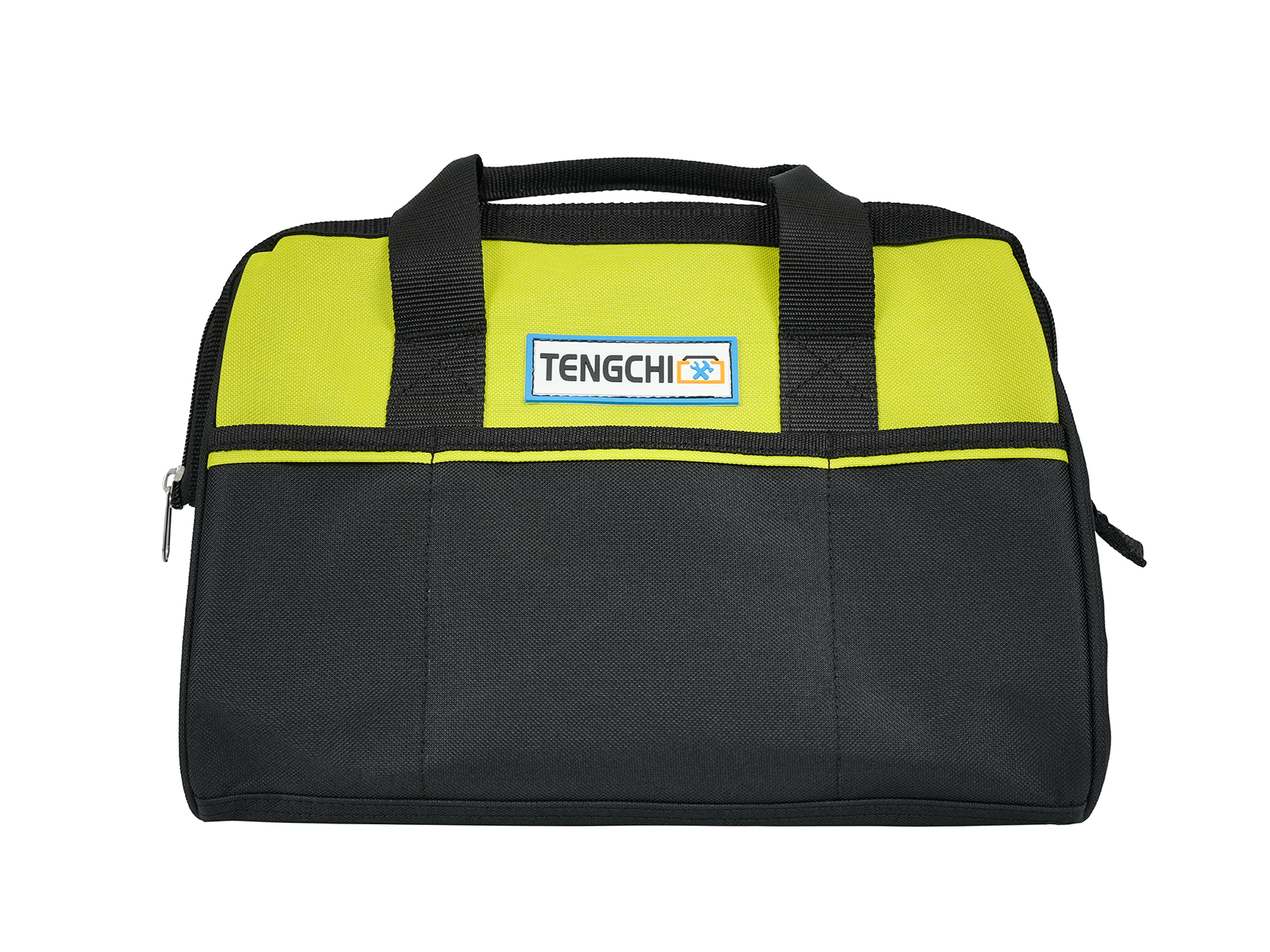
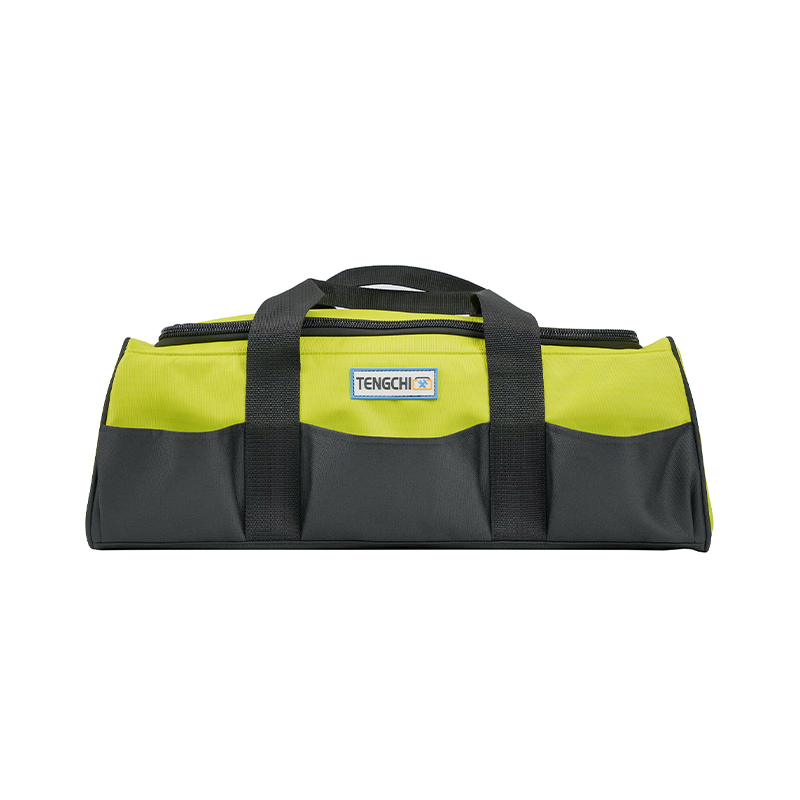

Yancheng Tengchi Tourism Products Co., Ltd. It is dedicated to
designing and producing high-quality tool bags, including
heavy-duty electrician bags.
Experienced staff and experts are always available to provide
you with professional guidance and solutions to technical
problems.
- Product
- Tool Bag
- Tool Backpack
- Capabilities
- Capabilities
- Custom
- About US
- About Tengchi
- Certification
- Quick Connect
- Custom
- Capabilities
- Contact



