
Email: [email protected]

 English
  español
Industry News
What Is a Rolling Tool Backpack? The Guide to Hybrid Tool Transport
 2026.07.08
 Industry News
What Is a Rolling Tool Backpack?
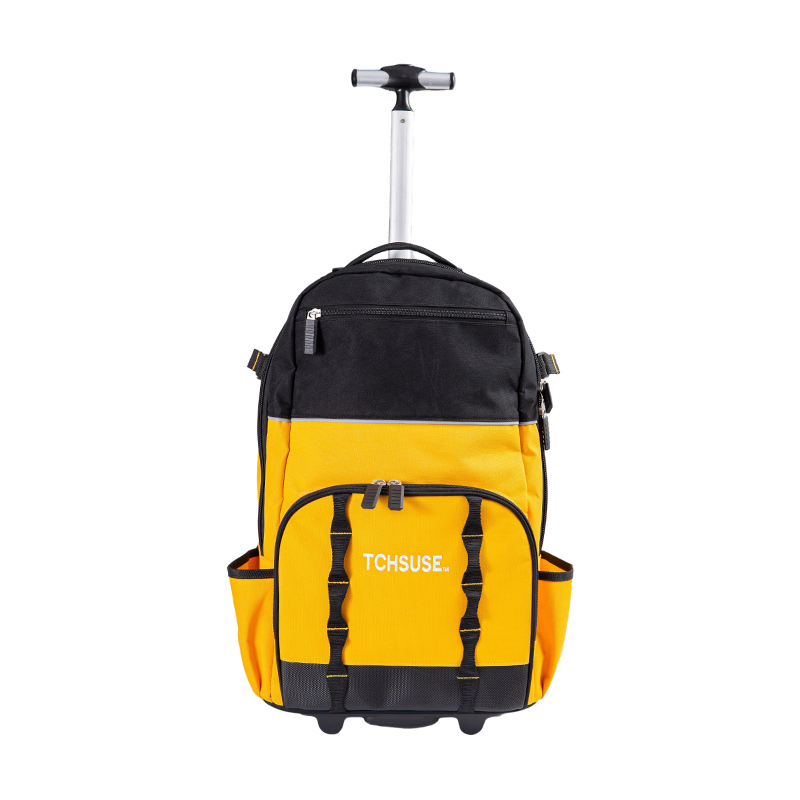
A rolling tool backpack is a hybrid tool storage bag that combines backpack-style straps with an integrated wheeled base and telescoping handle, allowing a technician to either carry it on their back for stairs and tight spaces or roll it through longer stretches like parking lots, hallways, or job site corridors. Most models are built with a rigid or semi-rigid base, reinforced tool walls with pockets and loops, and a load capacity ranging from 40 to 100+ pounds depending on size and construction.
In short: a rolling tool backpack is the right choice for technicians who carry a heavy, varied tool kit across mixed terrain — some stairs, some flat ground, some distance — and want to avoid the shoulder and back strain of carrying that weight exclusively on foot. It's not the best option for every job, but for field service, HVAC, electrical, and IT technicians, it's become one of the most popular tool transport solutions on the market.
Rolling Tool Backpack vs. Traditional Tool Bags and Boxes
Technicians typically choose between three main carry formats: a traditional shoulder tool bag, a hard rolling tool box, and a rolling tool backpack. Each has trade-offs in weight distribution, capacity, and mobility across different terrain.
| Format | Best On | Typical Capacity | Hands-Free Carry |
|---|---|---|---|
| Rolling Tool Backpack | Mixed terrain, stairs, and flat ground | 40-100+ lbs | Yes, dual mode |
| Shoulder Tool Bag | Short trips, tight spaces | 20-50 lbs | No |
| Rolling Tool Box | Flat, smooth surfaces only | 50-150+ lbs | No |
The defining advantage of a rolling tool backpack is flexibility across terrain types. A rolling tool box struggles on stairs, gravel, or curbs, while a shoulder bag places all the weight on one side of the body, increasing fatigue and long-term strain risk over a full workday.
Who Benefits Most From This Format
Rolling tool backpacks are especially popular among professionals whose daily routine mixes walking, driving, and site navigation. The following roles commonly rely on this format:
- Field service and HVAC technicians: moving between vehicles, buildings, and mechanical rooms, often up and down stairs
- Electricians and low-voltage installers: carrying testing equipment, hand tools, and wire alongside a laptop or tablet
- IT and network technicians: transporting diagnostic tools, cables, and devices across office floors and data centers
- Audio/visual and event installation crews: hauling equipment through venues with mixed flooring and stairwells
- Home inspectors and appraisers: needing a lighter but organized kit for walkthroughs across multiple properties per day
Technicians who report the biggest ergonomic benefit are typically those carrying 25 pounds or more of tools on a daily basis, since that's the threshold where sustained backpack-only or shoulder-bag-only carrying tends to contribute to cumulative shoulder, neck, and lower back strain.
Key Features to Look for When Buying
Not all rolling tool backpacks are built for the same demands. The following features separate a durable, work-ready bag from one that will fail prematurely under daily professional use.
- Wheel size and bearing quality: wheels of 3 inches or larger with sealed ball bearings roll more smoothly over uneven pavement, cracks, and thresholds than smaller in-line skate-style wheels
- Base rigidity: a molded or reinforced base prevents the bag from tipping or sagging when fully loaded and standing upright
- Telescoping handle stability: look for a handle with multiple locking height positions and minimal side-to-side wobble under load
- Fabric weight and coating: 1680D or 1800D ballistic-grade polyester with a water-resistant coating resists abrasion from job site debris and light rain exposure
- Compartment organization: dedicated tool loops, elastic pockets, and a padded laptop or tablet sleeve keep frequently used items accessible without digging
- Strap padding and load support: padded, adjustable shoulder straps with a sternum or waist strap improve stability when the bag is worn on the back rather than rolled
Wheel quality is the single most common point of failure in lower-cost models — undersized or unsealed wheel bearings tend to seize or crack within months of daily job site use, which is why it's worth prioritizing this spec even if it means paying more upfront.
Weight Capacity and Sizing Guide
Choosing the right size depends on how much gear needs to travel with the technician on a typical day, not just the maximum tool count the bag can physically fit. Overloading a bag rated below actual daily carry weight accelerates wear on zippers, straps, and wheel axles.
Compact Bags (Under 20L)
Suited to technicians carrying a focused kit of hand tools, a meter, and a laptop — typically in the 15 to 30 pound range. These bags prioritize maneuverability over maximum capacity.
Mid-Size Bags (20L to 35L)
The most common category for field service and HVAC work, typically rated for 40 to 65 pounds and offering enough dedicated compartments for a full daily tool loadout plus diagnostic equipment.
Heavy-Duty Bags (35L and Above)
Built for technicians who need to bring a near-complete toolkit to every job, often rated for 80 to 100+ pounds with reinforced frames and larger wheels to handle the added weight without structural failure.
Maintenance Tips to Extend the Bag's Lifespan
A rolling tool backpack takes daily abuse from job site debris, weather, and repeated loading. A few simple habits significantly extend its usable life.
- Clean wheels and axles monthly to remove dust, gravel, and debris that accelerates bearing wear
- Avoid overloading beyond the manufacturer's rated capacity, since this stresses zippers and seam stitching first
- Store heavier tools low and close to the base to keep the bag's center of gravity stable when rolling or standing upright
- Retract the telescoping handle fully when not in use to reduce stress on the internal locking mechanism
- Inspect strap stitching and buckle hardware periodically, since these are the first components to show wear under daily backpack-mode use
Technicians who follow a basic maintenance routine commonly report 2 to 4 years of daily professional use from a well-built rolling tool backpack, while neglected wheels and overloading are the most frequent causes of premature replacement.
Summary: Is a Rolling Tool Backpack Right for You?
A rolling tool backpack is the right choice for technicians who carry heavy, varied tool loads across a mix of stairs, uneven ground, and flat surfaces throughout the workday. When selecting a bag, size it to your actual daily carry weight rather than maximum capacity, prioritize wheel and bearing quality over price alone, and choose a compartment layout that matches your specific trade. For technicians working almost exclusively on flat, smooth terrain, a hard rolling tool box may offer more capacity per dollar — but for the majority of field service, HVAC, electrical, and IT professionals navigating real-world job sites, the dual carry flexibility of a rolling tool backpack delivers the best balance of ergonomics, durability, and daily practicality.
Related Products

Yancheng Tengchi Tourism Products Co., Ltd. It is dedicated to
designing and producing high-quality tool bags, including
heavy-duty electrician bags.
Experienced staff and experts are always available to provide
you with professional guidance and solutions to technical
problems.
- Product
- Tool Bag
- Tool Backpack
- Capabilities
- Capabilities
- Custom
- About US
- About Tengchi
- Certification
- Quick Connect
- Custom
- Capabilities
- Contact



